In slow sustained consistent vibration all over outside Tapping window, streaking roof, running down runnel and drain Waking a sense, once more, of all that lived outside of us! –Delmore Schwartz
All that lives outside us The Gift that grows and guides us An ocean and a windstorm And a flame
The sun that warms and feeds us Though it doesn't need us I'm pretty sure it loves us Just the same
Fade into what sustains us What bleeds and entertains us What drizzles from above us Down the drain
I'm at the tip of the top
There's a pep in my step
I got the hippity hop
Winning all of my bets

I’m hanging on a hope
Met a special sort of friend
I’m such a silly old dope
Am I falling again?

Gonna get a new start
I’m so happy I could scream
For the bounce in my heart
And the sparkle in my dreams

I’m hanging on a hope
Met a special sort of friend
I’m such a silly old dope
Am I falling again?

By Richard W. Bray
some say the most important thing is to calmly talk about your depression. wrong. the most important thing is to throw sand in its eyes, beat it with a sock full of quarters, then toss your depression in an Arby’s dumpster
–Beth, my spiritual adivsor
There ain’t no happy place
Where good times always last
You need to grab your misery
And kick its little ass
There ain’t no place to hide
There ain’t no happy pills
Don’t make up stupid stories
To wish away your ills
There ain’t no easy road
There ain’t no magic spell
Everything that’s worth a damn
Is gonna hurt like hell
Beat the blues down
When it bears its ugly head
It’s coming back again
Every day until you’re dead
Never said she was married
I didn’t see a ring
When Blue started barking
I picked up my things
Found myself staring
At a mighty big knife
Blue bit his ankle
And we ran for our life
Time to move along now
Alabama Blue
This no-good town
Ain’t fit for me and you
They’ll be pretty girls for me
And some new smells for you
Time to move along now
Alabama Blue
Honeys kept me busy
I was cuttin’ a rug
Honkytonk hero
Happy hittin’ a jug
Seven hundred dollars
Is a mighty big bill
Me and Blue skedaddled
Made it over the hill
Time to move along now
Alabama Blue
This no-good town
Ain’t fit for me and you
They’ll be pretty girls for me
And some new smells for you
Time to move along now
Alabama Blue
Never meant no trouble
Don’t wanna hurt no one
I’m not a bad feller
But I do love my fun
Never met nobody
Better than Blue
The finest amigo
That a man ever knew
Time to move along now
Alabama Blue
This no-good town
Ain’t fit for me and you
They’ll be pretty girls for me
And some new smells for you
Time to move along now
Alabama Blue
But, scarce observed, the knowing and the bold Fall in the gen’ral massacre of gold; Wide-wasting pest! that rages unconfin’d, And crowds with crimes the records of mankind For gold his sword the hireling ruffian draws, For gold the hireling judge distorts the laws; —Samuel Johnson, The Tenth Satire of Juvenal, Imitated
The rich everyday exhort a part of their daily allowance from the poor not only by private fraud but by public law —Thomas More, Utopia
Los ladrones que mandan The thieves who always win Extracting every dollar From misery and sin
When tyrants, kings and pirates Lay the land to waste Los ladrones que mandan Will always get their taste
Tax you, fine you, frame you Guilty any way you plea Los ladrones que mandan Lock you up for living free
Ain’t no way to ever reckon How much they really stole Los ladrones que mandan Crush you body, crush your soul
All the other pundits say we have to be strong So I’d look pretty stupid if I didn’t go along Pundits work for think tanks so we know a lot of things Strength means dropping cluster bombs on helpless human beings
All the other pundits say America must lead It isn’t our concern if millions have to bleed Our enemies respect us when we’re muscular and bold Our paymasters reward us based upon munitions sold
All the other pundits say we must support our friends Don’t obsess on means if you can justify the ends Friends can chop some heads if they possess a lot of oil Friends with good locations set their enemies to boil
All the other pundits say we must pay any price And pundits live in neighborhoods and houses that are nice Pundits tell you simple folk what is wrong and right Pundits think that wars are great for other folks to fight
Don’t owe the world an explanation
For all the things I’ve done
I won’t assist your calculation
Who to love and who to shun
Don’t owe the world an explanation
I don’t have to pass your test
Not here to seek evaluation
I just wish everyone the best
Don’t owe the world an explanation
I’ve known love and I’ve known pain
And your morality fixation
Lives and dies inside your brain
Don’t owe the world an explanation
You do your thing; I do mine
You can take your allegations
And stick em where the sun don’t shine
Don’t owe the world an explanation
Why I do the things I do
Lord knows my ultimate salvation–
It ain’t really up to you
If it sounds country, man, that’s what it is; it’s a country song.
–Kris Kristofferson
A tautology is a grammatical construct; circular reasoning is a logical fallacy. The two phenomena are related but not identical.
A tautology is a sentence in which the conclusion is equivalent to its premise. In other words, in a tautology, the predicate can be surmised by reading the subject.
Here are some examples of tautologies:
My mother’s brother is my uncle.
Father Brown is a priest.
It is what it is.
A circular argument occurs when someone affirms her position simply by restating it in different terms. In other words, circular reasoning is an argument where the conclusion depends upon or is equivalent to its premise.
In a circular argument:
X is true because of Y.
and
Y is true because of X.
A circular argument is similar in structure to a tautology, but a circular argument includes causal reasoning (because, therefore, for this reason, etc.).
Here are some examples of circular reasoning:
My mom is terrific because she is wonderful.
People do what Dave tells; therefore, he is a great leader.
I slumbered beyond my assigned wakeup time; that’s why I overslept.
Lesson Evaluation: Explain why the following examples are tautologies, circular arguments, or neither.
Chris Rock is a hilarious comedian because he makes people laugh.
A bartender is a guy who listens to people talk all day.
#3 Number off students in to groups of three. (Larger groups will encourage social loafing. It’s better to have two pairs than one group of four.)
#4 Assign a character to each group. It’s ok for more than one group to do the same character.
Group 1—Marie Lazarre Kashpaw Group 2—Nector Kashpaw Group 3—Lulu Nanapush Lamartine Group 4—June Morrissey Group 5—Lipsha Morrissey Group 6—Albertine Johnson Group 7—Eli Kashpaw Group 8—Lyman Lamartine Group 9—Henry Lamartine Jr Group 10—Gerry Nanapush
#5 Each group uses the novel to generate answers to the following questions:
a) What are four nouns that describe your character?
Example: Nector Kashpaw–Leader, Philanderer, Father, Indian
(Discourage students from going for the easiest, least revealing answers, like man, person, citizen, mammal.)
b) What are four adjectives that describe your character?
c) Explain how two passages (include page numbers) reveal something about your character.
Example—Albertine Johnson
d) What are two things your character wants? (Kurt Vonnegut informs the aspiring novelist to make sure your characters want something, even if it is just a glass of water.)
Got money in my pants
Got a shiny new car
Got tickets to a dance
Got a seat at the bar
Got everything I earned
From all the work I do
But I never ever learned
That I just needed you
I’m a boat without a sail
I’m a light without a lamp
I’m a letter in the mail
That ain’t got no stamp
I’m a fool without a plan
Darling, can’t you understand?
I’m a rinky dink shadow
Of a man
I’m tearing up the town
I’m breaking all the rules
And I’m rollin all around
With a mighty bunch of fools
Got all my crazy pals
Got a million things to do
Got a thousand horny gals
But I just need you
I’m a boat without a sail
I’m a light without a lamp
I’m a letter in the mail
That ain’t got no stamp
I’m a fool without a plan
Darling, can’t you understand?
I’m a rinky dink shadow
Of a man
Philosophers are bound to paradigms and past pronouncements. But no paradigm comes close to capturing our multifarious world. That’s why my favorite philosophers are mostly poets. Poets are less likely to get boxed in by theory or even worry too much about what they were saying a week ago.
Richard Wilbur notes that Emily Dickinson (“not a philosopher”) was “consistent in her concerns but inconsistent in her attitudes” (10; 5). One of Miss Dickinson’s major concerns is the limited capacity of human beings to absorb even a fraction of what we crave. Our gargantuan appetites are ill-fitted to our frail, finite, and terminable bodies. But instead of lamenting this unsuitable arrangement, Emily Dickinson celebrates privation for its own sake:
Heaven is what I cannot reach!
In his 1959 article “Sumptuous Destitution,” Wilbur explores Dickinson’s “huge world of delectable distances,” where desire trumps actual possession (11). As Wilbur explains Dickinson (“Linnaeus to the phenomena of her own consciousness”) the poetess finds anticipation far more enticing than actual possession because “once an object has been magnified by desire, it cannot be wholly possessed by appetite” (4; 8). Employing physical hunger as a metaphor for all human desire, Dickinson explains in “I had been Hungry All the Years” how she “found”
That hunger was a way
Of persons outside windows,
The entering takes away.
Frustration is the inevitable consequence in Dickinson’s world of perpetual want where itching vanquishes scratching. The vigor of Dickinson’s yearnings are “magnified” by elusive wants:
[N]ot only are the objects of her desire distant; they are also very often moving away, their sweetness increasing in proportion to their remoteness. “To disappear enhances” one of the poems begins (11-12).
When Dickinson asserts that
Success is counted sweetest
By those that ne’er succeed
she is “arguing the superiority of defeat to victory, of frustration to satisfaction, and of anguished comprehension to mere possession” (9). Wilbur posits convincingly that, for Dickinson, the dead soldier in “Success is Counted Sweetest” made “the better bargain” than his compatriots who survived the victorious battle because his “defeat and death are attended by an increase of awareness, and material loss has led to a spiritual gain” (10).
Emily Dickinson chose her seclusion, and “At times it seems that there is nothing in her world but her own soul, with its attendant abstractions, and, at a vast remove, the inscrutable Heaven” (12). The God of Emily Dickinson’s capacious consciousness is immense and mysterious. We can spend our lives contemplating Him, but He can only be ingested in small bites.
The creature of appetite (whether insect or human) pursues satisfaction, and strives to possess the object in itself; it cannot imagine the vaster economy of desire, in which the pain of abstinence is justified by moments of infinite joy, and the object is spiritually possessed, not merely for itself, but more truly as an index of the All (11).
In his poem “Hamlen Brook,” Richard Wilbur discovers sumptuous destitution when he is nonplussed by overwhelming natural beauty.
How shall I drink all this?
Joy’s trick is to supply
Dry lips with what can cool and slake,
Leaving them dumbstruck also with an ache
Nothing can satisfy.
The Perils of Bardolatry: Harold Bloom’s Limited Perception of Hamlet
The activity of art is based on the fact that a man, receiving through his sense of hearing or sight another man’s expression of feeling, is capable of experiencing the emotion which moved the man who expressed it.
—Leo Tolstoy, What is Art? (178)
The essential function of art is moral. Not aesthetic, not decorative, not pastime and recreation. But moral.
—D.H. Lawrence, Studies in Classic American Literature (180)
When Kurt Vonnegut was working on Slaughterhouse-Five, he told movie-producer Harrison Starr that it was going to be an anti-war novel.
“Why don’t you write an anti-glacier book instead?” Starr quipped.
Vonnegut found the comment amusing, agreeing that wars are “as easy to stop as glaciers.” This knowledge did not dissuade Vonnegut from completing his masterpiece because he realized that no work of art could ever rectify the human situation, and only the silliest sort of fool creates a work of art hoping somehow to fix the world. (This is what logicians refer to as assigning an irrelevant goal.)
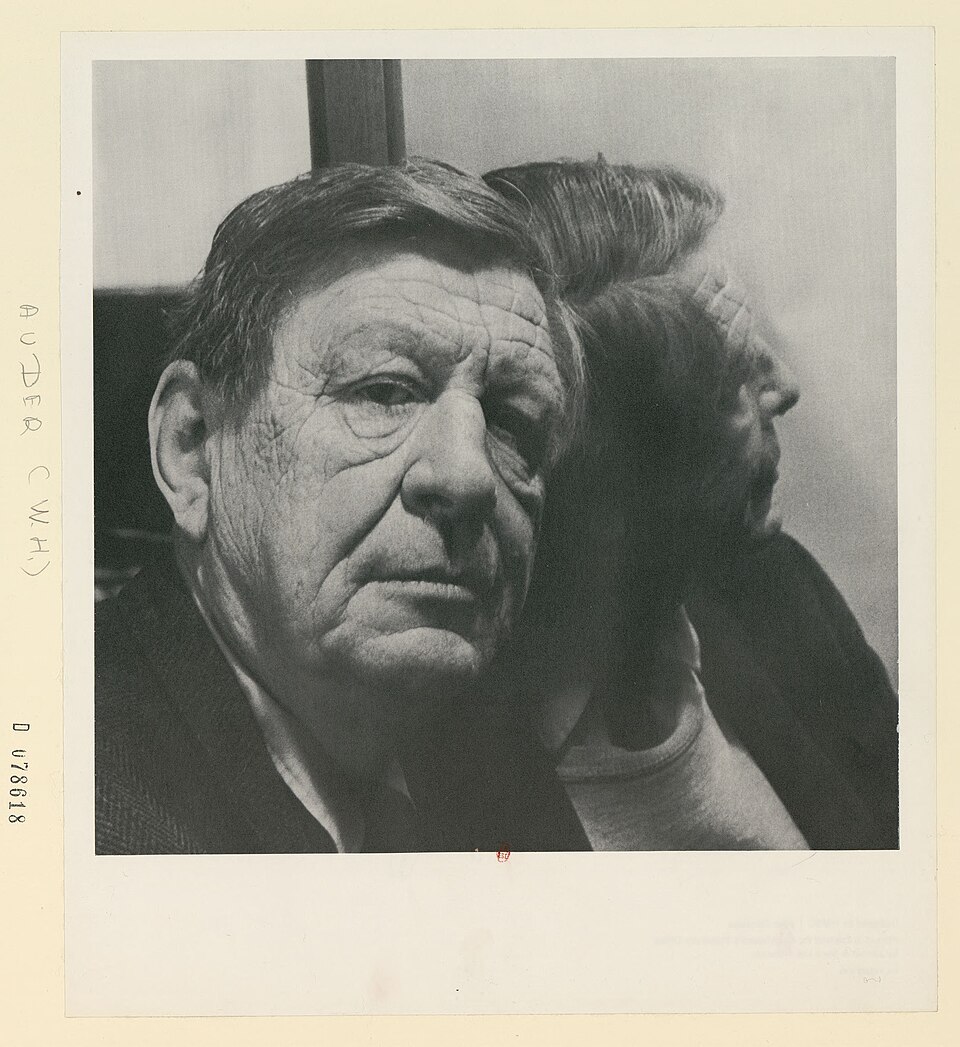
But literature has its uses. And W. H. Auden notwithstanding, poetry makes all sorts of things happen. Great works of art render our world a lot more beautiful and slightly less confusing.
Harold Bloom, one of America’s most acclaimed literary critics, has released a curious collection of musings on William Shakespeare’s Hamlet entitled Poem Unlimited. According to Bloom, “of all poems” Hamlet is the “most unlimited,” and, as a “meditation upon human fragility in confrontation with death,” the play “competes only with the world’s great scriptures” (3).
Bloom has long been an idiosyncratic critic, cocksure about his own brilliance and emphatic about the singular authenticity of his opinions. His general predisposition towards even the most revered literary figures is often miserly in terms of handing out approbation. For example, Bloom dismisses Matthew Arnold’s oeuvre in one sentence: “Arnold, long admired both for his poetry and for his literary criticism, was not particularly good at either” (The Best Poems of the English Language 684).
And like the notoriously fussy Mikey from the Life Cereal advertisement of my youth, when Bloom finally comes across something that pleases him, he really likes it.
Hamlet remains our world’s most advanced drama, imitated but scarcely transcended by Ibsen, Chekhov, Pirandello, and Beckett. You cannot get beyond Hamlet, which establishes the limits of theatricality. (7).
Of course, Bloom is hardly the first critic to gush over Hamlet.
It is perhaps not necessary to emphasize the quality of the prose in Hamlet. Here are passages which represent the highest point Shakespeare ever reached in this medium….it is the excellence and the importance of the prose which separates Hamlet from, and in many ways above, all the other plays (George H. W. Rylands, Words and Poetry 159).
So Bloom, a devout secularist who considers “Bardolatry” to be “only another name for authentic response to Shakespeare,” is ecstatic about Hamlet (7). This play’s the thing for Bloom, and its eponymous hero is the pinnacle of literary achievement, eliciting rapturous bellows of praise from the usually cantankerous critic:
[Hamlet] himself is a frontier of consciousness yet to be passed (7);
Hamlet always has had nothing in common with his father, his mother and his uncle. He is a kind of changeling…fathered by himself (9);
Hamlet becomes the freest artist of himself in all literature (51);
We cannot play upon him: he is cleverer than we are, and more dangerous (54);
[T]he likes of] whom we have scarcely encountered before (82);
[H]e is more intelligent than you are, whoever you are (88);
[H]e is a mortal god in an immortal play (90);
Hamlet is the truth, insofar as any hero of consciousness can be (96).
Thus inebriated in adoration, Bloom almost completely ignores the enigma at the core of Hamlet’s personality which has confounded and infuriated critics for centuries: Yes, Hamlet is a devilishly clever young man, full of all sorts of wonderful words. But he is also cruel, capricious, and ditheringly indecisive. Indeed, the very expression “playing Hamlet” is a synonym for indecisiveness.
No one could seriously question Bloom’s assertion that Hamlet is a font of fabulous words. But if, as D. H. Lawrence argues, the moral function of art is paramount, then there is no escaping the fact that Hamlet is an abject failure as a man. If Hamlet had simply killed Claudius (the man who murdered Hamlet’s father), so much senseless death and mayhem could have been avoided. The Polonius family—who, whatever their faults, were decent, loyal and loving human beings—is utterly destroyed due to Hamlet’s vacillating stupidity.
Unlike Hamlet, Laertes has no need to navigate a sea of words in order to determine the right course of action. Hamlet himself speaks of Laertes as a “great gentleman,” and Hamlet admires the “bravery of his grief.” Furthermore, the similarity of their plight is not lost on Hamlet, who says of Laertes, “by the image of my cause, I see/The portraiture of his.”
Yet Harold Bloom will have none of it: “Laertes is too absurdly slight to be Hamlet’s ‘second self,’ as many critics aver” (104).
Along with Laertes, the other heroic figure in Hamlet is Horatio. According to Hamlet, Horatio is
A man that fortune’s buffets and rewards
Hast ta’en with equal thanks: and blest are those
Whose blood and judgement are so well commedled
That they are not a pipe for fortune’s finger
To sound what stop she please. Give me that man
That is not passion’s slave, and I will wear him
In my heart’s core, ay, in my heart of heart,
As i do thee.
Again, Bloom is unwilling to listen, not even to Hamlet:
Though critics have asserted that Hamlet finds qualities in Horatio that are absent from himself, they are plainly mistaken. Hamlet is so various that he contains every quality, while Horatio, totally colorless, has none to speak of (15).
Alan Lerner jested that “The French don’t care what they do actually/As long as they pronounce it properly.” Similarly, Harold Bloom doesn’t care what Hamlet does, actually—whom he berates, whom he stabs, whom he has murdered, whom he brutishly badgers to the point of suicide, how many ways he contradicts himself, how many people die for his indecisiveness—as long as Hamlet collocates his lovely words better than anyone else.
Ira Gershwin, a City College dropout, was a great lover of words. The lyricist who is best-remembered for penning songs such as Embraceable You, I got Rhythm, and Someone to Watch Over Me with his prodigiously talented younger brother George displays much wit and erudition in Lyrics on Several Occasions (1959), which is part memoir, part songbook (minus the music), part dissertation on his craft, and part meditation on language.
Gershwin discusses various philological topics which range in complexity from the correct pronunciation of the word “Caribbean” and the use of “like” as a conjunction (77), to Sidney Lanier on the “laws governing music and verse” (301) and “erudite Isaac D’Isreali (father of brilliant ‘Dizzy’)” on the origins of rhyme (321-322).
Gershwin demonstrates his impressive breadth of knowledge in both poetry and linguistics describing how he makes what might seem to be a rather mundane word choice:
In “Crush on You” I used “sweetie pie,” which I felt wasn’t too diabetic a term. And I have gone for “sweet” as a noun of endearment several times. But the parent of the last two, “sweetheart” (which goes back about eight centuries to “swete heorte”), I have somehow always given a wide berth (95).
Other times Gershwin’s explanations for his word choices are more prosaic. Here is how he came up with a particular rhyme in the preamble for Looking for a Boy (‘Bout five foot six or seven):
…about the only rhymes I could use for “Heaven” were “seven” and “eleven”; hence her preoccupation with height. (“Devon” was geographically out-of-bounds; Laborite E. Bevins was probably already married; and what could one do with “replevin”?) (9).
Words enter a writer’s brain from various directions, and then via some mysterious alchemy, words come out. I will offer an example from my own writing simply because I’m the writer I know the best (and I’m not presuming in any way that anything I have written is on a par with Mr. Gershwin’s work.) When I read the complete works of Wilfred Owen a few years back I thought, “Wow, this slant rhyme is pretty cool!” I naturally assumed that after a brief interval my brain would begin to sprout forth slanty rhymes. Still waiting.
And when the words do come, sometimes a writer has to drop everything and tend to inspiration which might not return:
Working incommunicado, trying to solve the riddle of a lyric for a tune, I sometimes didn’t get to bed until after sunrise. Even then the tune could be so persistent that it could keep running on through sleep, and was still with me at breakfast. And later in the day when I was about to tackle some other problem, it was capable of capricious intrusion with the threat of “Write me up! Work on me now or you’ll never get through!” However, after some years of tussling with any number of tunes, I found that the newer ones gradually became less tenacious and more tractable (136).
Two Brief Funny Stories
When I was on jury service in New York many years ago there was a case found for the defendant. Afterwards, in the corridor, I saw the lawyer for the plaintiff approaching and thought I was going to be lectured. But no. Greetings over, all he wanted to know was whether the words or the music came first (41).
And on how Gershwin made use of the phrase Nice work if you can get it, which he came across in a book of cartoons rejected by British humor magazines:
One, submitted to Punch, I think, was–I’m pretty sure–by George Belcher, whose crayon specialized in delineating London’s lowly. In this one, two char-women are discussing the daughter of a third, and the first says she’s heard that the disscussee ‘as become a ‘ore. Whereat the second observes it’s nice work if you can get it (97).
Morality and Popular Music
In comparison to today’s popular music, it’s hard to imagine people who would find Ira Gershwin’s lyrics offensive, although “Stairway to Paradise” pokes fun at people who are too pious for dancing and “Fascinating Rhythm” is obviously about a couple whose amorous activity is too loud for the neighbors. In Gershwin’s time, however, one musicologist referred to Gershwin Brothers hit Do, Do, Do as “smart smut,” (261) and in Philadelphia “one of the town’s top critics” objected to an “obscene phrase” in the song “‘Swonderful”:
I don’t know what he would think about these Freedom-of-Four-Letter-Speech days, but at the time he felt that “feeling amorous” was something better scrawled in chalk than sung from a stage (253).
In the Winter, 1955 edition of ETC., noted semanticist and future California United States Senator S.I. Hayakawa proffered the absurd notion that Ira Gershwin and his colleagues were causing an epidemic of helplessly lovelorn youth. He labeled the phenomenon it “IFD disease (Idealization; Frustration; Demoralization).” Mr. Gershwin’s hilarious response is on page 113.
The Most Interesting Thing I Learned from This Book
Ira Gershwin continued to work with several composers for decades after his brother’s unfortunate and untimely passing. He wrote The Man that Got Away with Harold Arlen, which was nominated for an Academy Award in 1954. This portion of the haunting song contains two classic two-syllable Ira Gershwin rhymes.
The man that won you
Has gone off and undone you
That great beginning
Has seen the final inning.
Don’t know what happened. It’s all a crazy game!
I was built with a love of the night and the unquiet coffin, that’s all. If you disapprove, I only shrug my shoulders. It’s what I have.
—Stephen King (158)
Kurt Vonnegut joked that critics often mistake the Science Fiction genre for a urinal. But Science Fiction is certainly several notches above Horror in the Hierarchy of Serious Literature. Science Fiction writers such as H. G. Wells, Ursula Le Guin and Ray Bradbury are taken seriously by Serious Literary Types. With the notable exception of Edgar Alan Poe, however, Horror writers rarely receive such literary love.
Stephen King is the undisputed master of a genre which barely elicits as much respect as Romance Novels in the Academy and among Serious Critics. Although we wouldn’t expect someone who has enough money to buy up and pulp every edition of every negative review he has ever received to worry about such things, Stephen King is obviously irked by critics who look down their noses at a particular type of literature. (King is also irked by inelegant adverbs, and he would probably deem that “obviously” superfluous.)
King’s passionate defense of Raymond Chandler’s hard boiled mysteries tells us a lot about how he sees his own detractors:
a good deal of literary criticism serves only to reinforce a caste system which is as old as the intellectual snobbery which nurtured it. Raymond Chandler may be recognized now as an important figure in twentieth-century American literature, an early voice describing the anomie of urban life in the years after World War II, but there are plenty of critics who will reject such a judgement out of hand. He’s a hack! they cry indignantly. A hack with pretensions! The worst kind! The kind who thinks he can pass for one of us (143).
When King was in eighth grade, he wrote, published and sold his first bestseller, a novelization of the Roger Corman movie The Pit and the Pendulum. King made the mistake of selling his work at school. The book was confiscated and Stephen was brought before the authorities, his principal Miss Hisler, who accused the young writer of wasting his talent by writing “junk.” This left a wound which took years to heal, if it ever really did:
I was ashamed. I have spent a good many years since–too many, I think–being ashamed about what I write. I think I was forty before I realized that almost every writer of fiction and poetry who has ever published a line has been accused by someone of wasting his or her God-given talent. If you write (or paint or dance or sculpt or sing, I suppose), someone will try to make you feel lousy about it (50).
Knowing how much Americans love a good Horatio Alger Story, King is quick to point out his humble origins. He explains how he and his brother
lived an odd, herky-jerky childhood, raised by a single parent who moved around a lot in my earliest years….Perhaps she was only chasing our father, who piled up all sorts of bills and then did a runout when I was two and my brother David was four (17).
On Writing is a testament to the virtues of hard work. Before achieving astounding success with his first published novel Carrie, King worked various demanding manual labor jobs, including a stint at an industrial laundry where “maggots would try to crawl up your arms as you loaded the washers” (68). King’s commitment to the American Work Ethic was already evident in his teenage years:
During my final weeks at Lisbon High, my schedule looked like this: up at seven, off to school at seven thirty, last bell at two o’clock, punch in on the third floor at Worumbo at 2:58, bag loose fabric for eight hours, punch out at 11:02, get home around at quarter to twelve, eat a bowl of cereal, fall into bed, get up the next morning, do it all again (59).
King suggests that the good work habits he developed in order to surmount his humble origins have served him well as a writer because
while it is impossible to make a competent writer out of a bad writer, and while it is equally impossible to make a great writer out of a good one, it is possible, with lots of hard work, dedication and timely help, to make a good writer out of a merely competent one (142).
Above all, On Writing is a Love Story. When asked how he was able to achieve such a remarkable output–forty-nine novels, including such tomes as IT, which is suitable for bench pressing–King says that the two keys were staying healthy (up until he had an accident which actually occrred while he was writing this memoir) and maintaining “a stable relationship with a self-reliant woman who takes zero shit from me or anyone else has made the continuity of my working life possible” (155).
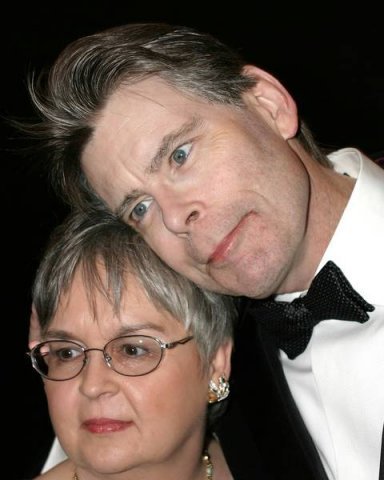
Steven King met his wife Tabitha when they were undergraduates at the University of Maine. As King sees it
“Writing is a lonely job. Having someone who believes in you makes a lot of difference. They don’t have to make speeches. Just believing is usually enough”(74).
In addition to being his life partner and “ideal reader,” Tabitha was also responsible for the major break of King’s career when she rescued the first draft of the novel Carrie from a wastebasket and convinced him to finish the story:
Tabby had the pages. She’d spied them while emptying my wastebasket, had shaken the cigarette ashes off the crumpled balls of paper, smoothed them out, and sat down to read them. She wanted me to go on with it, she said. She wanted to know the rest of the story” (77).
The rest, as they say, is publishing History.
Love literally saved King’s life when his wife and children decided they could no longer tolerate his ferocious addictions. So they staged an intervention wherein Tabby unloaded:
a trashbag full of stuff from my office out on the rug: beercans, cigarette butts, cocaine in gram bottles and cocaine in plastic Baggies, coke spoons caked with snot and blood, Valium, Xanax, bottles of Robitussin cough syrup and NyQuil cold medicine, even bottles of mouthwash (97).
King’s stubbornly succumbed only when the mother of his children laid down the law: “Tabby said I had my choice: I could get help at the rehab or I could get the hell out of the house” (97).
The bottle (and other addictions) has done damage to an extremely high percentage of American writers. But King recognizes that “Life isn’t a support-system for art. It’s the other way around” (101). King wisely (another superfluous adverb) refutiates what he calls the Hemingway Defense, which some employ in order to justify the ways if the dipsomaniacal scrivener:
I am a very sensitive fellow, but I am also a man, and real men don’t give into their sensitivities. Only sissy-men do that. Therefore I drink. How else can I face the existential horror of it all and continue to work? Besides, come on, I can handle it. A real man always can (94).
(As usual, I left out so much. Particularly the author’s witty and clever musings on the craft of writing which alone are worth the price of admission.)
I’ll leave the last word to Mr. King, describing his feelings for Tabitha:
“Our marriage has outlasted all of the world’s leaders except Castro, and if we keep talking, arguing, making love, and dancing to the Romones–gabba-gabba-hey–it’ll probably keep working” (61).
Holden Caulfield endeared himself to the anti-socializers of all ages because he went right into the lion’s cage–all those phonies!–without liking anything of what he relentlessly described.
—Alfred Kazin‘s America (250)
As Erik Erikson noted, adolescents are often deeply concerned with notions of identity. This preoccupation commonly manifests itself in decisions teens make regarding music and fashion. For many young people, life is a constant struggle to remain ahead of the curve, rejecting bands and fashions they have discovered as soon as they become popular. Authenticity is a key component of this phenomenon, as adolescents of all ages feel so betrayed when a band that they like “sells out” by making any sort of changes in their music or overall presentation which might enable them to attract a larger audience. (Death or glory becomes just another story)
The adolescent quest for authenticity has no greater (and certainly no more enduring) spokesman than Holden Caulfield, J.D. Salinger’s incessantly complaining hero from The Catcher in the Rye. For generations, this clarion castigator of the Great Phoniness of it All has attracted “armies of young people who gratefully see themselves in The Catcher in the Rye” (Kazin 248). What often goes unheeded by Caulfield’s admirers (though certainly not by Caulfield himself) is the fact that he is just as dishonest and insincere as all the phonies he admonishes throughout his brief sojourn back to the mean streets of Manhattan.
For the soon-to-be-institutionalized Holden Caulfield, the game of life has been intentionally rigged against him:
Game, my ass. Some game. If you get on the side where all the hot-shots are, then it’s a game all right–I’ll admit that. But if you get on the other side, where there aren’t any hot-shots, then what’s a game about it? Nothing. No game (12-13).
This is a peculiar outlook for someone as wellborn as Caulfield. Most of his contemporaries would consider Holden Caulfield–with his wealthy parents who send him to the finest schools and supply him with ample spending money–to be one of the hot-shots. Caulfield’s acute egocentrism inhibits him from stepping outside of his rather comfortable situation long enough to ponder how relatively fortunate he is.
For almost three-hundred pages, this whining, self-absorbed narcissist goes on and on about everyone else’s problems. (Nothing is ever really Holden’s fault. He can’t help the fact that the world is overpopulated with a bunch of goddam phonies).
One of the biggest reasons I left Elkton Hills was because I was surrounded by phonies….For instance, they had this headmaster, Mr. Haas, that was one of the phoniest bastards I ever saw in my life (19).
And later when his kid sister admonishes Holden for dropping out of yet another school, he whines:
“Oh, God, Phoebe, don’t ask me that. I’m sick of everybody asking me that,” I said. “A million reasons why. It was one of the worst schools I ever went to. It was full of phonies” (217).
But the most interesting thing about Caulfield is that he is quick to point out that he’s just as much of a hypocrite as anyone. (Oddly, this doesn’t seem to deter the legions of young people who find him so compelling.)
Caulfield freely admits that he’s “the most terrific liar you ever saw in your life” (22). When a potential date asks Holden if he is “from Princeton,” he replies, “Well, approximately” (84). And when a nice old lady tells him that Pencey is a “very good school,” he declines to demur. “Even if I’d wanted to, I wouldn’t have had the strength to straighten her out” (260). So there’s one loophole: it’s only ok to be a hypocrite when your name is Holden Caulfield
When Holden strikes up a conversation on a train with a woman he describes as “about forty or forty-five, but she was very good-looking,” he decides against telling her the truth about her son Ernie, “Who was doubtless the biggest bastard that ever went to Pencey, in the whole crumby history of the school” (70, 71). Caulfield freely admits that he “really started chucking the old crap around”( 73). His excuse for this supreme act of phoniness: “The thing is, though, I liked old Murrow’s mother.” (72).
But Caulfield is less honest with himself when he makes up a lie to get away from the almost preternaturally annoying Lillian and her “Navy guy” boyfriend: “After I told her I had to meet someone, I didn’t have any goddam choice except to [leave]…People are always ruining it for you” (114).
But nobody forced Caulfield to say he “had to meet someone.” It was merely the most expedient way to rid himself of unwanted company. He could have simply told the couple the truth, that he didn’t want to sit with them, but that would have been unkind. So he chooses to blame them for the fact that he is just as phony as anyone else in the story.
But I don’t find Caulfield’s hypocrisy nearly so annoying as his perpetual complaining. (I can hear you thinking, “Relax, he’s just a fictional character” or “Don’t you realize that the dude is in a mental hospital?”) Fictional or otherwise, I have a far greater tolerance for guys who choose a life of quiet desperation than those who opt for the whimpering variety. This is probably because I was raised to believe that men who complain too much just aren’t Scandinavian enough.
The “Oriental Mind”: E. M. Forster’s Fatuous
Caricatures of Indians in A Passage to India
Somehow, E. M. Forster, who detested imperialism, falls into this trap. The Indian characters in A Passage to India are all exotic. They are constitutionally incapable of acting like mature, honest and rational creatures. Dr. Aziz, the most sympathetic and well-developed of Forster’s Indians, is unable to appreciate the value of honesty. On the day of the incident in the Marabar caves he tells “a great many lies.” (175) He does not lie with malicious intent, he simply comes from a culture which puts no premium on honesty. He is, therefore, someone who has “no sense of evidence.” (302) Deeds which would be described as evidence of hypocrisy when performed by an Englishman are written off as the result of a mysterious culture so foreign as to defy any type of human universalism. Without a hint of irony the narrator declares of the Indians: “What they said and what they felt were…seldom the same.” (120) Aziz is not being a snoop when he reads Fielding’s mail because “The sanctity of private correspondence had never been ratified in the East” (344) .
Yet there is no question that Forster personally preferred the company of Indians to Anglo-Indians. In fact, he could hardly contain his contempt for the latter. When accused of being unfair to the Anglo-Indians Forster responded, “how can I ever like them when I happen to like the Indians and they don’t” (Das 14). With the exception of Fielding, none of the British in the novel could be described as sympathetic characters, and Fielding utterly rejects the Anglo-Indian creed. Many of the Anglo-Indians in A Passage to India are well-rounded, but the colonists represent the most wretched traits of the English temperament. As Benita Parry observes, “by temperament and choice the Anglo-Indians are outsiders, hostile to India whether it be mosques, cave or temple, participating in none, understanding none, resenting all” (Parry, Delusions, 279).
In his efforts to portray the Indians as morally superior to their colonists, Forster unwittingly practices Orientalism by creating characters whose thinking and motivation are alien from the Anglo-Indians. By imagining India as a people and a nation which might represent the antithesis of the cold-hearted, hypocritical, rapacious Anglo-Indians Forster inadvertently creates natives who, at best, can only be seen as half human. Ironically, in this attempt to “humanize” the Indians vis-a-vis their conquerors, Forster has truncated their humanity. Forster’s tendency to oversimplify his Indian characters is also a function of the philosophical struggle which permeates all of his fiction–the quest to find transcendence without God (a monumentally frustrating aspiration). Abdul R. JanMohamed observes:
The metaphysical preoccupation of A Passage to India is a culmination of problems that Forster had been examining throughout his work, and his decision to cast his concerns in terms of Indian philosophy is innocent and logical. But the narrative decision to turn India into a metaphysical protagonist inherently antithetical to Western liberal humanism probably stems from larger cultural differences, the machinery of which is similar to that of the manichean allegory (JanMohamed 96).
As Forster, the renowned humanist, attempts to make his Indians more sympathetic than their evil colonizers, he diminishes them into hideous caricatures. There are instances when it would be difficult to discern his depictions of Indians from those of an overtly racist apologist for Imperialism such as Kipling. Forster’s Indians are not merely prone to mysticism, but incapable of rational thought. Even Aziz, a man of science educated in the Western tradition, is unable to judge his friend Fielding rationally. This is because “(S)uspicion in the Oriental is a sort of malignant tumor, a mental malady, that makes him self-conscious and unfriendly suddenly; he trusts and mistrusts at the same time in a way that the Westerner cannot comprehend” (311). Why must suspicion, or, for that matter, any other normal human emotion, manifest itself differently in the person of an Indian than it would in an Englishman? The passage suggests that this difference in processing emotions is somehow racially based.
We would expect a westernized Indian like Aziz to be torn between two cultures. But he is not nearly so complex; he is western only in manner. His secularism is merely an affectation and therefore no match for an ancient instinctual mysticism. When his children exhibit idolatrous behavior we see how superficial his rationalism is: “He didn’t want them to grow up superstitious, so he rebuked them, and they answered yes, father, for they were well brought up, but, like himself, they were impervious to argument” (332).
But Aziz is not simply an irrational mystic–he is a childlike, fatuous creature who would certainly qualify for several of Benita Parry’s synonyms for exotic. By constantly fretting about whether his guests are well cared for he confirms the narrator’s conclusion that “(L)ike most Orientals, Aziz overrated hospitality, mistaking it for intimacy, and not seeing that it was tainted with the sense of possession.” (157) So, despite substantial westernization, Aziz, as a representative of his race, is constitutionally incapable of understanding something that would be obvious to any mature Westerner. Further evidence of his puerility is demonstrated when, in response to the death of Mrs. Moore “he wept like a child and ordered his three children to weep also.” (290) Aziz is unable to handle his emotions in a manly way, the way Forster’s alter ego Fielding would. When Fielding tries to speak intimately with Aziz about the strain in their relationship, he terminates the conversation with the ludicrous declaration “I say, shall we go pour water on to Mohammed Latif’s face. He is so funny when this is done to him” (279).
Dr. Aziz, whose behavior hovers between immaturity foolishness, is someone an intelligent reader might imagine to exist. Godbole, on the other hand, is a crepuscular creation who personifies a contempt for Hinduism which Forster made no effort to conceal. Forster’s letters regarding the Gokul Ashtami Festival are “extremely condescending” (Crews 153).
I cannot see the point in this, or rather in what it differs from ordinary mundane intoxication. I suppose that if you believe your drunkenness proceeds from God it becomes more enjoyable….I don’t think I can describe it better than this, and it is difficult to make vivid what seems so fatuous. (Hill, 160-61).
If Forster means to present India as a “metaphysical protagonist,” as JanMohamed argues, then Dr. Aziz and Dr. Godbole obviously represent the relative regard Forster had for their respective faiths. In contrast to his disdainful reaction to Hinduism, Forster was “aesthetically gratified by a religion that is not grossly anthropomorphic” (Crews 152). Indeed, his frustration with the confusion and inconsistency of Hinduism heightened his appreciation for the moral absolutism of a monotheistic religion.
…just as I thought nothing could be more beautiful a muezzin with a most glorious voice gave the evening call of prayer from a mosque. “There is no God but God.” I do like Islam, though I have come through hinduism to discover it. After all the mess and profusion and confusion Gokul Ashtami, where nothing ever stopped or need ever have begun, it was like standing on a mountain. (Hill, 193)
As the living embodiment of this “mess and profusion and confusion,” Dr. Godbole at best can only be described as a hideous caricature of a Hindu. He is a rambling mass of riddles and non sequiturs who frustrates Fielding by arguing that all people are equally responsible for whatever took place at the Marabar Caves. In contrast to Aziz who has “no sense of evidence” Godbole has no conception of reality. Nothing Godbole says is of value to the Westerner because he “had never been known to tell anyone anything.” (342) His pointless verbosity which never “stopped or need have ever begun” ridicules the philosophical underpinnings of Hinduism. Forster is not restrained in his mockery of Hinduism, as illustrated by the comment, “Godbole’s conversations frequently culminated in a cow.” (198)
While in India E. M. Forster continued to struggle to make meaning out of his life. This endeavor was complicated by a condition which is the antithesis of invincible ignorance. An inveterate secularist, Forster nonetheless yearned for some type of spiritual union. He was able to find some comfort in his personal relationships with individual Indians, but his personal Passage to India was frustrated by the unfortunate reality that England and India (and therefore, Englishmen and Indians) are not polar opposites.
By some strange alchemy of literature, Forester’s art is not damaged by this confusion. One might even argue that he achieves aesthetic harmony by oversimplifying his Indians. (A similar point can be made regarding his female creations.) However, that which is artistically appealing can be socially disastrous. By degrading a people who had been abused and exploited by his countrymen for centuries, Forster exposes another “peril of humanism.” Art cannot be justified merely for its own sake.
by Richard W. Bray
Works Cited
Crews, Frederick. The Perils of Humanism. Princeton: Princeton
U P, 1962.
Das, G.K. “`A Passage to India’: A Socio-historical Study,”
Passage to India: Essays in Interpretation. Ed. John
Beer. Totowa, NJ: Barnes & Noble, 1986. 1-15.
Forster, E.M. A Passage to India. 1924. San Diego: Harcourt,
Brace, 1984.
_____. The Hill of Devi. New York: Harcourt, Brace, 1953.
JanMohamed, Abdul R. “The Economy of Manichean Allegory: The
Function of Racial Difference in Colonial Literature,” Race,
Writing and Difference. Ed. Henry Louis Gates, Jr.
Chicago: U of Chicago P. 78-106.
Parry, Benita. Delusions and Discoveries Studies on India in the
British Imagination. Berkeley: U of California P, 1972.
_____. “The Politics of Representation in `A Passage to India'”, A Passage to India: Essays in Interpretation. Ed. John
Beer. Totowa, NJ: Barnes & Noble, 1986. 27-43.
Said, Edward. Orientalism. New York: Pantheon Books, 1978.
You want a better kind of future One that everyone can share You're not alone, we all could use it Stick around, we're nearly there –Paul McCartney, Coming Up
The better kind of future That everyone can share Seems a million miles away But I can taste it in the air
Call me stupid – call me crazy Cuz dreaming doesn't make it true But we can rewrite any story Every day is fresh and new
Shun the screeching noise Of the broken machine The world is enchanting And it's bursting with our dreams
I found out something, Baby The world already knew I found out something, Baby There's no one else like you Girl when I saw you It fell into place Everything's as clear As the smile on your face
Trimming my sails And dropping my oars Turning up my music And my metaphors
Girl when I saw you It fell into place Everything's as clear As the smile on your face
Been nursing my wounds Since my last rodeo I'm ready for a tumble But I ain't letting go
Girl when I saw you It fell into place Everything's as clear As the smile on your face