The spirit of the trees comes out at night 

December 20, 2025
The universe is charged and wondrous
Feel the force that floats among us
Resist the anger hate and greed
Only take the love you need

The spirit of the trees comes out at night
Dogs and children see the hidden light


Dynasties will rise and fall
Nothing's written on the wall
Seeking truth out day by day
We stagger on our wanting way

The spirit of the trees comes out at night
Dogs and children see the hidden light


Every breath is blessed and free
Share the joy and dignity
Love and kindness never cease
Live with hope and work for peace

The spirit of the trees comes out at night
Dogs and children see the hidden light


by Richard W. Bray

Frazzle Pazzle

December 6, 2025

Whackadoodle 
Walk your poodle
Eat a noodle
With some strudel

Whoopsie daisy
Love your crazy
Loopy lazy
Doesn't faze me

Hunky dory
Drive your lorry
Sing a story
Don't ignore me

Under over
Four-leaf clover
Cliffs of Dover
Play with Rover

Prince and pauper
Lemon dropper
Happy hopper
Never stop her

Razzle dazzle
Frazzle pazzle

Words unravel
Happy travels

by Richard W. Bray

Attention is the air I breathe

November 15, 2025
No memory of having starred
Atones for later disregard,
Or keeps the end from being hard.

Robert Frost

You're the water
I'm Narcissus
You're the source
Of all my wishes
When the pool
Begins to dry
That's when I
Begin to die

Everybody, look at me
Attention is the air I breathe


When my latest
Book won't sell
It's like the deepest
Ring of hell
People won't
Return my calls
Like Icarus
I fall and fall

Everybody, look at me
Attention is the air I breathe


I used to be
Among the guys
That everyone
Would recognize
Invisible
And seized with pain
As seasons turn
And fashions change

Everybody, look at me
Attention is the air I breathe


by Richard W. Bray

Rimsy Rosey Dipsy Dapsy Dozey

October 3, 2025


Rimsy
Rosey
Dipsy dapsy dozey

Brizzy
Brayzee
People think I'm crazy

Hipsy
Hopsy
Flipsy flopsy frozey

Dimby
Damby
You really understand me

Ohzee
Nosey
Tipsy tapsy toesy

Freedoo
Weedoo
I really wanna see you

Bimsy
Bamsy
Boomsy woomsy toomsy

Meedope
Beedope
You sunshine me with hope

Richard W. Bray

can we listen? can we talk?

September 17, 2025


can we listen?
can we talk?
can we walk around the block?
can we solve our problems
with words instead of rocks?


can we listen?
can we talk?
are we able to be free?
can we plant a garden
without a Poison Tree?

can we listen?
can we talk?
can we ever be certain
it's not a big lie
not the man behind the curtain?

can we listen?
can we talk?
can we walk around the block?
can a man have an opinion
without losing his job
?

can we listen?
can we talk?
frustration festers below
keep it out in the sun
and let your flower grow

by Richard W. Bray

All of the suffering the world could ever know

May 10, 2025

When life is lost to violence 
It diminishes the world
What looks back in the mirror
When you murder boys and girls?

Accumulated Silence
In the face of a Crime
Echoes through the Galaxy
Beyond all sense of Time

All of the suffering
The world could ever know
Exists inside the body
Of a child who will not grow

by Richard W. Bray

Dance because you’re not a dancer

January 25, 2025


I only have one thing to say
What are you gonna do today?

It's not a quiz
There's no wrong answer
Dance because you're not a dancer

Cook some eggs
Take a shower
Photograph the Eiffel Tower

Find a game
You like to play
Lollygag your time away

Have a beverage
With a friend
Read a novel to the end

Walk your dog
Smell some flowers
Sit around and talk for hours

Meet a deadline
With your team
Binge a show about a queen

Wax a roadster
Hike the hills
Debate the merits of free will

It's not about what others do
Do the thing that's right for you


by Richard W. Bray

A notion and a daydream

January 17, 2025

The world is a river
It sings to me in rhyme
Tiny specks of matter
Straddle space and time

The rhythm of the ocean
Berries on the vine
The universe in motion
Your body talks to mine


Vagrant spirits jingle
Clad in sundry hue
Everything that ever was
Lives inside of you

The rhythm of the ocean
Berries on the vine
The universe in motion
Your body talks to mine


A smile and a sunbeam
A moment and a prayer
A notion and a daydream
Your love is everywhere

The rhythm of the ocean
Berries on the vine
The universe in motion
Your body talks to mine


by Richard W. Bray

Fiends and Fury

November 29, 2024

We will find no comfort until the night melts away; until the fury of the night rots out its fire.
-Djuna Barnes, Watchman, What of the Night?

Get home before the sun goes down
This ain't no ordinary town
Cool your mind – keep out of sight
Don't bestir the doom of night

Hairy hounds released from hell
Zombies under wicked spells
Fiends and fury from The Fall
Moloch Gorgon Satan Baal

Tell-Tale Heart – The Witch of Coos
Now it's time to pay your dues
Spirits demons lunatics
I hope your house is made of bricks

Stay inside and lock the door
Don't look outside – don't ask wherefore
Calm your heart and clear your head
Keep a lantern by your bed

by Richard W. Bray

by loving you

February 15, 2024

nothing is only one thing
i drink up the rainbow you sing

no one else will understand
the way we talk by holding hands

we have forever to find out
what this thing is all about

there's only one thing i can do
love the world by loving you


by Richard W. Bray


love song to the world

December 25, 2023

I'm just a singer with some words
I rearrange the ones I heard

Town to town with my guitar
Nightclubs, honky tonks and bars

Love and longing, greed and pride
Dreams and jealousy collide

Sing it happy, sing it blue
Tell a tale and make it true

Let's sing a love song to the world
Full of happy boys and girls

Can't stop the misery with a song
But it sure beats dropping bombs


by Richard W. Bray

Distinctive Makes a Difference

July 10, 2022

ibr-30192

A Thousand Songs in My Pocket

I remember thinking I was the coolest guy in the world when I took my iPod to the gym. It’s funny because I’m not an early adopter and I’ve never really been into gadgets. But I got my first iPod about a year after they came out, and I can’t think of anything I ever bought that made me feel so good. 

Effective advertising tells people how your product is going to solve their problem. My iPod solved a problem I didn’t even know I had. I needed a device smaller than a Sony Diskman that could hold my entire CD collection. And there it was. 

“A thousand songs in your pocket” was the perfect slogan, even though an iPod actually holds a lot more songs than that. A thousand songs on one device sounded pretty miraculous at the time, and the slogan flows really well. (Like all forms of writing, copywriting is essentially poetry.)

Selling Joy

Byron Sharp* notes that the iPod advertising campaign “did not mention the term ‘MP3 player.’” In fact, “their advertising didn’t talk about this new technology at all.” 

Instead of selling new technology, Apple was selling joy. As Sharp explains, the iPod advertising campaign 

always employed the same silhouette figures against colourful backgrounds and these figures were always joyfully dancing (while listening to their iPods) and the white headphones were always obvious. Technical details were left to sales people and web sites to explain.

Carbonated Cough Syrup

red_bull_1525292174

A lot of people are willing to pay three times as much for an 8-ounce can of Red Bull than they would for a 12-ounce can of soda. But when it comes to ingredients, the only real difference is that Red Bull has a lot more caffeine and a smidgen of Vitamin B. 

So how did Red Bull convince so many people to pay so much more for a beverage that tastes like carbonated cough syrup?

The obvious is answer marketing, which is the art of convincing people to buy things. One of the most effective ways to convince people to buy things is by appealing to their internal narrative, which is the story everyone tells themself about who they are.

According to Seth Godin**, “our actions are primarily driven by one question: ‘Do people like me like things like this?’” If you align your product with the customer’s internal narrative, you can make oodles of money.

To align their product with the internal narratives of millions of customers, Red Bull spends billions of dollars in advertising every year, creating the perception that people who drink Red Bull are:

  • Young
  • Healthy
  • Athletic
  • Male
  • Carefree
  • Adventurous

Different Can, Different Product

People drink Red Bull to get amped up on caffeine. But Red Bull had to convince customers that they weren’t just buying a new type of hyper-caffeinated soda. Instead, Red Bull sells people a whole new lifestyle.

By making the can so distinctive, Red Bull creates the perception that it’s a totally different type of product. 

Rory Sutherland*** of Ogilvy & Mather Group explains: 

How can Red Bull charge £1.50 a can when Coke only charge 50p? Weirdly you make the can smaller. Suddenly people think this is a different category of drink for which different price points apply. If the can had been the same size, I am not sure they could have charged £1.50. Logic won’t tell you that and research won’t tell you, because in research we all pretend we are maximisers and hyper-rational.

by Richard W. Bray

*How Brands Grow, p142

**This Is Marketing, p104

***Quoted in The Choice Factory by Richard Shotten, p67

a man-hating woman and a woman-hating man

September 8, 2021
a man-hating woman
and a woman-hating man
raised a couple kids
in a pool of quicksand

daughter got away
and overcome the sad
angry little mama's boy
blames everything on dad

a man-hating woman 
and a woman-hating man

smells and yells and warning bells
forty years of rage
and they never even knew
they built their own cage

by Richard W. Bray

so many things I wanna tell you

August 28, 2021

So many things I wanna tell you
Every single day
So Many things I wanna tell you
But you went away
Parting is all we know of heaven,
And all we need of hell.Emily Dickinson
I heard a funny story
I saw a good film
So many things I wanna tell you
Things to make you smile
So many things I wanna tell you
Every single day
So many things I wanna tell you
But you went away

I had a bad day
I wanted to cry
So many things I wanna tell you
To help me get by
So many things I wanna tell you
Every single day
So many things I wanna tell you
But you went away

I pulled myself together
Dug out of my ditch
So many things I wanna tell you
Life is such a bitch
So many things I wanna tell you
Every single day
So many things I wanna tell you
But you went away

Everything that happened
Was better with you
So many things I wanna tell you
But there’s nothing I can do
So many things I wanna tell you
Every single day
So many things I wanna tell you
But you went away

by Richard W. Bray

the love of a child

July 17, 2021

unruly, rambunctious, exhausting and wild
there’s no greater love than the love of a child

boundless, colossal, extending for miles
there is no restraining the love of a child

needy and hopeful, touching and mild
the heaviest burden, the love of a child

investing your marrow, refunded in smiles
there’s no greater love than the love of a child

by Richard W. Bray

The Sparkle in My Dreams

June 6, 2021

Poppies
I'm at the tip of the top
There's a pep in my step
I got the hippity hop
Winning all of my bets

I’m hanging on a hope 
Met a special sort of friend
I’m such a silly old dope
Am I falling again?

Gonna get a new start
I’m so happy I could scream
For the bounce in my heart
And the sparkle in my dreams

I’m hanging on a hope 
Met a special sort of friend
I’m such a silly old dope
Am I falling again?

By Richard W. Bray

I can fix him

August 30, 2019


And once they have you, safe and sound,
They want to change you all around.

Dorothy Parker

I can change him
I can fix him
Make him do
Just what I say
I can bend him
I can mold him
Like a big ole
Ball of clay

I’ll carve him up
Like a banana
He’ll be my
Special toy
If you want
To own a man
Treat him like
A little boy

Men are helpless
Men are silly
Men are stupid
Men are weak
I can guide him
I can dress him
I can change
The way he speaks

He don’t know
No better
He’s a senseless
Waste of life
I’ll own the pockets
In his pants
I’ll own his nuts
I’ll be his wife

I’ll put his ass to work
I’ll never let him slip
I’m doing him a favor
Just watch me crack my whip

by Richard W. Bray

ibble-snabble wibble-wabble wicka wacka woo

May 20, 2018

ibble-snabble wibble-wabble
wicka-wacka woo

I wanna be the man
Who gets to spend my life with you

Sometimes people say
That I don’t make a lot of sense
They say that I’m a stalker
Cuz I stand outside your fence

wimpa-wampa dubba-dampa
bimpy-bampy boo

I’ll be gone tomorrow
If you tell me to

Sometimes I get silly
But I’m serious as hell
Things you make me feel
Are impossible to tell

numble-namble bimble-bamble
limba-lamba loom

Tell me how your presence
Makes a million flowers bloom

No place in the universe
That I’d rather be
Waiting for an angel
Underneath a cherry tree

by Richard W. Bray

fifty-seven lies

May 19, 2018

It takes fifty-seven lies
Just to get you outta bed
Lies are like a fungus
That grows inside your head
You need a journal to keep track of
All the lies you ever said

Once upon a time
There was a girl who loved you true
Now there’s someone in the mirror
But you swear it isn’t you
The lovely thoughts you’re thinking
And those ugly things you do

Your heart is black and rancid
And you can’t erase the stain
You got booze and you got pills
To protect you from the pain
An umbrella in a hurricane
Won’t keep away the rain

Your body and your soul
Are in a nasty civil war
You just keep on doing
Crazy things you did before
There’s gonna come a time
When you can’t take it anymore

You choked to death on love
That you were too afraid to give
On your tombstone it will say
That you had too much pride to live
Some folks choose to die
When it’s too frightful to forgive

by Richard W. Bray

I took a step back and I took a look around

May 10, 2018

Trouble comes up on you
In a million different ways
The man who isn’t ready
Is the man who’s gonna pay

I took a step back
And I took a look around

I damped down the fire
And I gathered up the hounds

You never know what’s coming
So you gotta be wise
Gotta keep your balance
And open your eyes

I took a step back
And I took a look around

I kept myself frosty
While making the rounds

Knew a lot of good men
Who made a mistake
Didn’t see what was coming
Till it was too late

I took a step back
And I took a look around

You can’t ignore trouble
When it’s gaining ground

by Richard W. Bray

Machine

December 27, 2017

They wanna count you, classify you
Stamp a number on your head
Aggravate you, allocate you
Every day until you’re dead

They sanitize and organize you
Till you fit in the machine
Hypnotize you, terrorize you
Till you’re lonely scared and mean

Indoctrinate you, fill-with-hate you
And nourish you with lies
Calibrate you, automate you
And march you off to die

by Richard W. Bray

The deepest darkest dirty you

December 16, 2017

The confession became one of the West’s most highly valued techniques for producing truth. We have since become a singularly confessing society. The confession has spread its effects far and wide. It plays a part in justice, medicine, education, family relationships, and love relations, in the most ordinary affairs of everyday life, and in the most solemn rites; one confesses one’s crimes, one’s sins, one’s thoughts and desires, one’s illnesses and troubles; one goes about telling, with greatest precision, whatever is most difficult to tell. One confesses in public and private, to one’s parents, one’s educators, one’s doctor, to those one loves; one admits to oneself, in pleasure and in pain, things that would be impossible to tell anyone else, the things people write books about. One confesses — or is forced to confess.
Michel Foucault, The History of Sexuality, Volume One

We have the right to know what’s true
The deepest darkest dirty you
And all those nasty things you do

Every word you ever said
Every thought that’s in your head
And everything you do in bed

We’re everywhere — you won’t get far
You have to tell us who you are
The ugly, wicked, and bizarre

We goad, we taunt, we tease, we hound
We build you up — we tear you down
We have the right to watch you drown

We pillage hearts and ransack souls
We seek salvation in your skull
And pray your blood will make us whole

by Richard W. Bray

Abelard and Héloise are Dead

December 7, 2016

zzabelard

Abelard and Héloise are dead
It doesn’t really matter what they said
Get your pretty face out of that book
Nature got a need for us to cook

Juliet and Romeo ain’t real
We can vanquish love like it’s a meal
Ravish and devour me till dawn
Live the life we got until it’s gone

Helena and Paris stole away
That’s what you and me should do today
Spirit me away in dark of night
Enchant me in delirious delight

Mark Antony and Cleo had their time
So we should make the most of yours and mine
Living blood is scorching through our veins
Let’s drink each other up just like Champagne

by Richard W. Bray

Sweetest Nut

December 2, 2016

zzheartlock

Sweetest nut hath sourest rind;
Such a nut is Rosalind.

Touchstone, from As You Like It by William Shakespeare

Do you have a secret
That you’re too afraid to tell?
Are you delicate and tender
Underneath your heavy shell?

Have you suffered shocks and stings?
Did you build a barricade?
Did you turn those slings and arrows
To a daunting palisade?

Can you let me in your fortress?
Is it big enough for two?
Can we fortify each other?
Or is your castle just for you?

by Richard W. Bray

Walt Whitman is the Poet We Deserve in the Age of Trump, but Emily Dickinson Reigns

May 28, 2016

wwemily

There are several reasons why Emily Dickinson does not inhabit her rightful position as the greatest writer our culture has yet produced—she sedulously avoided publicity in her own lifetime (“How dreary – to be – Somebody!”); a comprehensive scholarly edition of her poetry was not compiled until almost seventy years after her death (long after the cannon had been established); she is often celebrated for her winsome poems that find their way into the high school textbooks like “I Shall Not Live in Vain” which represent only a tiny fraction of her output; she wrote short poems. (There is an absurd bias among critics in favor of “epic” poetry). Finally, we cannot overlook the obvious fact that Emily Dickinson was a woman and most of our cannon-selectors have been men, many of whom no doubt shared Nathaniel Hawthorne’s contempt for that “mob of scribbling women”

Moreover, elevating Emily Dickinson to her rightful place atop the pantheon of American poets would call into question the singular supremacy of Walt Whitman. Whitman, who sees himself as the great champion of democracy, claims to “contain multitudes” in his writing, but he merely embodies mountains of self-regard:

If I worship one thing more than another it shall be the spread of
my own body,
or any part of it.

It is his intrepid endeavor to displace God with Self rather than the actual quality of his work which makes Whitman the darling so many humanist critics. As Alfred Kazin notes in God and the American Writer, for Whitman

There is no one supreme Deity, no hierarchy, no heaven. It is on earth and nowhere else that we live out the divine in ourselves to which we are called. We are as gods when we recognize all things as one. Spiritually, we are sovereign—entirely—thanks to our culture of freedom. As we dismiss whatever offends our own souls, so we can trust our own souls for knowledge of the infinite.

Like the self-deluded subjects who claim to see the Emperor’s New Clothes (and like the editors at Social Text who published Alan Sokal’s intentional gibberish) few critics today are able to discern this manifest truth—Walt Whitman is an overblown, narcissistic, self-worshipping buffoon. (“In all people I see myself.”) Of course, in so many ways, Whitman’s solipsism makes him precisely the national icon we deserve, particularly in the Age of Trump. (It is not at all surprising that Bill Clinton gave his girlfriend a copy of a book by Whitman, although we might have expected him to choose “Song of Myself” rather than Leaves of Grass.)

Walt Whitman’s poetry delivers much music but very little sense, irony, or wit. Despite his gargantuan reputation, the words of Whitman taken together hardly amount to a single metaphorical dead white blood cell inside the metaphorical pustule existing inside the metaphorical pimple on Emily Dickinson’s glorious metaphorical backside. Dickinson proves again and again that she is capable of saying more in fewer than thirty syllables than Whitman ever gets across in page after page of his rambling jingle jangle.

One of the wonders of Emily Dickinson’s capacious mind is her ability to entertain opposing thoughts. As Richard Wilbur notes in “Sumptuous Destitution,” his splendid 1959 article on Emily Dickinson, she is “not a philosopher.” This is precisely why she can embrace paradox in a manner that would be difficult for a philosopher, thus expanding our understanding of our bizarre universe.

In “Faith Is a Fine Invention,” for example, Dickinson seems to ridicule the tendency to cling to faith in our modern age.

“Faith” is a fine invention
When Gentlemen can see–
But Microscopes are prudent
In an Emergency.

Note the irony of calling faith (rather than the microscope) an invention. And what is it exactly that a gentleman can see? Evidence of an invisible God, perhaps? But she is also lampooning those whose superstitious faith prevents them from seeing what wonders science reveals. One is reminded of Christian Scientists who would deny their children medical attention on religious grounds.

In “I Never Saw a Moor,” however, Dickinson defends faith entirely for its own sake. If you will pardon the tautology, she knows because she knows.

I never saw a moor;
I never saw the sea,
Yet know I how the heather looks
And what a billow be.
I never spoke with God,
Nor visited in heaven.
Yet certain am I of the spot
As if the checks were given.

Paradox is not a manifestation of reality; it is a consequence of the limitations of human perception. As Kurt Vonnegut notes in the novel Deadeye Dick, birth and death amount to the opening and closing of a “peephole.” Great poets enable us to slightly expand the boundaries of our peephole. That’s why my favorite philosophers are mostly poets.

by Richard W. Bray

she broke me so bad

April 15, 2016

wwwbroken man

She broke me so bad
I’m drinking beer for my brunch
And a bottle of whiskey
Is all I have for lunch

She broke me so bad
I fell apart and lost my job
I’m begging on the corner
I swindle and I rob

She broke me so bad
My anatomy stings
She got me seeing monsters
And hearing crazy things

She broke me so bad
My life is such a drag
Got a heart torn and tattered
Like a dirty old rag

I’m lost and I’m loaded
And I’m sick and I smell
I gave all my sweet lovin
To a demon from hell

by Richard W. Bray

Crazy Fools for Love

February 13, 2015

I had no time to hate, because
The grave would hinder me,
And life was not so ample I
Could finish enmity

Emily Dickinson

You can hate away your days
Disparaging the ways
Of the wicked

You can while away your time
Pondering the crimes
Of the sickest

You can multiply your spite
But it won’t make nothing right
For the wretched

And your dreams of retribution
Only cultivate pollution
In your heart

You might find more success
Fighting hate with tenderness
And compassion

Plant a flower in your heart
It’s the perfect place to start
Your garden

Hope will be our only tool
Let’s all be crazy fools
For love

by Richard W. Bray

Too Big for Our Own Good: Kurt Vonnegut on the Human Brain

February 8, 2015

So far the human episode has been a brief chapter in the story of life on Earth—about two hundred thousand years.  That’s not very long compared to the dung beetles who feed on rhinoceros droppings, which are the hearty descendants of bugs that were frolicking in dinosaur poop at least forty million years ago.  And sharks have been around for over 400 Million years.

Although it’s fun to fantasize about a time long ago when giant monsters roamed the earth, it’s much more painful to imagine a point in the future when Mother Nature says: “Time’s up, humans.  You had your chance, but you blew it.”   Indeed, as the poet Richard Wilbur notes, it’s almost impossible to imagine a future on this planet without us:

Nor shall you scare us with talk of the death of the race.
How should we dream of this place without us?—

The novel Galapagos by Kurt Vonnegut describes a future where evolution has altered humanity beyond recognition.  A million years hence, we have mutated into a furry, seal-like creature with flippers and a much smaller brain encased in a “streamlined skull.”  Our future progeny is no longer equipped to build skyscrapers or compose Beethoven’s Ninth Symphony.  And these new creatures exhibit an immense moral superiority over modern-day humans because they lack the intellectual and physical tools to harm one another on a grand scale.  Besides, “how could you ever hold somebody in bondage with nothing but your flippers and your mouth?”

According to the Ghost of Leon Trout, the narrator of Galapagos who witnesses the million-year transformation of our species, this reduction of endowment is all for the better because humans

back then had a brain weighing about three kilograms!  There was no end to the evil schemes that a thought machine that oversized couldn’t imagine and execute.

Trout’s Ghost concludes that the human brain “is much too big to be practical.”  A practical brain would never “divert” people from “the main business of life by the hobgoblins of opinion.” The main business of life, of course, is survival and procreation.  Yet by some freak of evolution, human beings are capable of so much more.

Trout’s Ghost laments how our “overelaborate nervous circuitry” is responsible “for the evils we [are] seeing or hearing about simply everywhere.”  Furthermore, such self-inflicted horrors as war, famine, slavery, and genocide are “as purely a product of oversized brains as Beethoven’s Ninth Symphony.”

Trout’s ghost confides that, “A million years later, I feel like apologizing for the human race.”  He also describes “the most diabolical aspect” of the oversized human brain:

They would tell their owners, in effect, “Here is a crazy thing we could actually do.”….And then, as though in trances, the people would really do it—have slaves fight each other to the death in the Colosseum, or burn people alive in the public square for holding opinions which were locally unpopular, or build factories whose only purpose was to kill people in industrial quantities, or to blow up whole cities, and on and on.”

Here’s another disadvantage to having too much brain power for our own good:

Big brains back then were not only capable of being cruel for the sake of cruelty.  They could also feel all sorts of pain to which lower animals were entirely insensitive.

Today the “mass of mankind” is “quietly desperate” because “the infernal computers inside their skulls [are] incapable of idleness.”  The constant din of thought inside our brains that people must bear is akin to having “Ghetto blasters inside our heads.” And there is

no shutting them down! Whether we had anything for them to do or not, they ran “All the time!  And were they ever loud!  Oh, God, were they ever loud.”

Like Brick in Tennessee in Williams’ “Cat on a Hot Tin Roof,” humanity craves to hear a “click in the head” which renders life “peaceful.” In Galapagos, Kurt Vonnegut suggests an evolutionary solution to the plight which ails us.  And perhaps it is the most plausible solution.  As Emily Dickinson notes

Narcotics cannot still the Tooth That nibbles at the soul

by Richard W. Bray

This Happy Now

January 20, 2015

Not Me and Max

Not Me and Max

As soon as Max sees me grab the leash, he goes into spasms of delight, jumping in the air and making little pirouettes. Joy. It’s not just for humans.

(I try not to say the word “walk” in front of Max unless I’m ready to take him for one. So in order not to tease him, I’ll say, “Maybe I’ll take Max for a ‘W-Word’ later this afternoon.”)

Like so many poets, Max is giddy for the natural world, and he cannot contain his enthusiasm for outside smells, sights, and sounds. And like Max, William Wordsworth began to cultivate his love of nature exploring “those few nooks to which my happy feet/ Were limited.”

Unlike so many human beings, however, Max is not overburdened by the demands of his quotidian existence. And I’m pretty sure he’s never given much thought to the meaning of life. It is therefore unlikely that Max could share with Mr. Wordsworth

That blessed mood
In which the burthen of the mystery,
In which the heavy and the weary weight
Of all this unintelligible world
Is lighten’d:—that serene and blessed mood,
In which affections gently lead us on,
Until, the breath of this corporeal frame,
And even the motion of our human blood
Almost suspended, we are laid asleep
In body, and become a living soul:
While with an eye made quiet by the power
Of harmony, and the deep power of joy,
We see into the things of life

But ecstasy also hurts. Wordsworth referred to such ecstatic moments as “spots of time.” Spots of time are often induced by nature, and as Sheldon W. Liebman explains, nature is “a domain in which the fundamental conditions of life are mixed, even paradoxical.” Ecstasy hurts because even in its thrall we realize that soon we will return to a world where

That time is past,
And all its aching joys are now no more,

Once we get beyond joy “And all its dizzy raptures” we are once again confined to “The still, sad music of humanity”

In the poem “Hamlen Brook,” Richard Wilbur calls this phenomenon “joy’s trick.” (Collected Poems 115).

Confronted with the immense beauty of the natural world, Wilbur laments his inability to “drink all this”

Joy’s trick is to supply
Dry lips with what can cool and slake,
Leaving them dumbstruck also with an ache
Nothing can satisfy.

For his part, Robert Frost argues that “Happiness Makes Up In Height For What It Lacks In Length” (Collected Poems 445).

There are many moments in Frost’s poetry when

We went from house to wood
For change of solitude. (445)

And the trick for human beings is to appreciate this happy now on its own terms. Frost explains in “Two Look at Two” (283).

‘This must be all.’ It was all. Still they stood,
A great wave from it going over them,
As if the earth in one unlooked-for favor
Had made them certain earth returned their love.

by Richard W. Bray

Resources for a Lesson Plan on Tautologies and Circular Reasoning

January 9, 2015

If it sounds country, man, that’s what it is; it’s a country song.

Kris Kristofferson

A tautology is a grammatical construct; circular reasoning is a logical fallacy. The two phenomena are related but not identical.

A tautology is a sentence in which the conclusion is equivalent to its premise. In other words, in a tautology, the predicate can be surmised by reading the subject.

Here are some examples of tautologies:

My mother’s brother is my uncle.

Father Brown is a priest.

It is what it is.

A circular argument occurs when someone affirms her position simply by restating it in different terms. In other words, circular reasoning is an argument where the conclusion depends upon or is equivalent to its premise.

In a circular argument:

X is true because of Y.

and

Y is true because of X.

A circular argument is similar in structure to a tautology, but a circular argument includes causal reasoning (because, therefore, for this reason, etc.).

Here are some examples of circular reasoning:

My mom is terrific because she is wonderful.

People do what Dave tells; therefore, he is a great leader.

I slumbered beyond my assigned wakeup time; that’s why I overslept.

Lesson Evaluation: Explain why the following examples are tautologies, circular arguments, or neither.

Chris Rock is a hilarious comedian because he makes people laugh.

A bartender is a guy who listens to people talk all day.

Freedom’s just another word for nothing left to lose.

Anthony is extremely strong due to his ability to bench press three hundred pounds.

If aliens didn’t create the pyramids then how come pyramids are the product of technology that didn’t exist on earth at that time?

Allen hasn’t had a drink in twenty-three years, but he isn’t really sober because he doesn’t go to AA meetings and he isn’t working the steps.

A man’s gotta do what a man’s gotta do.

They are who we thought they were.

If I could tell you, I would let you know.

I stopped eating meat in 1987; that’s what makes me a vegetarian.

by Richard W. Bray

An Honest Day’s Toil

September 11, 2014

am  dream

I grew up in a country
Where an honest day’s toil
Could earn a man a castle
Where the working man was royal
He could send his kids to college
They could elevate their lot
Everybody pitched in
Everybody had a shot

Every day working people
Are struggling to get by
On a smaller and smaller
Piece of the pie
Cuz sleazy politicians
And heartless corporations
Sold out the workers
And mortgaged off our nation

Every road that you drive
Every building that you see
Was made by working people
Like you and me
We need to stop trying
To build nations overseas
And start investing
In you and me

Every day working people
Are struggling to get by
On a smaller and smaller
Piece of the pie
Cuz sleazy politicians
And heartless corporations
Sold out the workers
And mortgaged off our nation

by Richard W. Bray

Things That Aren’t Childish

August 25, 2014

Sooner or later
You gotta grow up
Your body’s gonna do it
Like it or not
But there’s a whole
Bunch of things that
Shouldn’t be forgot:

Puppy dogs and rainbows
Summer afternoons
Lazy Sunday mornings
Ridiculous cartoons
Teddy Bears who listen
Family treks to the park
Silly laughs with friends
Playing soccer after dark
All your daddy’s hopes
Your grandmother’s love
Castles in the sand
Castles floating up above

Feed your happy wishes
And dream every day
These things are never childish
Don’t put them away

by Richard W. Bray

In the Dirty Grubby Grime

May 7, 2014

aaaimagesF5HIRP8O

In the dirty grubby grime
Is where I like to spend my time
Nothing feeds the living blood
Like sloppy teeming murky mud

I genuflect and praise and bless
The sullied sloppy sultry mess
A boggy swamp rejuvenates
The muck is where life germinates

Terrified of nature’s touch
Are folks who like to bathe too much
You’ll be inert and none the wiser
With too much soap and sanitizer

Deliver me from points pristine
The antiseptic and the clean
Spotless dreams cannot console
The barren sparkling stainless soul

by Richard W. Bray

Non-Apology Apology

April 17, 2014

bad manners

I ate your lunch, but don’t you see?
You left it right in front of me
I’m sorry that you’re feeling cross
I’m sorry but you’re not my boss

All my friends thought it was funny
When I dipped your phone in honey
I’m sorry you can’t take a joke
I’m sorry you’re a stodgy bloke

I’ll raise some hell and make a fuss
I’ll fart and belch and shout and cuss
I’m sorry if you think I’m rude
I’m sorry you’re a silly prude

As long as everyone is free
I’ll be the man I want to be
I’m sorry you’re hung up on rules
I’m sorry you were raised by fools

by Richard W. Bray

Compassion

February 17, 2014

roses-abstract

Being mean
Don’t make a man
So love your neighbor
As you can

Compassion
Don’t grow on trees
It lives or dies
In you and me

I’ll never know
What you been through
But I can try
And comfort you

Compassion
Don’t grow on trees
It lives or dies
In you and me

Don’t hate folks
For being frail
A hardened heart
Is like a jail

Compassion
Don’t grow on trees
It lives or dies
In you and me

Try to have
A humble heart
Be thankful if
You’re strong and smart

Compassion
Don’t grow on trees
It lives or dies
In you and me

It don’t make
Much sense to live
If we can’t
Comfort and forgive

Compassion
Don’t grow on trees
It lives or dies
In you and me

by Richard W. Bray

Of FANBOYS and Conjunctive Adverbs: How to Compose Compound Sentences

October 27, 2013

T-L-4953-FANBOYS-Co-Ordinating-Conjunctions-Display-Poster_ver_1 (1)
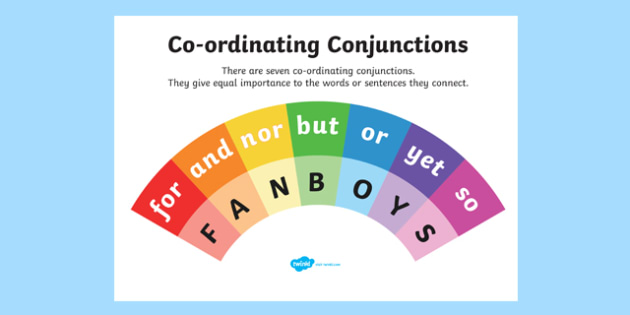
Let’s start with the FANBOYS (for, and, nor, but, or, yet, and so). I’ll use this handy, easy-to-remember mnemonic device instead of a more technical term because some people refer to them as conjunctions (as in, Conjunction-junction, what’s your function?), some call them coordinators, while others use the term conjunctive coordinators. (Oh, those wild and crazy linguists. In England they’re called philologists. Is that cool, or what?)

FANBOYS are used to combine two simple sentences into one compound sentence. You’ll be relieved to discover that compound sentences are much easier to punctuate than those pesky complex sentences. All you have to do is replace the period with a comma, insert the appropriate FANBOY, and change the first letter of the second sentence from uppercase to lowercase.

Here are some examples:

I want to go out. My girlfriend wants to stay home.

becomes

I want to go out, but my girlfriend wants to stay home

Don’t hurt me. I am just the piano player.

becomes

Don’t hurt me, for I am just the piano player.

(I know this sounds a little goofy, but when for is employed as a FANBOY, it means because.)

I worked very hard. I should get a good grade.

becomes

I worked very hard, so I should get a good grade.

I studied all night. I got a “D” on the test.

becomes

I studied all night, yet I got a “D” on the test.
(But and yet can be used interchangeably.)

I love pizza. My best friend owns a pizzeria.

becomes

I love pizza, and my best friend owns a pizzeria.

(A note on and: By my crude estimation, only about half of the high school English teachers in Los Angeles County enforce the comma rule for compound sentences using the word and. Moreover, the comma is unnecessary when combining two simple sentences with the same subject. Thus, the following sentence requires no comma: I’m going to go out and buy a car.)

The following words are conjunctive adverbs: accordingly, also, besides, consequently, conversely, finally, furthermore, hence, however, indeed, instead, likewise, meanwhile, moreover, nevertheless, next, nonetheless, otherwise, similarly, still, subsequently, then, therefore, and thus.

Now repeat after me three times: FANBOYS are NOT conjunctive adverbs and they must never be utilized as such. More on that in a future post.

Quick lesson on combining simple sentences with FANBOYS:

#1 Share the above examples of simple sentences combined into compound sentences with your students.

#2 Number off students into groups of three.

#3 Instruct each group to compose eight pairs of simple sentences and then combine them into four compound sentences. (4+8=12)

#4 When groups have completed this task, they will show their work to the teacher who will put an asterisk next to one of the complound sentences.

#5 Students will copy the compound sentences along with the two simple sentences from which it was combined on the board.

#6 Teacher will review the sentences on the board as a whole-class activity.

by Richard W. Bray

War is Money

October 13, 2013

war-money

War is money
Widows weep
Bombs and rockets
Don’t come cheap

War is money
Napalm glows
It also lights up
A portfolio

War is money
Children die
Oh, what comfort
Blood can buy

War is money
War is power
Should have listened
To Eisenhower

by Richard W. Bray

Rain

May 28, 2013

rain

You can’t lie away the pain
But you can hide it for a while
Whitewash covers up a stain
Like a fresh coat of denial

You can’t drink away the pain
It’s such a sad and silly goal
And if you don’t go insane
You might just wash away your soul

You can’t laugh away the pain
By insisting it’s not real
When your dreams go down the drain
Don’t pretend that you don’t feel

I can’t love away your pain
But I can help you through the day
We’ll walk together in the rain
It’s never gonna go away

Richard W. Bray

Ghosts of all my Lovely Sins: Some Thoughts on the Complete Poems of Dorothy Parker

June 9, 2012

Dorothy-Parker-1939

As Dorothy Parker once said
To her boyfriend, “Fare thee well”

Cole Porter Just One of Those Things

Years ago I was up late reading a poetry anthology when I came across a familiar passage from Wordsworth:

She lived unknown, and few could know
When Lucy ceased to be;
But she is in her grave, and oh,
The difference to me!

I put the book down and thought, “You poor, poor man.” I was briefly flooded with empathy for Lucy and her chronicler. And this sensation connected my life and my various heartaches and disappointments with the turbid ebb and flow of human misery. (Soon I remembered that the people about whom I was reading had been dead for over a century. I picked up my book and went on to the next poem.)

Reading The Complete Poems of Dorothy Parker, a women who “wore [her] heart like a wet, red stain,” I am reminded of the sage* who informs us that “Happiness is a sad song” (10).

Although I’m no stranger to heartache and self-pity, Mrs. Parker obviously possesses, to paraphrase Emily Dickinson, a heart not so airy as mine.

The sun’s gone dim, and
The moon’s turned black;
For I love him, and
He didn’t love back.
(151)

Just about every human being who has ever lived has had a similar experience. But how many of us could condense so much feeling into eighteen beautifully collocated metrical syllables?

(A note on Light Verse: Kurt Vonnegut complained that critics mistook Science Fiction for a urinal, and that’s how I feel about this dismissive term often applied to rhymed poetry which possesses a healthy meter. Even when, for example, Phyllis McGinley writes of serious topics like nuclear annihilation, critics belittle such poetry by classifying it as light verse. This is why I am heartened by the growing presence of poets such as Mrs. Parker and Ogden Nash in the anthologies.)

Of course, the poetry of Dottie Parker would be a dreary place were it not for the courage she demonstrates by climbing back on that horse no matter how many times it throws her.

Better be left by twenty dears
Than lie in a loveless bed;
Better a loaf that’s wet with tears
Than cold, unsalted bread
(134)

And the existential vivacity of the tender heart which continues to grab life by the horns for all its gusto is heroic indeed.

For contrition is hollow and wrathful,
And regret is no part of my plan,
And I think (if my memory’s faithful)
There was nothing more fun than a man!
(172)

Perhaps not coincidentally, the tenacity of Mrs. Parker’s amorousness is matched (if not bested) by the ferocity of her malevolence.

Then if friendships break and bend,
There’s little need to cry
The while I know that every foe
Is faithful till I die.
(70)

Dorothy Parker is a legendary hurler of insults
who penned several composites of enmity which she calls “hate poems.” Here are some of her more artful derisions:

(Serious Thinkers)
They talk about Humanity
As if they had just invented it;
(224)

(Artists)
They point out all the different colors in a sunset
As if they were trying to sell it to you;
(236)

(Free Verse)
They call it that
Because they have to give it away
(237)

(Writers)
They are always pulling manuscripts out of their pockets,
And asking you to tell them, honestly—is it too daring?
(237)

(Tragedians)
The Ones Who Made Shakespeare famous. (246)

(Psychoanalysts)
Where a Freud in need is a Freud indeed,
And we can all be Jung together
(263)

(Overwrought Dramaturgy)
Of the Play That Makes You Think—
Makes you think you should have gone to the movies.
(265)

(Married “Steppers-Out”)
They show you how tall Junior is with one hand,
And try to guess your weight with the other.
(359)

(Bohemians)
People Who Do Things exceed my endurance;
God, for a man who solicits insurance!
(120)

(Men)
They’d alter all that they admired.
They make me sick, they make me tired.
(73)

(Past boyfriends)
The lads I’ve met in Cupid’s deadlock
Were—shall we say—born out of wedlock.
(147)

*Schultz, Charles Happiness is a Warm Puppy

by Richard W. Bray

William Faulkner and the English Language

February 11, 2012

Carl_Van_Vechten_-_William_Faulkner

(Below are notes from a presentation I gave in graduate school.)

Question: Some people say they can’t understand your writing, even when they’ve read it two or three times. What approach would you suggest for them?

Faulkner: Read it four times.

—Interview with Jean Stein vanden Heuvel 1955 (Meriwether 250)

William Faulkner’s flamboyant use of language is a widely-discussed topic which includes a variety of subjects, including his use of part of speech, punctuation, long sentences, stream of consciousness, redundancy, visual imagery, metaphors, dialect, word clusters, coinages, paradox and poetics (particularly meter).

This presentation will cover some of these topics, particularly

1. Faulkner’s often playful use of parts of speech
2. The significance of sentence structure (in a historical perspective)
3. Word clusters (including redundancy)
4. Coinages (particularly with prefixes and suffixes)

Faulkner’s style is still controversial. Even those who acknowledge his greatness are often annoyed by it. According to Warren Beck:

No other contemporary American novelist of comparable stature has been as frequently or severely criticized for his style as William Faulkner. Yet he is a brilliantly original and versatile stylist. The condemnations of his way of writing have been in part just; all but the most idolatrous of Faulkner’s admirers must have wished he had blotted a thousand infelicities (142).

Placed in its historical context, Faulkner’s style can be seen as a stark contrast to the “muscular” or “masculine” style of prose utilized by many of his contemporaries, particularly Hemingway, Stevens and Cummings. During the fist part of the twentieth century, a lean style (labelled nominalism by Panthea Reid Broughton) was hailed for its commitment to Truth

Wallace Stevens’ dictum: Not Ideas about the Thing, but the Thing Itself

And Cummings and his entire generation seem to have developed an almost paranoid fear of the abstract phrase. (Broughton 12)

Earnest Hemingway, Faulkner’s obvious rival, argued that writing should strip the language clean, lay it bare down to the bone. (Broughton 14)

But nomalism has its limitations. According to Broughton,

Nominalism is reductionist first of all because it ignores the complexity of reality, the evasiveness of truth. It is grounded in the assumption that truth objectively knowable, that perception is entirely accurate (16).

Faulkner took the opposite approach. Because words are so inadequate to capture reality, Faulkner piles words upon words in order to depict a variety of images and ideas which might at least add up to a fragmented picture of reality.

Faulkner on Hemingway:

I thought that he found out early what he could do and he stayed inside of that. He never did try to get outside the boundary of what he really could do and risk failure. He did what he could do marvelously well, first rate, but to me that is not success but failure….failure to me is the best to try something you can’t do, because it’s too much (to hope for) but still try and fail, then try it again. That to me is success (Meriwether 88).

And, He did it fine, but he didn’t try for the impossible. (Slatoff 185)

So we can begin to understand the method in Faulkner’s madness by appreciating that he was trying for the impossible. He did this by experimenting with language and the convention of the novel in a variety of ways. One method was the use of paradox in the form of oxymoron. According to Walter J. Slatoff

The oxymoron, on the one hand, achieves a kind of order, definiteness, and coherence by virtue of the clear antithesis it involves. On the other, it moves towards disorder and incoherence by virtue of its qualities of irresolution and self-contradiction….Traditionally it has often been used to reflect desperately divided states of mind (Slatoff 177)

So Faulkner attempts to achieve clarity by means of depicting confusion. (That’s a paradox.)

Hightower’s face is at once gaunt and flabby
the church has a stern and formal fury
Singing from a church is a sound at once austere and rich, abject and proud
Joe Christmas’ feet move in a deliberate random manner
Armstid’s eye’s at once vague and intense
Abe Snopes’ homestead is a cluttered isolation
Eula Varner seems to exist in a teeming vacuum
Houston and the girl he is to marry: Up to this point their struggle, or all its deadly seriousness…had retained something of childhood, something both illogical and consistent, both reasonable and bizarre

Faulkner’s use of redundancy to clarify meaning is a practice which Edwin R. Hunter has labeled “word hunting.” This involves the author searching for the appropriate word not only in his mind, but on the page as well. Hunter has described eight different types of “word hunting” in the work of Faulkner. (130-132)

1. Questions the exactness of a word.
2. Comments openly about the rightness of a word.
3. Searches for a word only to come back to original.
4. Seeks openly for a word.
5. Records progress, step by step.
6. Corrects word on the spot.
7. Acquiesces in inexact word.
8. Sets down and repeats in.

Faulkner also uses the redundancy of adjective clusters to create a kind of depth in his depiction of reality. Hunter has painstakingly discovered 1416 examples of three-, four-, five-, six-, seven-, eight-, nine-, ten-, and even a thirteen-adjective clusters. (See chart).

Examples: (Hunter 136-139)

Three Adjectives–1009 examples
‘Pa stands over the bed, dangle-armed, humped, motionless
she advanced in identical and anonymous and deliberate wagons…
‘Houston, followed by the big, quiet regal dog’

Four-Adjectives –268 examples
the wealcolored, the strong pallid, Iowacorncolored hair
In the glare its eyes roll with soft, fleet, wild opaline fire

Five-adjective–84 (136)
the last old sapless indomitable unavanquished widow or maid had died’
the big rambling multigalleried multistoried steamboat-gothic hotel

Six-adjective–30 examples (136-7)
a lean, loose-jointed, cotton-socked, shrew, ruthless old man
with his little high hard round intractable canon-ball head

Seven-adjective–16 examples (137)
a brawling lean fierce mangy durable imperishable old lion

Eight-adjective–4 examples (137-8)
the youth fleeing, the forsaken aging yet indomitable betrothed perusing, abject, constant, undismayed, undeflectable, terrifying not in effect but in fidelity
“These may be nine or or even ten adjective clusters. One cannot be sure.”

Nine or more adjective
he approached, chop-striding, bull-chested, virile, in appearance impervious and indestructible, starred and exalted and, within this particular eye-range of Earth, supreme and omnipotent still

Faulkner also utilizes redundancy through a process which Hunter calls “Repeated Cluster Patterns” (139-40).

Examples:

a bell tinkled…high and clear and small

a belltinkled…to make that clear small sound

The little bell tinkled once, faint and clear and invisible

She just looked at me, serene and secret and chewing

She looked at me, chewing, her eyes black and unwinking and friendly

She stood in the road…her eyes still and black and unwinking

She looked at me, black and secret and friendly

We see a good indication of Faulkner’s playfulness in his uncommon use of parts of speech. One example of this is what Hunter calls Adjective Clusters.
Examples:

Stem Adverb Clusters (Hunter 152)

his uncle told it, rapid and condensed and succinct
He shook hands with him, Charles, quick and brief and hard too

-ly-ended Adverb Clusters (Hunter 152)

he was mentally and spiritually, and with only an occasional aberration, physically faithful to her
the group commander was listening…quietly and courteously and inattentively

Faulkner’s coinages are also often amusing and playful. One way he did this was by creating negatives by adding prefixes and suffixes to a variety of words. (Hunter 176-8)

Some examples of Faulkner’s wordplay from The Sound and The Fury

Parts of speech
Jason snuffled (68)

wind chill and raw (290)

anticked (297)

he loaded himself mountainously (268)

Coinages via prefixes and suffixes:

unimpatient (87)

peacefullest (174)

unsecret (177)

unhurriedly (288)

unmindful (297)

paintless (299)

Paradox:

clairvoyant yet obtuse (280)

Conclusion:

Maybe William Faulkner was greatest American novelist of the twentieth century; maybe he was an unreadable buffoon. What cannot be argued is that he continues to exert a tremendous influence upon the conventions of modern fiction.

Endnotes

Beck, Warren. William Faulkner’s Style, William Faulkner: Three Decades of Criticism

Ed. Frederick J. Hoffman and Olga W. Vickery. Lansing: Michigan State UP, 1960.

Broughton, Panthea Reid. William Faulkner: The Abstract and the Actual. Baton Rouge:

Louisiana State UP, 1974.

Faulkner, William. The Sound and the Fury New York: Random House, 1990.

Hunter, Edwin R. William Faulkner: Narrative Practice and Prose Style. Washington,

DC: Windhover Press, 1973.

Meriwether, James B. and Michael Millgate. Lion in the Garden: Interviews with

William Faulkner, 1926-1962. New York: Random House, 1962.

Slatoff, Walter J. “The Edge of Order: The Pattern of Faulkner’s Rhetoric.” William

Faulkner: Three Decades of Criticism Ed. Frederick J. Hoffman and Olga W.

Vickery. Lansing: Michigan State UP, 1960.

Richard W. Bray

Small Wonders

November 1, 2010

Small Wonders

There’s a teensy-weensy town,
Which only can be found
When you get down on your knees
In a forest full of trees
And peer among the roots,
Rotten leaves, and shoots
Near the katydid
Just beneath the mushroom lid.
It’s a Lilliputian land,
Built, designed and planned
By a teeny-tiny breed
Of creatures known as Sneeds.
This itsy-bitsy borough
No deeper than a furrow
Has microscopic alleys,
Bridges, roads and valleys
Mini libraries and malls,
Little parks with waterfalls;
A minuscular world
Filled with minute boys and girls.
They get dressed each day like you
In their teensy clothes and shoes.
They attend their puny schools
So they won’t be dinky fools,
But like you they’d rather play
In their wondrous world all day.

So the next time you go hiking
You really would do well
To be careful to tread lightly
Cuz’ you really cannot tell
What worlds you may be trampling
In a forest or a dell.

by Richard W. Bray

Creatures

October 17, 2010

Creatures

Creatures you’ll meet
Out on my street:
Goblins, vampires
Shrunken head buyers
Gargoyles, zombies
Brain-dead mummies
Giant spiders
Headless riders
Grimmer Reapers
Crawly creepers
Werewolves, Frank Stein
Are not friends mine

No joy for me
Just lost my key
Locked out, late night
Cold air, fresh fright
Who could this be?
Someone help me
It’s moved closer
I’m safe? No, sir
Mommy, save me
It might grave me

Neighbor Louise
With my spare keys
“Thank you!” I gush
Inside. Big rush

by Richard W. Bray

Robert J. Dutton

September 9, 2010

Robert J. Dutton

Robert J. Dutton, a nice little boy
For both his folks, a true pride and joy
He’s kind and helpful in all manner of chores
He does all the dishes and oils creaky doors

But young Robbie Dutton has one little flaw
So minor it’s hardly worth mentioning at all
Despite bribes and threats and forecasts of doom
Robert J. Dutton just won’t clean his room

As days and weeks and years passed by
Robert J. Dutton—this wonderful guy
Began to emit an unhealthy aroma
One kid who smelled it went into a coma

The source of this odor, of course, is his room
I’ll attempt to describe it with minimal gloom:
It’s fusty and musty and dusty and dank
Kids in Australia complain ’bout the stank

The haphazard pile of waste on the shelf
Could only be seen by a junkman as pelf
Green grimy grunge covers the floor
It oozed ‘cross the room and spilt out the door

The garbage and junk and offal and rubble
And gunk and debris are a great source of trouble
The litter and rubbish and refuse and trash
Threaten to cause the walls to collapse

Beneath it all (this hurts to explain!)
Are twelve frozen meals—or at least their remains
The walls are caked with much muck and mire
The strong methane fumes are a real risk of fire

When finally the neighbors couldn’t take any more
They called the police who didn’t wish to explore
The cavern of filth at the end of the hall
So Officer Murphy decided to call

Federal agents, all the great masters
Of famines and floods and natural disasters
Who red-tagged the house they would not dare enter
That haven of crud was smut’s epicenter

The room was declared off limits to all
The army reserve has been placed on call
The Duttons, of course, have all been sent packing
For raising a boy whose neatness was lacking

by Richard W. Bray

Heartbreak

August 24, 2010

I won’t be there
To watch you grow
And share your life with you
I’ve given up
The right to know
About everything you do
I lost my chance
To be with you
And see you every day
To see you smile
And hear you cry
And learn from what you say
The memory
The times we had
Feel like a missing limb
I can’t get back
To where we were
I never will again

by Richard W. Bray

Some Thoughts on The Glass House

August 2, 2010

Allan Seager

Theodore Roethke

Some Thoughts on The Glass House

I’m naked to the bone,
With nakedness my shield.
Myself is what I wear:
I keep the spirit spare.

–from Open House by Theodore Roethke, Collected Poems (3)

Theodore Roethke and his biographer Allan Seager had a lot in common. Although they were not particularly close, the two writers were one year apart as undergraduates at the University of Michigan and they were later colleagues at Bennington College and sometime drinking buddies. Their respective literary reputations, however, are far from equal: Despite achieving a certain amount of critical acclaim during his lifetime, Allan Seager’s fiction is rarely read today; Theodore Roethke, a poet who garnered a copious collection of prizes and honors in his time, is one of the titans of American Letters. But Seager was uniquely qualified to chronicle Roethke’s life in The Glass House, as fine a biography of a literary figure as one is likely to encounter.

Allan Seager was a heavy drinker who suffered with tuberculosis and finally succumbed to lung cancer in 1968. He had just completed The Glass House, which turned out to be his most enduring work. A Rhodes Scholar and champion swimmer in his early years, Seager wrote novels and short fiction which “never won general recognition,” yet his work was “highly praised ” by such esteemed critics as Hugh Kenner, James Dickey, and Robert Penn Warren (x). In his illuminating introduction to The Glass House, Donald Hall asserts that Seager’s real strength was constructing “stories and sentences–maybe sentences more than stories,” which is confirmed by the book’s many marvelous words, beautifully collocated (xii).

Any book tells us at least as much about its creator as it does about its subject. And The Glass House is particularly revealing when it comes to Seager’s feelings about what it felt like for a young man with an artistic temperament to grow up in a small-town Michigan about a century ago. (Seager was born in Adrian which is near Lansing; Roethke was reared in the more rural and remote city of Saginaw.) Seager’s Michigan was hardly a hotbed of artistic activity:

It is hard to convey how strange, how foreign the willful making of a poem would have been in a society like his, the inert weight of custom that not only did not have room for any original work in the arts but feared and hated it (46).

And we can only wonder to what extent Seager is speaking about himself when he notes how a poetic temperament was evident in Roethke from an early age:

his despair seems to prove that he already had the prime requisites of a poet, a tingling sensitivity as if he lacked an outer layer of skin, and some sort of compulsion to elevate his life, his emotions into words (28).

As any reader of Roethke would immediately surmise, the glass house of the title refers to his family’s floral farm in Saginaw as well as the poet’s delicate ego. When Ted was fourteen, feuding between his father Otto and his Uncle Charlie, Otto’s brother, led to breakup of the family business and the sale of the beloved greenhouse. Soon thereafter, Uncle Charlie committed suicide. And then Otto, a monumental figure in young Ted’s world, died from intestinal disease. “In the space of three months, the greenhouse was gone, his uncle was gone, his father was gone” (43).

This fateful period in Roethke’s life “must have been a hell of bright awareness” because “he had suffered deprivations greater and keener than he was going to suffer again” (55). Thus, the first fourteen years of his life were “burned into his memory” and, as a poet, Roethke would continue to revisit his bucolic childhood for the rest of his life:

what he writes about are always himself, his father, his mother, more rarely his sister, the greenhouse and its flowers and its working people, the field behind it, the fishing trips with his father, and his own rambles in the game preserve and along the rivers. Instinctively he remembers the period and the area that has been charged with his deepest emotions (163).

Forever collapsing back into his early years, Roethke built one of the most remarkable careers in American Literature. According to the poet Stanley Kunitz, a great friend and supporter of Roethke, “[t]his florist’s son never really departed from the moist, fecund world of his father’s greenhouse in Saginaw” (New York Review, 1963). Ultimately, a writer has only himself to work with, and he must “use himself as a mine, to dig out, to identify, and make images of his emotions” (105). Roethke’s keen reflections of a lost youth stoked his artistic furnace for decades.

Although he would later travel extensively throughout Europe, the greatest journey for Roethke was always inward. He had little interest in sightseeing.

“Churches, galleries, the Colosseum meant nothing to him and he simply refused to see them. It was people he liked to see”(211).

Seager relates that “Stanley Kunitz says he was not a really close observer, and, of course, he did not need to be since everything around him was useful to him only as signatures of himself” (123).

Roethke, who told his students that he never voted, was not someone who kept up with current affairs (50). He read voraciously but not systematically. As Roethke’s good friend W. H. Auden explains, “Ted had hardly any general ideas at all” (67). Seager explains that Roethke was “always reading–and it was not to acquire a fund of general knowledge. Rather, like most writers, he abstracted and kept only what concerned him and let the rest slide out of his memory” (110). At any rate, somehow the multitude of words that went into his head would later recombine in marvelous combinations in his poems.

Seager concedes that Roethke’s greatest artistic asset, a near total disregard for what was happening outside his own psyche, has been seen as a liability by some critics:

Ted’s work has been criticized for the narrowness of its range, for his constant concentration on the fluctuation of the state of his own soul, with the implication that he either selfishly or helplessly limited his vision or deliberately turned it inward, using his images of the nature outside himself merely as barometric signals of internal pressures, as if he found nothing worth writing about in the world around him or was blindly unaware of it (222).

At this point, however, Roethke’s high rank in the literary cannon is very secure.

In Allan Seager’s estimation, Theodore Roethke’s life was a smashing success:

It takes determination and luck for an artist to surmount the variety of obstacles which society–and he himself with unwitting inadvertence–can throw in the way of a period when he can work effectively, eat well enough, have friends to drink with, and be bothered by only petty everyday worries. But Ted managed it (189).

(An entire post about Theodore Roethke that doesn’t mention his renowned prowess as a teacher, his mental illness, the University of Washington, the incessant self-aggrandizing lies he would tell, nor his relationships with women. Wow.)

by Richard W. Bray

Maybe

July 31, 2010

Maybe

Maybe I will clean the house
Maybe I will make my bed
Maybe I will write a book
Maybe I will bake some bread

Maybe I will lie around
Maybe I will watch tv
Maybe I’ll go back to bed
Maybe I’ll just let things be

Maybe I will paint the house
Maybe I will do my chores
Maybe I’ll take out the trash
Maybe I will scrub the floor

Maybe I will eat some cake
Maybe I will smell some flowers
Maybe I will play some tunes
Maybe I will dream for hours

Time is all we have to spend
We never get it back
I’m ready for this poem to end
Because I’m late to take my nap

by Richard W. Bray

nuh-NUH, nuh-NUH, nuh-NUH, nuh-NUH

May 27, 2010

Archibald MacLeish

nuh-NUH, nuh-NUH, nuh-NUH, nuh-NUH

The poem’s meaning is evoked by the structure of words-as-sounds rather than by the structure of words-as-meanings. And the enhanced meaning, which we feel in any true poems, is a product, therefore, of the structure of the sounds.

–Poetry and Experience
by Archibald MacLeish (23)

Scansion records units of rhythm, not units of sense

–All the Fun’s in How You Say a Thing by Timothy Steele (530)

Vocabulary

Meter: The basic rhythmic structure of written and uttered words (not simply poetry)

Iamb: A unit of language consisting of an unstressed syllable and a stressed syllable, in that order.

I once began a lesson on meter to a group of eighth-graders by exaggerating (both verbally and bodily) the inherent iambic rhythms of the following lines of poetry:

“I cannot go to school today,”
Said little Pegg-y Ann McKay
I have the measles and the mumps
A gash, a rash and purple bumps*

A girl in the class looked at me in utter recognition and blurted out,
“I get it:

nuh-NUH, nuh-NUH, nuh-NUH, nuh-NUH

I was happy that this student immediately picked up on the main point of my lesson, but I was really thrilled because her description of iambic poetry was, in my opinion, superior to the one that is commonly offered in textbooks, a depiction with a musical correlation which mimics a snare drum:

ti-tum ti-tum ti-tum ti-tum

Here are some examples of iambic meter:

Iambic Monometer–One Beat (nuh-NUH)

Upon His Departure Hence by Robert Herrick

Thus I
Passe by
And die:
As one,
Unknown,
And gone:
I’m made
A shade,
And laid
I’th’grave:
There have
My cave.
Where tell
I dwell,
Farewell.

Iambic Dimeter–Two Beats (nuh-NUH, nuh-NUH)

The Robin by Thomas Hardy

When up aloft
I fly and fly,
I see in pools
The shining sky

Iambic Trimeter–Three Beats (nuh-NUH, nuh-NUH, nuh-NUH)

Touring a Past by Dick Davis

There is no boat to cross
From that ill-favored shore
To where the clashing reeds
Complete the works of war
Together with the grass,
And nesting birds, and weeds.

Iambic Tetrameter–Four Beats (nuh-NUH, nuh-NUH, nuh-NUH,
nuh-NUH)

Now I lay me Down to Sleep

If I should die before I wake
I pray the Lord my soul to take

Iambic Pentameter–Five Beats (nuh-NUH, nuh-NUH, nuh-NUH,
nuh-NUH, nuh-NUH)

Mad Girl’s Love Song by Sylvia Plath

“I shut my eyes and all the world drops dead;
I lift my lids and all is born a-gain
(I think I made you up inside my head.)

One Final Thought


…”scanning” a line is not a dramatic, or poetic reading of a line. Scanning a line is reading it in a special, more or less forced, way, to bring out the meter and any definite derivations or substitutions. Scanning will not bring out the other parts of the tension; it will tend to iron them out. On the other hand, a good dramatic, or poetic, reading will tend to bring out the tensions–but note well that in order to do this it must be careful not to override and completely kill the meter. When that is done, the tensions vanish. (Another reason why the meter must be observed is, of course, that if a line is truly metrical, a reading which actually destroys the meter can only be an incorrect reading–by dictionary and rhetorical standards.) A good dramatic reading is a much more delicate, difficult, and rewarding than a mere scanning. Yet the scanning has its justification, its use. We would argue that a good dramatic reading is possible only by a person who can also perform a scansion.


The Concept of Meter by W.K. Wimsatt and Monroe C. Beardsley
from The Structure of Verse, Edited by Harvey Gross (163-164)

Suggested Further Reading:

The Ode Less Travelled: Unlocking the Poet Within by Stephen Fry

The Sounds of Poetry: A Brief Guide by Robert Pinsky

Versification: A Short Introduction by James McAuley

by Richard W. Bray

* Sick by Shel Silverstein

The Snootysnouts

October 15, 2009

14913088_s

The Snootysnouts


The Snootysnouts of East Wampoo
An exclusive bunch—sad but true
Barely able to stand each other
I met one who shunned her mother
So much pride, so little heart
They live to set themselves apart
Secret codes, restrictive clubs
Are how they execute their snubs
Having eliminated all inferiors
Now they vie to be superiors
Separating by social station
Even detaching from closest relations
The loneliest people under the sun
Are only happy in groups of one

by Richard W. Bray

Sunshine and Happiness

September 25, 2009

zzzzzzzzzzzzzzzzzzzzgrumpy

Sunshine and Happiness

Melanie Margaret McClintock, The Third
Can’t stand to hear an encouraging word
So if you want to send her away
Here’s a list of words that you can say:

Sunshine and happiness, polka dots and pie
Puppy dogs and moonbeams, a clear blue sky
Friendship and families and root beer floats
Kindness and cleanliness and cozy woolen coats
Flowers and rainbows, warm winter gloves
Freedom and Motherhood, goodness and love
Birthdays and holidays, crunchy candy bars
Bubble baths and babies, twinkling little stars
Fairgrounds and Fridays, fun that’s always funny
Pinballs and pizza, a truck with loads of money
Grandpa and gumballs, a week at summer camp
Barbeques, fresh-cut lawns, a genie in a lamp
A night under the stars and a day at the beach
Everything that’s good and true, all within your reach

But if you are with Melanie, try to be polite
Speak of dark and gloomy days and long, depressing nights
Mention graveyards and garbage and grungy old grime
And the two of you are sure to have such a lovely time

by Richard W. Bray

Let Your Garden Grow

August 21, 2009

garden

garden

Although it’s now the fashion for girls to shave down there
I’m pleading that you don’t remove that lovely patch of hair
Such cruel extirpation abuses all who care
For that glorious triangle beneath your underwear

Let your garden grow, sister, let your garden grow
Keep your forest natural; neither prune nor mow
Let your garden grow, sister, let your garden grow
Don’t shear off nature’s bounty, the flora down below

The benefits of bushes are aesthetic and tactile
And it’s also more hygienic to have a healthy pile
Of furry insulation and any normal guy’ll
Choose the feral beaver: hairy, happy, wild

Let your garden grow, sister, let your garden grow
Keep your forest natural; neither prune nor mow
Let your garden grow, sister, let your garden grow
Don’t shear off nature’s bounty, the flora down below

Originally I reckoned this was just a silly fad
How could anything Brazilian turn out to be so bad?
And how can I convince you that I’m not the only lad
Who prefers to see a female shaggy when unclad?

Let your garden grow, sister, let your garden grow
Keep your forest natural; neither prune nor mow
Let your garden grow, sister, let your garden grow
Don’t shear off nature’s bounty, the flora down below

by Richard W. Bray

Fight Yourself or Fight the Sea

December 3, 2025

Cold deep dark and absolutely clear,
Elizabeth Bishop

Cold and clear
Wet and dark
Impossibly near
Deep and far

Water and salt
Freezes and burns
Lunar attraction
Always returns

Fight yourself
Or fight the sea
Heroic and Stupid
Never quite free

Endless and certain
Absolute
A tree is a man
With a brain in its root

by Richard W. Bray

There’s lots of hurt to go around

October 18, 2025


She scrambled up my insides pretty good
I drank myself past crazy, knock on wood

I grabbed my hounds and packed my sled
And prayed for better days ahead

I never cared for that old town
There's lots of hurt to go around

I thought she'd be the one to make me true
I end up sad no matter what I do

The best laid plans don't guarantee
A life that's free of misery

I tried so hard – I let her down
There's lots of hurt to go around

We did the Tallahassee do-si-do
Then she left me bleeding in the snow

My chariot is flying low
I guess it's just my time to go

Harps and horns make lovely sound
There's no more hurt to go around

by Richard W. Bray

The bee and the butterfly and the breeze

October 12, 2025

In the name of the Bee—
And of the Butterfly—
And of the Breeze—Amen!
Emily Dickinson

Big ugly buildings don’t do much for me
Walking in the woods is my favorite show
The bee and the butterfly and the breeze

Dogs and leopards and bobolinks agree
Give me a mountaintop slathered in snow
Big ugly buildings don’t do much for me

No more bosses and timeclocks to appease
No one monitors when I come and go
The bee and the butterfly and the breeze

Hugging a rainbow – talking to a tree
Sipping on the sunshine – living real slow
Big ugly buildings don’t do much for me

Overcome by joy – overwhelmed with ease
Sing with the flowers – listen to them grow `
The bee and the butterfly and the breeze

Daydream and become everything you see
Take a deep breath – your body feels the flow
Big ugly buildings don’t do much for me
I’ll take the bee and the butterfly and the breeze

by Richard W. Bray

A little heaven big enough for two

September 28, 2025


A funny movie on a rainy day
Things we’re feeling but we cannot say

I say goodbye to all the gloomy doom
Just by knowing that you're in the room

A gentle symphony of you and me
Dissolving into simple melody
Greatest beauty that could ever be


Like a fire on a frozen night
You bring the heat and keep it burning bright

So many hurts and stings and scary things
Shelter me with all the love you bring

A gentle symphony of you and me
Dissolving into simple melody
Greatest beauty that could ever be

More contentment than I ever knew
A little heaven big enough for two

A gentle symphony of you and me
Dissolving into simple melody
Greatest beauty that could ever be


by Richard W. Bray

Resentment doesn’t age so well

September 5, 2025

Resentment doesn't age so well 
Torn and tattered like a shoe
It has a rather nasty smell

Grit your teeth or share your hell
Curse the things you did not do
Resentment doesn't age so well

Can't escape the morning bell
Facing facts and coming to
It has a rather nasty smell

Sagging hopes and cold farewells
Less and less in front of you
Resentment doesn't age so well

No one’s buying what you sell
Still sucking on the residue
It has a rather nasty smell

I have no comfort words to tell
I cannot paddle your canoe
Resentment doesn't age so well
It has a rather nasty smell

by Richard W. Bray