Cruel Crazy World

December 24, 2010

Cruel Crazy World

I go out each day
Confronting
Hazards and constraints
I bear it all
So joyfully
Without any complaints:

Traffic jams, mudslides, maniacs, bug bites
Derelicts, hurricanes, potholes, red lights
Pranksters, liars, idiots, road crews
Bad news, salesmen, rain delays and dog doo
Frustrated road-ragers, terrorists, and tidal waves
Lunatic zombies climbing right up out their graves
Bad coffee, typhoons, forty-car pile-ups
Degenerate freaks and unrequested dial-ups
Backfires, flat tires, insolent creeps
Nattering nitwits boring me to sleep
Seedy backstreet sideshow demons
And everyone is always scheming

I come home to you
And you hug
The pain away
Ready and refreshed
I’ll face
Another blessed day

by Richard W. Bray

Status Update

December 18, 2010

Status Update

My sister met
A man online
Who showed up at her place
With choc-o-lates and roses
And my boyfriend’s face

Status update:
You’re deleted
I scrubbed my profile clean
You’re a liar and a cheater
And a lousy human being

Block all further access
Gonna find
Somebody new
A guy who ain’t too flirty
Don’t need no skeevy dog like you

I left him for
Five minutes
Alone with my best friend
He asked her for her number
And a hundred bucks to spend

Status update:
You’re deleted
I scrubbed my profile clean
You’re a liar and a cheater
And a lousy human being

Block all further Access
Gonna find
Somebody new
A guy who ain’t too flirty
Don’t need no skeevy dog like you

I hear his phones
‘Aringing when he’s
On the other line
Who are all these women
Calling all the time?

Status update:
You’re deleted
I scrubbed my profile clean
You’re a liar and a cheater
And a lousy human being

Block all further Access
Gonna find
Somebody new
A guy who ain’t too flirty
Don’t need no skeevy dog like you

I’m so sad
And lonesome
What’s a girl to do?
I just need a decent guy
Who’s rich and tall and handsome too

Status update:
You’re deleted
I scrubbed my profile clean
You’re a liar and a cheater
And a lousy human being

Block all further access
Gonna find
Somebody new
A guy who ain’t too flirty
Don’t need no skeevy dog like you

by Richard W. Bray

Whoppers

December 13, 2010

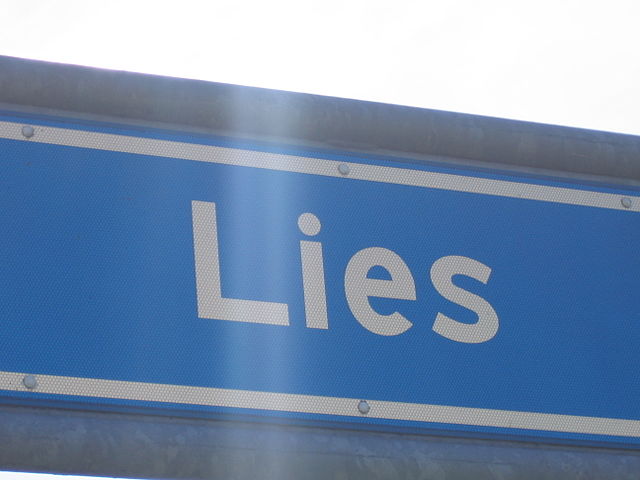
640px-Lies_Terschelling

Whoppers

I’ll never tell you little lies
I’ll only tell you whoppers
Fibs are for the other guys
My lies are all chart-toppers

When I forgot to do my chores
Cleverly, I uttered:
“Typhoon Tom blew off the doors
That’s why my room is cluttered”

When I ate the birthday cake
Purchased for my sister
I blamed it on a hungry snake
I said, “Y’all just missed her”

When I took ten thousand bucks
Earmarked for the poor
I just smiled and said, “Aw, shucks
It just ran out the door”

When I didn’t turn the gas off
And blew up several houses
I blamed it on an army of
Flamethrower-toting mouses

When I didn’t want to eat my peas
It required all my smarts
To claim that peas will make you wheeze
And cause colossal farts

When I wished to meet the star
Who was an awesome dancer
I showed her agent an old scar
And faked that I had cancer

When my dog went next door
And rooted up some posies
I said, “I saw a warthog
With roseys on his nosey?”


I’ll never tell you little lies
I’ll only tell you whoppers
Fibs are for the other guys
My lies are all chart-toppers

by Richard W. Bray

Bleary Blob of Blue

December 8, 2010

Bleary Blob of Blue

Time is just a concept
And I am just a fool
And the last fourteen hours
Are just a bleary blob of blue

I think I lost my girlfriend
I think I lost my mind
I know I lost my dinner
I can’t find my behind

I think I lost employment
I know they took my car
I lost everything that matters
When I stepped inside that bar

I’m overcome with sickness
My brain’s a filthy stew
I cannot stop these tremors
And my body feels like goo

I think I lost my girlfriend
I think I lost my mind
I know I lost my dinner
I can’t find my behind

I think I lost employment
I know they took my car
I lost everything that matters
When I stepped inside that bar

This county holding pen is
Just as cold as I am dry
Right now I need to rally
Just to find the strength to die

I think I lost my girlfriend
I think I lost my mind
I know I lost my dinner
I can’t find my behind

I think I lost employment
I know they took my car
I lost everything that matters
When I stepped inside that bar

by Richard W. Bray

Parkwood to Rosewood

December 6, 2010


Parkwood to Rosewood

I met a gal from Fresno
Drivin’ down the line
Drinkin’, Dancin’, Motel Rooms
We had ourselves a time
But I got misdirected
She just walked away
An’ I been clawing my way back
Across the USA

Parkwood to Rosewood
To Kenwood to Pine
Gotta find my baby
And see her one more time
Cedar to Maple
To Dogwood to Vine
I’ll do whatever it takes
To make that woman mine

I rumble round America
One city at a time
Truckstops, bars and diners
Someday I will find
That gal who made
My whole world sing
I got to make her mine

Parkwood to Rosewood
To Kenwood to Pine
Gotta find my baby
And see her one more time
Cedar to Maple
To Dogwood to Vine
I’ll do whatever it takes
To make that woman mine

by Richard W. Bray

The Three Types of Irony and an Amusing Teacher Story

December 4, 2010

Coincidence is NOT irony

As George Carlin and others have pointed out, sportscasters, particularly baseball announcers, have an irony problem. Many of them simply don’t understand what the word means. Usually they mistake coincidence for situational irony. For example, an announcer might say,

“It’s ironic that Stubby McGillicutty broke the single season RBI record in Anaheim where Angel great Jackie Fullcup, whose record McGillicutty broke, spent his entire career.”

No. IT’S COINCIDENTAL.

The Three Types of Irony

1) Verbal IronySaying what you DON’T mean

Definition: A speaker means something different than, often the opposite of, what she says.

Examples:

“I can’t wait to start writing these forty-seven reports.”

“My walk home was only twenty-three blocks.”

(Note: The terms sarcasm and irony are often used interchangeably, but there is a semantic difference. Sarcasm is meant to insult or cause harm. So strictly speaking, “Great, I forgot my umbrella” is ironic, whereas “You call this a cup of coffee?” is sarcastic.)

2) Situational IronyThe gods are laughing at me by giving me ten thousand spoons when I just need a knife.*

Definition: When the outcome of actions or events is different than the desired or expected result

Examples:

If Dave died because he was allergic to the antibiotics that were supposed to save him, he is not merely a victim of bad luck. There is an oddly perverse poetry in Dave’s plight. Such a phenomenon as situational irony would only occur to a species which has a concept of fairness and a tendency to automatically anthropomorphize Fate.

The Psychic Friends Network went bankrupt due to “unforeseen circumstances.”

(George Carlin’s marvelous book Brain Droppings has some wonderful examples of situational irony, particularly the one about the Kurd who survives a brutal attack by Saddam Hussein at the end of the First Gulf War and escapes over the mountains only to be crushed by an airdropped box of humanitarian aid. If you want to teach Carlin on situational irony, however, be prepared to explain about the Kurds and the first Gulf War and to tell them who Darryl Stingley was.)

3) Dramatic IronyThe reader or audience knows something fictional characters don’t

Definition: When we say something is ironic we almost never mean dramatic irony. Dramatic irony occurs when the reader or audience has important knowledge which is withheld from a character or characters in a story, a movie, or a play.

The most obvious example of this is when the young lady in the slasher flick doesn’t realize that the guy in the hockey mask with the meat cleaver is hiding behind the hot tub—but we do.

Perhaps a more erudite example would be that the audience knows who Oedipus Rex’s parents really are.

* From the song Ironic by Alanis Morissette which can be a good teaching tool because it contains some hits and several misses. (Rain on your wedding day is simply a case of bad luck unless you are having an outdoor wedding in Southern California in June and all your bridesmaids are wearing paper dresses.) The song has been much-derided by English teachers because it contains one example of verbal irony, four examples of situational irony, six examples of bad luck, two examples of stupidity and one example of coincidence.

Evaluation

State whether the following are examples of verbal irony, situational irony, dramatic irony or not ironic in any way.

1. “Oh, great! It’s raining and I forgot my umbrella.”

2. I failed the test because I did not study.

3. Dave’s blood pressure medication gave him a heart attack.

4. Batman doesn’t know that the Joker is waiting for him, but the audience does.

5. Cal Poly Pomona and Cal Poly SLO are both located in California.

6. The box of airdropped humanitarian aid landed on the refugee and killed him.

7. I missed the job interview because I overslept.

8. “Thank you for this ticket, Officer. You just made my day.”

9. Three celebrities died in three separate plane crashes yesterday.

10. “I heard that sun block causes cancer.”

An Amusing Teacher Story (which is in no way ironic)

I made a class of college freshman read Welcome to the Monkey House, a collection of short stories by Kurt Vonnegut. At the end of the quarter we watched some videos of stories from the book which were introduced by the author. Before class a student came up to me and asked how the man in the video could be Vonnegut when it says on the book jacket that he is “our finest black-humorist.” I explained that there are people who practice dark humor and there are also African-American humorists.

Richard W. Bray

Like we Love our Kids

November 28, 2010

Like we Love our Kids

Someday we’ll pay for all the things we did
We broke some stuff and made some noise
We love our soldiers like we love our kids

Methods and motives are better left hid
Nothing’s too good for our girls and boys
Someday we’ll pay for all the things we did

Missed every birthday, but I always did
Send a little box of love and joy
We love our soldiers like we love our kids

The mighty don’t fall so much as they skid
Lives and countries have been destroyed
Someday we’ll pay for all the things we did

Love ain’t cheap, so what’s your bid?
Can’t you see how much we spend on toys?
We love our soldiers like we love our kids

War and kids: Patriotic joy
Up too close they begin to annoy
Someday we’ll pay for all the things we did
We love our soldiers like we love our kids

by Richard W. Bray

Stupidity Shows

November 22, 2010

reality tv

Stupidity Shows

Had a lovely time at Larry’s
Till they turned on the tv
We spent the evening watching morons
With their phony rivalries
Grownups trading insults
Like they’re still in jr. high
Silly self-indulgence
Fifteen minutes passes by…

Read a book,
Chop some wood
Or take yourself a walk
Anything is better
Than hearing losers squawk
Ride a bike,
Brew some tea
Or dream yourself a dream
And miss those morons eating bugs
To beat the other team
Hug your kid,
Go to church
Or fix yourself some grits
Don’t waste your precious life
Watching losers pitching fits

by Richard W. Bray

Some Thoughts on Where I Was From

November 18, 2010

Some Thoughts on Where I Was From

In the introduction to his book Many Mexicos, historian Lesley Byrd Simpson explains how its jagged mountain ranges carve the nation up into several distinct geographical and cultural regions. It dawns on me that Many Californias would be an apt title for the book Where I Was From, a collection of Joan Didion’s writings about her native state.

Not much about California, on its own preferred terms, has encouraged its children to see themselves as connected to one another. The separation, of north from south—and even more acutely west from east, of the urban coast from the agricultural valleys and of both the coast and the valleys from the mountain and desert regions to their east—was profound, fueled by the rancor of water wars and by less tangible but even more rancorous differences in attitude and culture (64).

Our Many Californias often seem to be working at cross purposes from one another, much like our notoriously undisciplined congressional delegation. (State-boostering legislative discipline is the only thing we envy about Texas.)

So the much-hyped rivalry between the San Francisco Bay Area and Southern California (a label which, oddly, doesn’t seem to include the San Diego area) is merely one of many divides. Rivalry, however, isn’t really the correct word because that would imply that people in Southern California are actively conscious of what others are thinking about us. Yes, the smug sense of superiority that Bay Area residents feel over their glittery and shallow water-thieving “neighbors” to the south is a cornerstone of regional identity, but Southern Californians don’t spend a lot of time worrying about the haters. This is fortunate because we are roundly detested (BEAT LA). In San Diego, for example, TV weathermen give the “Smell A” forecast.

In 1890 my grandfather was born in Upland, which makes my California lineage much longer than that of most of my fellow inhabitants. But my ancestors came by railroad; Joan Didion’s people came by covered wagon. Ms. Didion insists that this distinction created a clan of hearty settlers who don’t look kindly upon those who fuss and dawdle:

Sentiment, like grief and dissent, cost time. A hesitation, a moment spent looking back, and the grail was forfeited. Independence Rock, west of Fort Laramie on the Sweetwater River, was so named because the traveler who had not reached that point by the Fourth of July, Independence Day, would not reach the Sierra Nevada before snow closed the passes (32-33).

The details of the Crossing are deeply ingrained in family lore because “The gravity of the decisive break demands narrative” (30).

The importance of recording these memories was unquestioned: the flood and the levees and the two-story house on the Grape Vine Ranch had become, like the potato masher that crossed the plains, like the books that did not get jettisoned on the Umpqua River, evidence of family endurance, proof of our worth, indistinguishable from the crossing story itself (158).

Of course, many Californians were ambivalent about the massive influx of citizens which transformed our state into the nation’s largest and most prosperous in the nation. In particular, California’s tradition-conscious older families who are often large landholders, “have an equivocal and often uneasy relationship to the postwar expansion (97).” More people might bring wealth and increase real estate “value”, but they will never get what it really means to be a Californian.

“New people, we were given to understand, remained ignorant of our special history, insensible to the hardships endured to make it, blind not only to the dangers the place still presented but to the shared responsibility its continued habitation demanded” (95).

And Californians have been happy to share the cost of much of our growth with the rest of the country by way of federal railroad subsidies, massive hydro-agricultural projects and military/aerospace spending. For decades we blissfully accepted federal largess despite the obvious contradiction that such an “extreme reliance of California on federal money [was] so seemingly at odds with the emphasis on unfettered individualism that constitutes the local core belief” (23).

For example:

The cost of controlling or rearranging the Sacramento [River], which is to say the “reclamation” of the Sacramento Valley, was largely born, like the cost of controlling or rearranging many other inconvenient features of California life, by the federal government (23).

And:

It was a quartet of Sacramento shopkeepers, Charles Crocker and Leland Stanford and Collis P. Huntington and Mark Hopkins, who built the railroad that linked California with the world markets and opened the state to extensive settlement, but it was the citizens of the rest of the country who paid for it through a federal cash subsidy (24-25).

During the remarkable postwar boom, California grew and grew. We built cities, freeways, airports and the greatest system of higher education in the world. It was perfectly natural to assume that “[g]ood times today and better times tomorrow were supposed to come with the territory” (129).


Then came the Oil Shock, Governor Moonbeam, Proposition 13, an era of limits, the end of the Cold War, the loss of “800,000 jobs between 1988 and 1993”, the Rodney King Riots, OJ, and thriving auto and aerospace factories replaced by warehouses offering “165,000 Square Feet of T-Shirts Madness”
(134, 151).

A scared and frustrated public reacted angrily to the demise of our “artificial ownership class” (113). However,

“when they finally noticed that the jobs had gone to Salt Lake or St. Louis, [they tended] to see their problem as one caused by ‘the media’ or by ‘condoms in the schools’ or by less-good citizens, or by non-citizens” (116).

As Californians began to turn on ourselves, bizarre, fear-driven policies led to this:

“It was 1995 when, for the first time, California spent more on its prisons than on its two university systems, the ten Campuses of the University of California and the twenty-four campuses of California State University” (187).

When Joan Didion was a child, she asked her mother to which class the family belonged, only to be rebuffed that “class” was “not a word we use.”

We believed in fresh starts. We believed in good luck. We believed in the miner who scratched together one last stake and struck the Comstock Lode. We believed in the wildcatter who leased arid land at two and a half cents an acre and bought in Kettleman Hills, fourteen million barrels of crude in its first three years. We believed in all the ways that apparently played-out possibilities could while we slept turn green and golden (128).

California could sure use a green and golden fresh start these days.

by Richard W. Bray

Steve

November 15, 2010

gullible-4

Steve

My name is Steve and I believe
All that I am told
My buddy Bill who lives up the hill
Is a hundred and sixty years old
My neighbor Frank who works at the bank
Is really the king of Siam
My friend Frankie Nicks who picks up my bricks
Once built the Hoover Dam
My tailor Tom who’s always so calm
Is a super secret spy
And my homey Sal who calls himself Al
Owns everything under the sky

My friends all agree that I’m lucky to be
Their favorite trusting friend
Just ask Mr. Wirth, who rules the Earth
He lives just round the bend

by Richard W. Bray