Ballad of the Pitiable Politician

July 20, 2012

I love the working man
And I’d walk your picket line
But my wingtips give me bunions
And my sneakers need a shine
And it’s so darn hot
When I’m out in the sunny
You know I feel your pain
But I love that dirtymoney

Free trade ain’t so free
When we ship your job away
But those fat cats with their wallets
Will remember me someday
Disappearin’ factory jobs
Ain’t no kind of funny
You know I feel your pain
But I love that dirtymoney

All my favorite people
Are really corporations
Corporations don’t get sick
Or ask me for vacations
Politicians crave cash
Like a bear loves him some honey
You know I feel your pain
But I need that dirtymoney

by Richard W. Bray

It’s What You Do

July 14, 2012


It ain’t what you create
It’s what you do
That’s gonna be important
When you’re through

Who cares if you
Rewrote the record book
When you’re a liar and
A cretin and a crook?

So slap your name across
A thousand walls
But everything that’s built
Is gonna fall

It don’t mean much
Rising to the top
When your private life
Is one gigantic flop

A million statues
Won’t make you a god
When you’re feeding worms
Beneath the sod

It ain’t what you create
It’s what you do
That’s gonna be important
When you’re through

by Richard W. Bray

The Hemingway Defense

July 7, 2012

William Faulkner

According to William Faulkner, it is permissible for an artist to engage in all manner of malfeasance and loutish behavior because “An artist is a creature driven by demons.”

The writer’s only responsibility is to his art. He will be completely ruthless if he is a good one. He has a dream. It anguishes him so much he must get rid of it. He has no peace until then. Everything goes by the board: honor, pride, decency, security, happiness, all, to get the book written. If a writer has to rob his mother, he will not hesitate; the “Ode on a Grecian Urn” is worth any number of old ladies. (h/t Ta-Nehisi Coates)

It is common for supermacho bibulous writers such as Faulkner, Kingsley Amis, Ernest Hemingway and Christopher Hitchens to confuse self-avoiding cowardice and self-destruction with courage and an intrepid dedication to art. Amis, for example, wrote entire books celebrating the wonders of alcohol. Hitchens thought that crawling into a bottle every day was something to boast about and he was dismissive of people who lack the requisite foolishness to become nicotine addicts. In the sick, sad world of Christopher Hitchens, teetotaling joggers are the real losers.

Stephen King, a man who knows a thing or two about both writing and substance abuse, has a name for the hyper-masculine variety of denial celebrated by various dipsomaniacal American authors: The Hemingway Defense.

as a writer, I am a very sensitive fellow, but I am also a man, and real men don’t give into their sensitivities. Only SISSY-men do that. Therefore I drink. How else can I face the existential horror of it all and continue to work? Besides, come on, I can handle it. A real man always can.*

King explicitly rejects all such poppycock. He argues that “[t]he idea that creative endeavor and mind-altering substances are entwined is one of the great pop-intellectual myths of our time.”

Unlike writers such as Faulkner who lack the necessary self-awareness to confront their “demons,” when given the choice, Stephen King wisely selected his health and his family over the bottle. Thus he has no use in mythologizing the inebriated scribbler.

Substance abusing writers are just substance abusers—common garden-variety drunks and druggies, in other words. Any claims that the drugs and alcohol are necessary to dull a finer sensibility are just the usual self-serving bullshit. I’ve heard alcoholic snowplow drivers make the same claim, that they drink to still the demons.

Faulkner asserts that it is perfectly natural and wholly acceptable for a writer to be a scoundrel because a true artist “is completely amoral in that he will rob, borrow, beg, or steal from anybody and everybody to get the work done.”

Sadly, people who think like Faulkner have gotten existence precisely backwards. As King notes, “Life isn’t a support system for art. It’s the other way around.”

William Faulkner notwithstanding, no art is essential to humanity, and no poem, not even one as lovely as “Ode on a Grecian Urn,” is worth the well-being of a single old lady. Humanity will grope along with or without any particular work of art, and Earth will continue to abide long after we’re gone no matter what we do. It is expressly because everything we do is ephemeral that the artist’s humanity is of far greater value than anything he could possibly create.

Perhaps it is a longing for a false sense of immortality that leads people to engage in such diseased thinking. But it’s important to remember that although Hamlet will continue to live on for as long as humanity is extant, William Shakespeare is just as dead as the fellow buried next to him. As Groucho Marx pithily noted: “What has posterity ever done for me.”

Only love conquers death.

*All Stephen King quotations are from his marvelous memoir On Writing

by Richard W. Bray

Hope Starved

July 4, 2012

How about when hope is starved
And dreams fade into dust?
How ’bout when your plans
Disintegrate with rust?
Dreams prepared and baked with love
Crumble to a crust
And hope is a mirage
With nothing left to trust

Who deserves to be the kid
Playing all alone?
Who deserves to hear her dad
Only on the phone?
Childhood deprivations
Don’t set like broken bones
Memories cut like razor blades
Even when you’re grown

Parents die in accidents
Puppies run away
Lovers get impatient
And set off on their way
Keepsakes and mementos
Tatter, crack, and fray
Everything you care about
Crumbles just like clay

by Richard W. Bray

For All They Care

June 30, 2012

W. H. Auden

Which is more significant, a person or a star?

People could not exist without stars. Not only does our sun provide us with essential warmth, light, and sustenance, but astronomers believe that all solid matter, ourselves included, is made up of the debris from former stars.

Compared to a person, our abiding sun is surely great and grand. But as far as we can tell, a star is neither sentient nor alert to its own existence. So unlike a human being or even a shih-poo who responds to the name of Max, a star will never want for anything.

W. H. Auden ponders his unreciprocated affection for stars and correctly concludes that despite a star’s magnificence, between the two, the poet himself is ultimately “the more loving one.”

Thus human beings gaze at stars with a longing that the stars themselves could never “return.”

Looking up at the stars, I know quite well
That, for all they care, I can go to hell,

And although the breadth of a star’s life is incomprehensible to a human being, a star is nonetheless ephemeral like everything else in our universe. (When the dividend is eternity, all quotients are miniscule.) Someday every star will “disappear or die.”

Getting back to my original question, is a star’s immense, blazing endurance a match for a human being’s cognizance and sensitivity? It’s a rhetorical question, of course. Even if it weren’t a false alternative, the answer would still lie beyond the scope of human imagination. We could not survive in a universe without stars, and as Richard Wilbur inquires,

How shall we dream of this place without us?–

For his part, Thomas Hardy maintains that the “disease of feeling” is overrated, and “all went well” prior to “the birth of consciousness,”

None suffered sickness, love, or loss,
None knew regret, starved hope, or heart-burnings;
None cared whatever crash or cross
Brought wrack to things.

If something ceased, no tongue bewailed,
If something winced and waned, no heart was wrung;
If brightness dimmed, and dark prevailed,
No sense was stung.

Auden is similarly cynical about the ultimate value of human sentimentality:

Were all stars to disappear or die,
I should learn to look at an empty sky
And feel its total darkness sublime,
Though this might take me a little time.

by Richard W. Bray

Sorry: A Duet of Heartache

June 28, 2012

Daddy said my tender heart
Leads me to pursue
Birds with broken wings
And stray dogs just like you

I’m sorry bout the mixup
I’m sorry I’m a fool
Didn’t mean to spend your birthday
Takin’ shots and shootin’ pool

I’m sorry that you took my car
And wrapped it round a tree
I’m sorry that I hocked my house
And gave my guarantee

I’m sorry I jumped bail
I’m sorry that I ran
I’m sorry that the PeeDee
Found me in my van

Always been I susceptible
To rascals just like you
All it ever got me was
A pocket full of blues

I’m a live tornado
Spewin’ mess and misery
Till I beat the bottle
It’s all I’m gonna be

by Richard W. Bray

An Amusing Teacher Story: Tammy’s Puppy

June 22, 2012

Back in the days before substitute teaching assignments were given out by robocomputers, subs would call the early-rising sub-assigners during our lunch hour and beg for work.

One day the sub lady in Pomona granted me an after-lunch half-day assignment for the next afternoon. (Normally if a teacher can’t get a dentist appointment for the late afternoon, she schedules it for the morning and takes the day off. But some districts offer half-day substitutes.) This is usually a pretty good gig for the substitute, particularly in elementary school where most of the heavy lifting (Math and Language Arts) is done before lunch.

The teacher was sitting in the classroom reading her newspaper when I arrived during lunch. I said Hi and she gave me the lesson plans which consisted of a map and one sentence instructing me to walk the students several blocks to and from the theater located at the district office where there was going to a West African Talking Drums concert. This ought to be fun, I thought.

The teacher was out the door before I got a chance to ask her how many parent volunteers she had arranged for the trip. I soon discovered that the answer to that question was zero, and my day went downhill from there.

I picked up the kids from lunch recess, and thirty-two fifth graders and I embarked through the turbulent streets of Pomona, California towards the district office. Normally in such a situation I would put my best parent volunteer at the front of the line, and string the rest of the volunteers throughout the line as I took up the rear in order to encourage slowpokes.

But working alone I was forced to man the front of the line, stopping frequently whenever the students in the back straggled out of view. But we were making good time nonetheless, and I was looking forward to getting good seats for the show.

Suddenly there was a great commotion when a thirty-third soul joined our serpentine. As we walked past Tammy’s house, her puppy which had somehow gotten loose decided to tag along with us. Everyone but Tammy and I were thrilled by this addition to our group. So we all waited as Tammy knocked and knocked on her door, summoning a grandmother who did not answer. I asked Tammy if there were anything else she could do, such as leave the dog with a neighbor. But she just kept knocking on the door.

There was much merriment among the students as my aggravation rose. After what seemed like an eternity of waiting, I implored Tammy to think of something (anything!) that she could do to rid us of our little friend. “Well,” she said, “maybe I could tie him up in the backyard.” She hopped the locked gate and someone handed her the puppy. About ten minutes later she miraculously appeared sans puppy, and we were off.

We were the last group of students to arrive at the theater. I was greeted with dirty looks from several district officials. We had to squeeze into the remaining gaps at the back of the theater. Several of the students were objecting to being separated from their friends as the West African Drummers were filing down the aisle towards the stage.

I may have raised my voice a tad when I said, “Just sit down. Now!”

One of the West African ladies from the drum troupe looked up and asked, “Who is dis terrible man shouting at de cheeldren?

by Richard W. Bray

Bitter

June 17, 2012

aaaaabitter


Alex lives for beauty
And the memory of a smile
From a love that never was
That continues to beguile

He’s a little ball of bitter
Muffling primal screams
Concocting better days
And waiting on a dream

Walter’s in his workshop
He got himself a plan
Turning lead to gold
He’s gonna be a wealthy man

He’s a little ball of bitter
Afraid to laugh or grin
Holding back on living
Until his ship comes in

Don’t bother with Maria
If you ain’t a wealthy guy
No money means no honey
She got bigger fish to fry

She’s a little ball of bitter
But she ain’t about to quit
Cuz a feller with a fortune
Will be a perfect fit

No Happy Hour for Henry
He don’t waste his life in bars
He’s got an audition
And the ladies love a star

He’s a little ball of bitter
He ain’t livin’ for today
Got no time for losers
He’ll show them all one day

by Richard W. Bray

Righteous Retribution

June 14, 2012

What if life were simple
For all to understand?
What if we could settle things
By killing just one man?

What if crime and evil
Had a clear solution?
What if all it took were
Gallant executions?

Does he walk among us?
A man of grace and skill
Sent by God to tell us
Exactly whom to kill?

Deliver us from feeling
God grants us alone
Righteous retribution
Delivered on a drone.

by Richard W. Bray

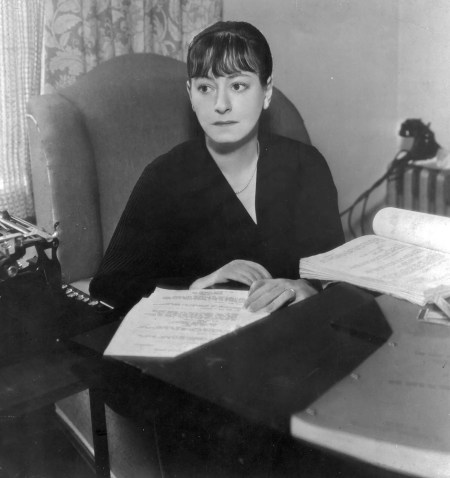
Ghosts of all my Lovely Sins: Some Thoughts on the Complete Poems of Dorothy Parker

June 9, 2012

Dorothy-Parker-1939

As Dorothy Parker once said
To her boyfriend, “Fare thee well”

Cole Porter Just One of Those Things

Years ago I was up late reading a poetry anthology when I came across a familiar passage from Wordsworth:

She lived unknown, and few could know
When Lucy ceased to be;
But she is in her grave, and oh,
The difference to me!

I put the book down and thought, “You poor, poor man.” I was briefly flooded with empathy for Lucy and her chronicler. And this sensation connected my life and my various heartaches and disappointments with the turbid ebb and flow of human misery. (Soon I remembered that the people about whom I was reading had been dead for over a century. I picked up my book and went on to the next poem.)

Reading The Complete Poems of Dorothy Parker, a women who “wore [her] heart like a wet, red stain,” I am reminded of the sage* who informs us that “Happiness is a sad song” (10).

Although I’m no stranger to heartache and self-pity, Mrs. Parker obviously possesses, to paraphrase Emily Dickinson, a heart not so airy as mine.

The sun’s gone dim, and
The moon’s turned black;
For I love him, and
He didn’t love back.
(151)

Just about every human being who has ever lived has had a similar experience. But how many of us could condense so much feeling into eighteen beautifully collocated metrical syllables?

(A note on Light Verse: Kurt Vonnegut complained that critics mistook Science Fiction for a urinal, and that’s how I feel about this dismissive term often applied to rhymed poetry which possesses a healthy meter. Even when, for example, Phyllis McGinley writes of serious topics like nuclear annihilation, critics belittle such poetry by classifying it as light verse. This is why I am heartened by the growing presence of poets such as Mrs. Parker and Ogden Nash in the anthologies.)

Of course, the poetry of Dottie Parker would be a dreary place were it not for the courage she demonstrates by climbing back on that horse no matter how many times it throws her.

Better be left by twenty dears
Than lie in a loveless bed;
Better a loaf that’s wet with tears
Than cold, unsalted bread
(134)

And the existential vivacity of the tender heart which continues to grab life by the horns for all its gusto is heroic indeed.

For contrition is hollow and wrathful,
And regret is no part of my plan,
And I think (if my memory’s faithful)
There was nothing more fun than a man!
(172)

Perhaps not coincidentally, the tenacity of Mrs. Parker’s amorousness is matched (if not bested) by the ferocity of her malevolence.

Then if friendships break and bend,
There’s little need to cry
The while I know that every foe
Is faithful till I die.
(70)

Dorothy Parker is a legendary hurler of insults
who penned several composites of enmity which she calls “hate poems.” Here are some of her more artful derisions:

(Serious Thinkers)
They talk about Humanity
As if they had just invented it;
(224)

(Artists)
They point out all the different colors in a sunset
As if they were trying to sell it to you;
(236)

(Free Verse)
They call it that
Because they have to give it away
(237)

(Writers)
They are always pulling manuscripts out of their pockets,
And asking you to tell them, honestly—is it too daring?
(237)

(Tragedians)
The Ones Who Made Shakespeare famous. (246)

(Psychoanalysts)
Where a Freud in need is a Freud indeed,
And we can all be Jung together
(263)

(Overwrought Dramaturgy)
Of the Play That Makes You Think—
Makes you think you should have gone to the movies.
(265)

(Married “Steppers-Out”)
They show you how tall Junior is with one hand,
And try to guess your weight with the other.
(359)

(Bohemians)
People Who Do Things exceed my endurance;
God, for a man who solicits insurance!
(120)

(Men)
They’d alter all that they admired.
They make me sick, they make me tired.
(73)

(Past boyfriends)
The lads I’ve met in Cupid’s deadlock
Were—shall we say—born out of wedlock.
(147)

*Schultz, Charles Happiness is a Warm Puppy

by Richard W. Bray