Second-String Chump

April 25, 2012

You sent me a text
When your man was away
Said we could meet
If I wanted some play

Things been ruff since I got dumped
But I ain’t gonna be your second-string chump

You wanted to meet
At the far end of town
So no one would see
You were messin around

I’ve been in one helluva a slump
But I ain’t gonna be your second-string chump

You call me up
At a quarter to four
Ya run outta ice
Can I get you some more?

I’ll do what I do to get over the hump
But I ain’t gonna be your second-string chump

We hooked up once
It wasn’t that good
You never called back
Like you said you would

Things been ruff since I got dumped
But I ain’t gonna be your second-string chump

ain’t gonna be your second-string chump

Richard W. Bray

This Business of Saving Souls

April 20, 2012

Richard Wright

This business of saving souls has no ethics“, writes Richard Wright as he recalls how the entire weight of his community was brought down upon him for rejecting Christianity. Wright is certainly not the first person to point out hypocrisies committed in God’s name, and the cogency of Wright’s irony exposes his utter contempt for organized religion. As the author sees it, Christianity is merely one of several methods which society employs to enforce submission upon the masses in general and upon Richard Wright in particular.

Black Boy is overflowing with social forces designed to break Richard Wright down—domestic violence, white terrorism, the media, the school system and the black church all conspire to bridle his spirit. This only makes him angrier and more productive.

For a man who wears the scars of nonconformity as a badge, Wright’s unwillingness to submit to God is perfectly consistent. Like any memoir, Black Boy is an amalgamation of fact, fantasy, and recollection. But this particular autobiography has a remarkably consistent theme: Always the rebel, Richard Wright heroically reveals all forms of human hypocrisy and confronts every injustice perpetrated against him. The institutional repression of the church is just another cross for him to bear.

Wright’s descriptions of the black church seethe with hostility as he chooses to see only the most negative aspects of religion. He is “disgusted” by the “snobbery, clannishness, gossip, intrigue, petty class rivalry, and conspicuous displays of cheap clothing” which he encounters in church. Of course, with the possible exception of “cheap clothing,” these phenomena are apparent in all human institutions. It’s just the way people are. And this vituperation for the church is a function of Wright’s deep–seated misanthropy.

It is disheartening that Wright’s quest to slay all dragons prevents him from experiencing the virtuous aspects of organized Christianity. He is absolutely blind to the worldly fellowship, charity, comfort, hope and spiritual fulfillment religion has to offer. And the immense beauty of religious art and music are completely lost on him. As Wright sees it, “(t)he naked will to power seemed always to walk in the wake of a hymn”.

But this cannot be dismissed as a simple outgrowth of Wright’s Marxist/humanist philosophy. Many confirmed atheists are willing to concede that organized religion can be beneficial to society in various ways despite the plethora of grievous wrongs committed in its name. (Full disclosure: I am a devout deist, but I reject the smugness with which many of the so-called New Atheists attack religion.) The roots of Wright’s profound enmity towards the black church stem from the part of him which could never find solace in groups, not even in a political party which reflected his beliefs.

Richard W. Bray

Time to Run

April 15, 2012

I don’t care about my marriage
I don’t care about the kids
I don’t care who I hurt
And I don’t care what I did

It’s time to have a bottle
It’s time to have some fun
It’s time to find a woman
And forget the things I done
It’s time to hit the honky tonks
It’s time for me to run

I don’t care how much she loved me
I don’t care about her pain
I don’t care if she gets lonely
I don’t care if she’s sane

It’s time to have a bottle
It’s time to have some fun
It’s time to find a woman
And forget the things I done
It’s time to hit the honky tonks
It’s time for me to run

I don’t care about my daughter
I don’t care bout my son
Growin up without a daddy
Never hurt me none

It’s time to have a bottle
It’s time to have some fun
It’s time to find a woman
And forget the things I done
It’s time to hit the honky tonks
It’s time for me to run

Richard W. Bray

Scenarios for Discussing Business Ethics

April 13, 2012

aaaaathumb.php

1. Have students rate the awfulness of the following scenarios on a scale from one to ten.

2. Pair and share answers while considering the following questions.

   a) Who gets hurt? How much?
   b) Would you want your mother to know if you did it?
   c) What kind of world would it be if everyone acted like this?

3. Full-class discussion led by teacher.

Scenarios

Dumping toxic waste in a Third World country.

Embezzling from a large corporation.

Embezzling from the widows and orphans fund.

Collecting on a false claim from an insurance company.

Quid pro quo sexual harassment.

Plagiarism in a company report.

Copying computer software without permission.

Bribing foreign officials to get a contract in countries where it is a commonly accepted practice.

Bribing a building inspector instead of fixing faulty electrical equipment.

Only hiring people who belong to the same race or the same gender as you.

Omitting side effect information in a published drug trial.

Profiting from child labor.

Profiting from “sweatshop” labor.

Threatening employees with termination if they don’t work unpaid overtime.

“Spamming” strangers in hopes of attracting clients.

“Cold calling” potential clients in their homes during dinner.

Taking office supplies from your employer on a regular basis.

CEOs getting large compensation and bonuses when they are laying off employees and/or cutting worker salaries and benefits.

Managers who routinely pitch fits and scream at employees.

A restaurant owner skimming money from the tips of waiters and busboys.

Richard W. Bray

In Praise of Clever

April 7, 2012

Clever is underrated.

Clever describes one who possesses brilliance, mental sharpness, originality, or quick intelligence. But the word clever also implies shallowness and superficiality.

Fables teach our children that the clever fox is subordinate to the wise old owl. Cleverness is ephemeral but wisdom abides.

According to this distinction between cleverness and wisdom, cleverness is quick and slick whereas wisdom is an invaluable beverage which must ferment over time: wisdom enlightens; cleverness simply amuses. But without intelligence there is no wisdom; there is merely pablum which seeks to comfort.

And even the least refined cleverness has value. Every flash illuminates, if only for an instant.

I hope you enjoy these witty rhymes from Lyrics on Several Occasions. Ira Gershwin was very clever and that is good enough for me.*

Ira Gershwin rhymed embraceable you with irreplaceable you and silk and laceable you in Embraceable You (29-30)

Ira Gershwin rhymed divorcement with of course, meant and he rhymed painless with ball-and-chainless in Sweet Nevada (78)

Ira Gershwin rhymed enjoyment with for girl and boy meant in Nice Work if You can Get it (96)

Ira Gershwin rhymed caress men with yes men and chessmen in How Long has this Been Going On? (277)

Ira Gershwin rhymed four leaf clover time with (my heart) working overtime in ‘S Wonderful (251)

* I realize, of course, that the word clever has often been used to disparage the accomplishments of Jews, just as the word sinister has often been used to impugn their motives. This is not my intention.

Richard W. Bray

Warbucks

April 3, 2012

rich man’s war
poor man’s fight
buddy, what gave
you the right
to profit offa
blood and misery?

warbucks fill
your bank account
tell me what’s
the right amount
to make you
be the best that you can be

i seen things
you can’t erase
i lost friends
you can’t replace
i pray to God
you worship property

your blood freezes
my blood burns
you seek silver
i just yearn
to be stateside
with my lovin family

Richard W. Bray

Brittle

April 1, 2012

Damaged_fragile_parcel_delivered_to_doorstep

I fell in love with your heart
Ain’t never been very smart
My passion making me a slave
Love is gonna put me in my grave

I fell in love with your heart
Your eyes are like a paira’ poison darts
Your tender love is hollow and untrue
Lord knows what I ever saw in you

I fell in love with your heart
I knew I shoulda’ run from the start
Smiling while you cut me to the bone
I’d be so much better off alone

I fell in love with your heart
Why you gotta pick my world apart?
My soul is freezing naked in the rain
I guess it ain’t no secret I’m insane

I fell in love with your heart
Ain’t never been very smart
My passion making me a slave
Love is gonna put me in my grave

Richard W. Bray

Muy Muy Macho

March 28, 2012

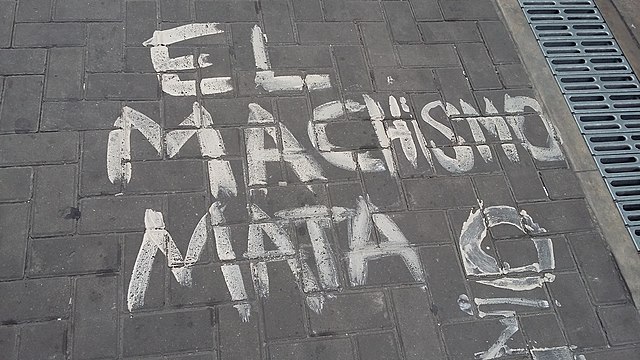
2016_03_marzo_24_El_machismo_mata_(1)

Muy Muy Macho

I’m muy muy macho
You don’t wanna mess with me
I ain’t lost a donnybrook
Since Nineteen Eighty-Three

I shave with a machete
I eat razor blades for snacks
For fun I take my clothes off
And roll around in tacks

I’m muy muy macho
I never shed a tear
I swallow all my problems
And wash them down with beer

I floss my teeth with barbed wire
I wash with Brillo pads
Got a PhD in danger
And I wrote the Book of Bad

I’m muy muy macho
Don’t got no time for friends
And if you try to touch me
There’s a chance your life will end

Richard W. Bray

Choice

March 23, 2012

Sam thinks
ten drinks
will clean
his spleen
rebuke
and puke
such thoughts
have brought

Bart buys
new tie
with cash
from Nash
gets job
from Bob
repays
next day

Meg mopes
no hope
her guts
erupt
since Ted
switched bed
time flows
pain grows

life hard
says bard
thought makes
hearts break
breathe, cry
soon die
rejoice
in choice

Richard W. Bray

Take it Decently

March 17, 2012
xxxgordimer

Nadine Gordimer

The remark that did most harm at the club was a silly aside to the effect that the so-called white races are really pinko-grey. He only said this to be cheery, he did not realize that “white” has no more to do with a colour than “God save the King” with a god, and that it is the height of impropriety to consider what it does connote.

—from A Passage to India by E.M. Forster (62)

I stand astonished at my own moderation.

Robert Clive’s response to a Parliamentary Inquiry on the plunder of India

Take it Decently

The obvious difference in pigmentation between the Europeans and Africans is the original point of reference for countless imaginary polarities: black and white, pure and impure, tame and wild, civilized and barbaric, rational and emotional, good and evil, decent and indecent. And in a culture built upon the systematic, racist murder and subjugation of tens of millions of Africans and Asians, members of the dominant class risk much pain and psychic confusion if they are unable to reconcile this tissue of false dichotomies at the core of imperialism.

The barter between the boy and the elderly native in “The Train from Rhodesia” is a microcosm of the imperial enterprise because it amuses the boy to toy with an old man who is attempting to eke out a meager livelihood. Oblivious to his own depravity, the boy represents all those who reveled in the plunder of Southern Africa.

“He laughed. ‘I was arguing with him for fun.’”

When the girl berates the boy for the callousness of his actions, he is “shocked by the dismay in her face.” Because the boy has internalized the imperialist denial of the old man’s humanity, the native is merely a thing to be trifled with for sport.

Unlike her boorish companion, the girl in “The Train from Rhodesia” has empathy for the old man, but as a member of the ruling race, she too is steeped in the toxic juices of Apartheid. Thus, her blindness to the inherent malevolence of imperialism is exposed by her protest that the boy should have found a way to “take it decently.”

The “shame that mounted through her legs and body and sounded in her ears like the sound of sand pouring” is merely the genesis of an appropriate response to a monstrous crime committed against entire populations for centuries.

The indecent mass murder, rape, and pillage of so much of the planet perpetrated by the Europeans over five centuries was carried out in direct contradiction to their notions of civility. When the Europeans commit such atrocities in the name of civilization who then are the real barbarians?

Richard W. Bray