Live Your Hurt

January 25, 2015

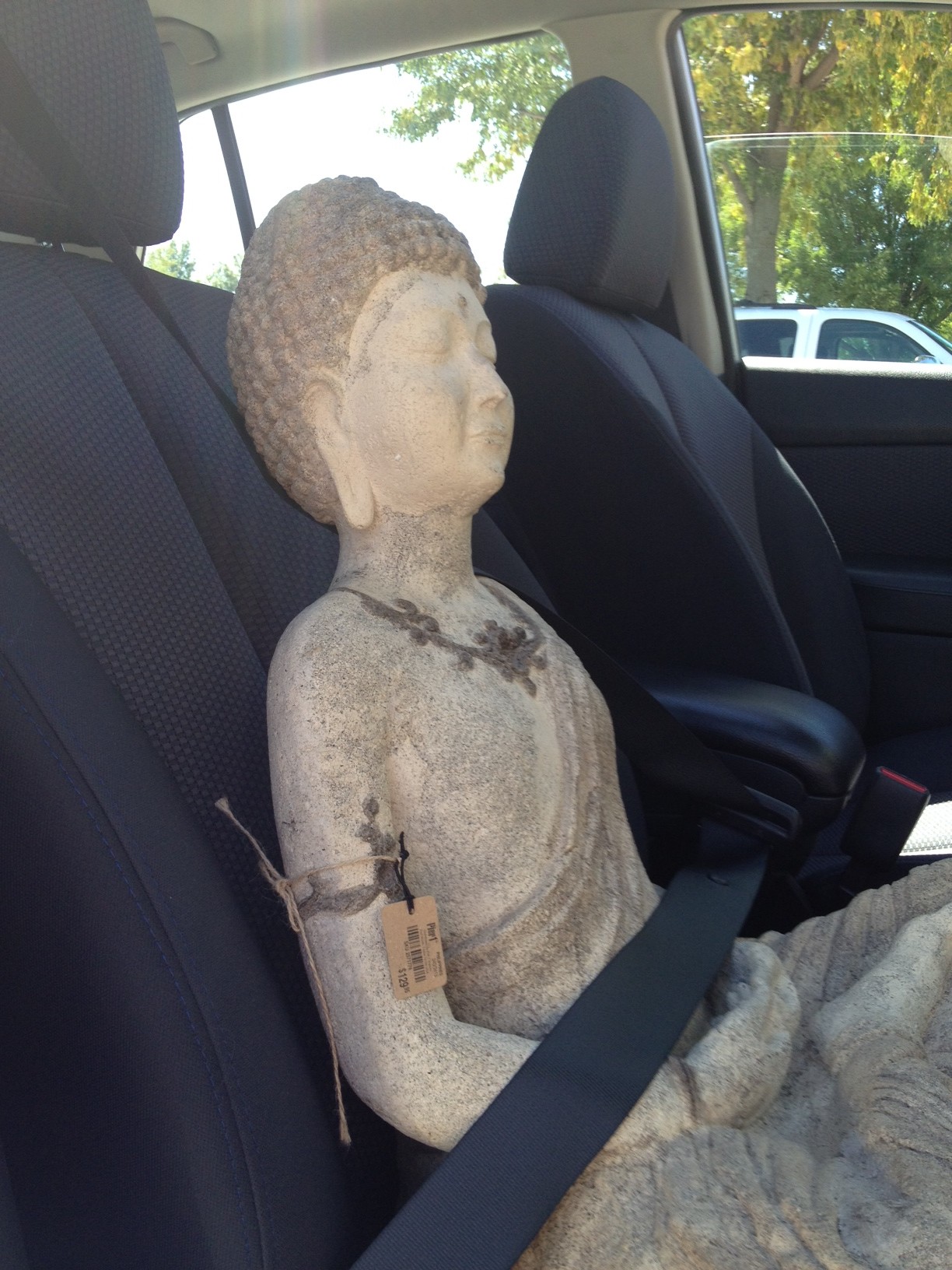
aaaaaaaaaaaaaaaabuddha

Indeed, the truth that many people never understand, until it is too late, is that the more you try to avoid suffering, the more you suffer, because smaller and more insignificant things begin to torture you, in proportion to your fear of being hurt. The one who does most to avoid suffering is, in the end, the one who suffers the most: and his suffering comes to him from things so little and so trivial that one can say that it is no longer objective at all. It is his own existence, his own being, that is at once the subject and the source of his pain, and his very existence and consciousness is his greatest torture.

Thomas Merton, The Seven Storey Mountain (H/T–Andrew Sullivan)


Live your hurt
It’s where you are
It’s riding shotgun
In your car

Live your hurt
Day by day
You can’t pretend
Your hurt away

Love your hurt
And pay respect
To the way
That we connect

Stare at hurt
Like a mirror
You’ll never see
Your conscience clearer

Praise your hurt
With every breath
The only other
Choice is death

by Richard W. Bray

In For the Night

January 22, 2015

aaaaaaaaaaaaaaajammies

Gonna a take a nice bath
Gonna wash my hair
In for the night
Ain’t going nowhere

Gonna put on my jammies
Gonna have me some fun
And I don’t need nuthin
From anyone

Gonna curl on the couch
Won’t see another soul
I’ll have a sensible dinner
And some cinnamon rolls

Gonna put on my jammies
Gonna have me some fun
And I don’t need nuthin
From anyone

Gonna have a glass of wine
Got a book to get lost in
Just me, myself,
And Miss Jane Austen

Gonna put on my jammies
Gonna have me some fun
And I don’t need nuthin
From anyone

by Richard W. Bray

This Happy Now

January 20, 2015
Not Me and Max

Not Me and Max

As soon as Max sees me grab the leash, he goes into spasms of delight, jumping in the air and making little pirouettes. Joy. It’s not just for humans.

(I try not to say the word “walk” in front of Max unless I’m ready to take him for one. So in order not to tease him, I’ll say, “Maybe I’ll take Max for a ‘W-Word’ later this afternoon.”)

Like so many poets, Max is giddy for the natural world, and he cannot contain his enthusiasm for outside smells, sights, and sounds. And like Max, William Wordsworth began to cultivate his love of nature exploring “those few nooks to which my happy feet/ Were limited.”

Unlike so many human beings, however, Max is not overburdened by the demands of his quotidian existence. And I’m pretty sure he’s never given much thought to the meaning of life. It is therefore unlikely that Max could share with Mr. Wordsworth

That blessed mood
In which the burthen of the mystery,
In which the heavy and the weary weight
Of all this unintelligible world
Is lighten’d:—that serene and blessed mood,
In which affections gently lead us on,
Until, the breath of this corporeal frame,
And even the motion of our human blood
Almost suspended, we are laid asleep
In body, and become a living soul:
While with an eye made quiet by the power
Of harmony, and the deep power of joy,
We see into the things of life

But ecstasy also hurts. Wordsworth referred to such ecstatic moments as “spots of time.” Spots of time are often induced by nature, and as Sheldon W. Liebman explains, nature is “a domain in which the fundamental conditions of life are mixed, even paradoxical.” Ecstasy hurts because even in its thrall we realize that soon we will return to a world where

That time is past,
And all its aching joys are now no more,

Once we get beyond joy “And all its dizzy raptures” we are once again confined to “The still, sad music of humanity”

In the poem “Hamlen Brook,” Richard Wilbur calls this phenomenon “joy’s trick.” (Collected Poems 115).

Confronted with the immense beauty of the natural world, Wilbur laments his inability to “drink all this”

Joy’s trick is to supply
Dry lips with what can cool and slake,
Leaving them dumbstruck also with an ache
Nothing can satisfy.

For his part, Robert Frost argues that “Happiness Makes Up In Height For What It Lacks In Length” (Collected Poems 445).

There are many moments in Frost’s poetry when

We went from house to wood
For change of solitude. (445)

And the trick for human beings is to appreciate this happy now on its own terms. Frost explains in “Two Look at Two” (283).

‘This must be all.’ It was all. Still they stood,
A great wave from it going over them,
As if the earth in one unlooked-for favor
Had made them certain earth returned their love.

by Richard W. Bray

When Friend Became a Verb

January 20, 2015

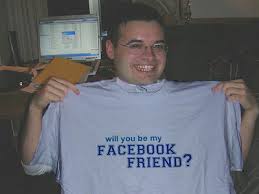
aaaaaaaaaaaaaafriend

I’ve flattened
Myself
To enable
Your reception
I’ve squished
My essence
Down to two
Dimensions:
A flicker
Of photos
And lists of
Preference

Inspect my life
And accept my life
I hope you
Will select me
As a friend
I’ll accede to
Your request
And I’ll do
My best
To pretend
I really
Know you
Like a friend

by Richard W. Bray

Don’t Wake Me Up for Anything

January 10, 2015

Don’t wake me up for anything
Don’t even say my name
This ain’t the time for pestering
My weak and weary frame

Don’t wake me up for anything
My bedroom is a shrine
Don’t disrupt my napping
My stupor is divine

Don’t wake me up for anything
Don’t halt my brief vacation
No good comes from bedeviling
My blesséd hibernation

Don’t wake me up for anything
I can’t afford to lose
Time set aside for slumbering
Don’t interrupt my snooze

Don’t wake me up for anything
My dreams are grandiose
If the world is ending
Just leave me comatose

by Richard W. Bray

Resources for a Lesson Plan on Tautologies and Circular Reasoning

January 9, 2015

If it sounds country, man, that’s what it is; it’s a country song.

Kris Kristofferson

A tautology is a grammatical construct; circular reasoning is a logical fallacy. The two phenomena are related but not identical.

A tautology is a sentence in which the conclusion is equivalent to its premise. In other words, in a tautology, the predicate can be surmised by reading the subject.

Here are some examples of tautologies:

My mother’s brother is my uncle.

Father Brown is a priest.

It is what it is.

A circular argument occurs when someone affirms her position simply by restating it in different terms. In other words, circular reasoning is an argument where the conclusion depends upon or is equivalent to its premise.

In a circular argument:

X is true because of Y.

and

Y is true because of X.

A circular argument is similar in structure to a tautology, but a circular argument includes causal reasoning (because, therefore, for this reason, etc.).

Here are some examples of circular reasoning:

My mom is terrific because she is wonderful.

People do what Dave tells; therefore, he is a great leader.

I slumbered beyond my assigned wakeup time; that’s why I overslept.

Lesson Evaluation: Explain why the following examples are tautologies, circular arguments, or neither.

Chris Rock is a hilarious comedian because he makes people laugh.

A bartender is a guy who listens to people talk all day.

Freedom’s just another word for nothing left to lose.

Anthony is extremely strong due to his ability to bench press three hundred pounds.

If aliens didn’t create the pyramids then how come pyramids are the product of technology that didn’t exist on earth at that time?

Allen hasn’t had a drink in twenty-three years, but he isn’t really sober because he doesn’t go to AA meetings and he isn’t working the steps.

A man’s gotta do what a man’s gotta do.

They are who we thought they were.

If I could tell you, I would let you know.

I stopped eating meat in 1987; that’s what makes me a vegetarian.

by Richard W. Bray

Gossip Rumor Innuendo

January 2, 2015

She’s the kind we gotta watch
Time to take her down a notch
Keeping folks where they belong
Is what makes the village strong

Gossip rumor innuendo
Whisper slander hearsay
Slurs and lies and defamation
Character assassination
Violators gotta pay

The village has to spank her
Words are like an anchor
We police ourselves with hate
Like a bucket full of bait

Gossip rumor innuendo
Whisper slander hearsay
Slurs and lies and defamation
Character assassination
Violators gotta pay

by Richard W. Bray

Scared Little People

December 27, 2014

aaaaaaaaaaaaaaadrne

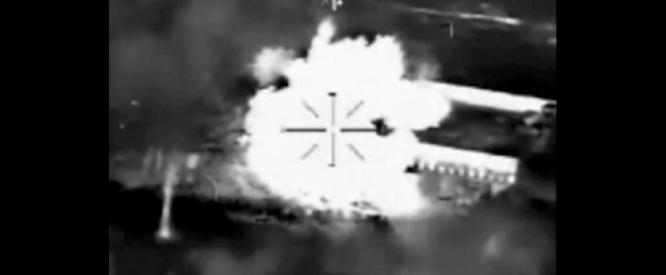
Our absolutized aversion to dealing with any kind of tragedy imposed from without has truly dark applications. It is precisely this existential-dread level of ass-covering and risk-management that informs the American security state’s adoption of the drone “signature strike,” in which men and perhaps some bystanders near are killed by drone attack even if we have no idea who they are. Their “pattern of life” in Yemen is just deemed too risky for their existence to be endured by the American military. Fire away.

Michael Brendan Dougherty

Scared Little People

Eighty-six hours in stress positions
Those horrible people make us so mean
We burn the tapes of Crucifixion
We glamorize torture on flashing screens
We shrapnel the flesh of people who gather
At weddings and funerals and blitzkrieg scenes
Protecting the lives of people who matter
From monsters who claim to be human beings
We hide from ourselves avoiding detection
Righteous folks we’re pretending to be
That’s not a window; that’s a reflection
That stain on our soul is a shocking decree
What a scared little people we have become
With hearts and brains rendered totally numb

by Richard W. Bray

They Hate Us for Our Sunshine

December 26, 2014

aaaaaaaaahaters

Seems like every time I look at
Some Eastern magazine
Another California-Hater’s
Blowing smoke out of his spleen

They hate us for our happy
They hate our smiling gleam
All those people pissing
On our California Dream

Cheering drought and earthquake
Feeding on their scorn
California-Haters
Watch the news like porn

Huddled by their heaters
I can almost hear them scream
All those people pissing
On our California Dream

Baited by our beaches
Folks come from all around
Y’all stop by; you’re sure to find
Someone from your hometown

They hate us for our sunshine
They hate our happenin scene
All those people pissing
On our California Dream

by Richard W. Bray

Flinging our Souls

December 24, 2014

aaaaaaathrush

I’m goofy for words. And I will happily read and read and read until I find a combination of words which “strikes like a chime through the mind.” Then I will read some more.

Thomas Hardy forges a concoction of meaning, sound, and feeling when he tells us that a singing little bird

Had chosen thus to fling his soul

Of course, every line of “The Darkling Thrush” is a work of art.

Poetry and language are the same thing. Perhaps the people we call poets live the music inside the words with greater intensity than the rest of us do, but all words are music.

Consider the first line of a poem by Emily Dickinson:

From Us She wandered now a Year,

There are a thousand less lovely ways to tell us that a woman has abandoned her family. And the beauty of the sound and rhythm of this line is assaulted by the sadness it conveys.

Here’s the entire poem:

From Us She wandered now a Year,
Her tarrying, unknown,
If Wilderness prevent her feet
Or that Ethereal Zone


No eye hath seen and lived
We ignorant must be—
We only know what time of Year
We took the Mystery.

There are so many things we are not told: Who is this woman? Whom did she abandon? Where? Why? The reader is left to fill in the blanks.

Robert Pinsky proffers a handy metaphor: Novelists wade through words while poets skate on their surface.

by Richard W. Bray