I’ll tell you what’s wrong with your girlfriend

June 17, 2016

wwJEALOUS

I’ll tell you what’s wrong with your girlfriend
I do it because I’m your friend
I’ll tell you what’s wrong with your girlfriend
I won’t stop till you comprehend

She’s snooty and snotty
And hurtful and mean
She’s hateful and haughty
And gross and obscene

She’s pompous pretentious
And full of manure
A definite menace
She smells like a sewer

I’ll tell you what’s wrong with your girlfriend
To help you is all I intend
I’ll tell you what’s wrong with your girlfriend
You’ll see that I’m right in the end

Her charm is a lie
She’s not all she seems
I look in her eyes
And I see all my dreams

She’s sexy and graceful
And lovely and free
Why’d she pick you when
She could’ve had me?

by Richard W. Bray

Walking Makes Humans What We Are

June 12, 2016

WWHUNTERS

I have never hunted animals. And I used to wonder how hunters walking around lugging heavy guns could ever get close enough to their prey in order to shoot it. Most animals can easily smell/see/hear humans long before the hunters get into firing range and then they could simply run away. Meaty mammals tend to be much faster runners than humans. What I didn’t realize is that human beings are designed to walk and walk and walk until our prey is too exhausted to continue. Then we use our weapons to kill it. And then we cook it and eat it.

In Masters of the Planet, an excellent introduction to human evolution, Ian Tattersall describes how the ability to walk great distances was key to the hunting prowess of homo ergaster, “an extinct ancestral form on the evolutionary scale of the genus Homo” that “lived in eastern and southern Africa during the early Pleistocene, that is, between 1.8 million and 1.3 million years ago.” Tattersall explains that “although homo ergaster would hardly have been fast compared to four-legged predators, its newer slender hips and long legs would have made members of the species exemplary distance runners.”

This evolutionary innovation gives homo sapiens a huge advantage over our prey because, unlike humans, “most mammals do not have the capacity to shed the heat load acquired and generated during sustained activity in the tropic sun, except by pausing in the shade while it slowly dissipates, largely through panting.” That’s why hunters will eventually catch their prey.   “In the heat of the day, the human ability to simply keep going would have allowed these lucky bipeds to single out, say, an antelope, and to keep chasing it, until it fell from heat prostrations” Or we can just kill it with our weapons when we get close enough.

Our ancestors made the remarkable transition from prey to predator.  Human beings are designed to vanquish by walking and running after animals until we get close enough to kill them.  This evolutionary history remains a major component of our collective psyche whether we like it or not.  And we should never forget this, even in an age when, for most of us, meat comes from the back of the supermarket.

So, Aesop’s fable The Tortoise and the Hare, in addition to being a marvelous parable on the efficacy of slow and steady diligence, is also the true story of how Our Hunting Fathers survived. Human beings are designed to “simply keep going” and going and going.

And simply trudging along is how our species came to inhabit and dominate so much of the planet.

I’m really glad that I exist as a human being; I wouldn’t trade in this particular vehicle of consciousness for anything in the world.  But our evolutionary success has had ominous ramifications for many of our fellow inhabitants of planet Earth.

As novelist Kurt Vonnegut notes, the human tendency to simply keep on walking and consuming has a dark side:

humanity itself had become an unstoppable glacier made of hot meat, which ate up everything in sight and then made love, and then doubled in size again.

Soldiers drilling, refugees fleeing, shoppers shopping, children strolling to school. Walking. It’s what we do and it’s one of the most essential things that makes us who we are.

Final word to Fats Domino:

By Richard W. Bray


A Supple Heart

June 12, 2016

WWHeartcage

Everything
I say and do
Has a single
Purpose

I long to know
The tender soul
That lurks below
The surface

Ramparts guard
A supple heart
Bruised to
Hesitation

Time to go
Cuz she says “No”
And gives no
Indication

What I adore
Is nothing more
Than my
Imagination

by Richard W. Bray

my crooked crooked heart

June 9, 2016

WWREDBLOOD

I should never forgive myself
   for what I did to you
I should never forget
   what I put you through
I should never forget how I pulled
   your world apart
I should never forget I got
   a crooked crooked heart

What always happens
When the lovin ends?
Somebody loses
But nobody
Ever wins

Been on both sides
Of that barbed and
Jagged fence
I got and I gave
Misery intense

I bled and
I bludgeoned
Just for a kiss
That’s all I got left
In love’s reminisce


by Richard W. Bray

Empathy

June 4, 2016

wwvaleriewolf

Suffering is not increased by numbers: one body can contain all the suffering the world can feel
Thomas Fowler

You can take an anvil
And drop it on my face
Feed me to the rodents
Till I’m gone without a trace

Tie me to an anthill
Drop me from the sky
Just don’t hurt the ones I love
Or make my baby cry

I know I can contain
The borders of my pain
A million shocks and aches
Won’t make me complain

Tie me to an anthill
Drop me from the sky
Just don’t hurt the ones I love
Or make my baby cry

Love gives it meaning
The hurt that we all feel
The pain we have for others
Makes existence real

Tie me to an anthill
Drop me from the sky
Just don’t hurt the ones I love
Or make my baby cry

by Richard W. Bray

Writing: Sketch and Fill, Write, Write, Prune, Sitting, Standing, Morning, Afternoon or Night

May 30, 2016
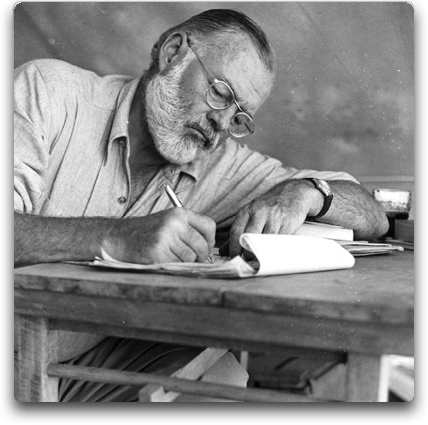
Ernest Hemingway

Ernest Hemingway


I write in the afternoon, like everybody else” asserts Dylan Thomas in the in the Caedmon Collection, a fantastic set of recordings of the poet’s live readings which are introduced by Billy Collins.

This would be a curious comment coming from most writers, but Thomas was a notoriously late drinker. Actually, he was a round-the-clock drinker.  In one of his introductions, Collins laments the foibles of Thomas, who was often confused, lost, and inebriated across America during the early 1950s.  (My dad had tickets to a see Thomas at Bridges Auditorium in Claremont, CA; sadly, as on many other occasions, Thomas was unable to make the show.)

I’m pretty sure most writers write in the morning when the mind is fresh. Many writers such as Kurt Vonnegut had to wake early to write before hitting the day job. Kafka would come home from his job at the insurance agency and nap so he could write when everyone else had gone to sleep and the house was quiet.

Ernest Hemingway’s approach to writing is strongly influenced by Freud.  Hemingway sees creativity as a sort of gas tank that is constantly being refueled by the subconscious mind. Hemingway recommends against allowing the brain to run on empty.

Always stop while you are going good and don’t think about it or worry about it until you start to write the next day. That way your subconscious will work on it all the time. But if you think about it consciously or worry about it you will kill it and your brain will be tired before you start. (Ernest Hemingway On Writing 42)

I don’t know if Graham Greene was familiar with Ernest Hemingway’s philosophy of writing, but he certainly practiced it. Greene had some sort of system that informed him exactly when he had written five hundred words. And that’s how much he wrote every morning, even if had to stop mid-sentence. Pretty soon after that he would start drinking, but this isn’t going to be another post about the inebriated scribbler, is it?

Writers write all sorts of ways: before breakfast, after dinner, dictating, typing, long-hand, short-hand, hunched over a keyboard, sitting up in bed, or standing up. Standing up is how Thomas Jefferson wrote the Declaration of Independence, on a desk that his descendants later sold (along with 130 slaves) to pay off the Great Man’s debts after he died. Jefferson heartily enjoyed the finer things in life, particularly French wine. (Spendthrift Jefferson provides a stark contrast to frugal George Washington who made provisions in his will to leave Martha with a healthy estate and to also grant* manumission to all of his slaves.)

I have a theory that there are basically two types of prose-writers: Sketch and Fill writers and Write, Write, Prune, writers.

I’m a Sketch and Fill writer. I prefer to write in the morning and revise later in the day or during the evening. As my writer’s gas tank nears empty, I often begin to make notes on what I’m going to write about when I return to the keyboard with a fresh brain.

* to boldly split your infinitive is often the more poetic thing to do

by Richard W. Bray

Shut that stinkin’ thinkin’ down

May 29, 2016

WWEyore

Our family is a prison
Of misery and sad
My sister blames my mother
I just blame my dad

You can live or you can drown
On thoughts
You can’t get rid of
Shut that stinkin’ thinkin’ down
With fellowship and love

I’m a sad man
Getting sadder every day
Sitting on a barstool
While my life drips away

You can live or you can drown
On thoughts
You can’t get rid of
Shut that stinkin’ thinkin’ down
With fellowship and love

Everything I try to do
Is just gonna fail
I’m coward and a loser
I belong in jail

You can live or you can drown
On thoughts
You can’t get rid of
Shut that stinkin’ thinkin’ down
With fellowship and love

I should just accept
What everybody knows
Bad luck gonna follow
Everywhere I go

You can live or you can drown
On thoughts
You can’t get rid of
Shut that stinkin’ thinkin’ down
With fellowship and love

It really makes sense
To drink my blues away
It’s all God’s fault
For making me this way

You can live or you can drown
On thoughts
You can’t get rid of
Shut that stinkin’ thinkin’ down
With fellowship and love

by Richard W. Bray

Walt Whitman is the Poet We Deserve in the Age of Trump, but Emily Dickinson Reigns

May 28, 2016

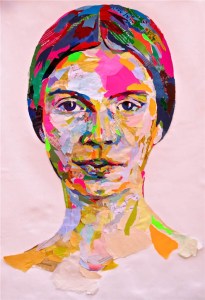
wwemily

There are several reasons why Emily Dickinson does not inhabit her rightful position as the greatest writer our culture has yet produced—she sedulously avoided publicity in her own lifetime (“How dreary – to be – Somebody!”); a comprehensive scholarly edition of her poetry was not compiled until almost seventy years after her death (long after the cannon had been established); she is often celebrated for her winsome poems that find their way into the high school textbooks like “I Shall Not Live in Vain” which represent only a tiny fraction of her output; she wrote short poems. (There is an absurd bias among critics in favor of “epic” poetry). Finally, we cannot overlook the obvious fact that Emily Dickinson was a woman and most of our cannon-selectors have been men, many of whom no doubt shared Nathaniel Hawthorne’s contempt for that “mob of scribbling women”

Moreover, elevating Emily Dickinson to her rightful place atop the pantheon of American poets would call into question the singular supremacy of Walt Whitman. Whitman, who sees himself as the great champion of democracy, claims to “contain multitudes” in his writing, but he merely embodies mountains of self-regard:

If I worship one thing more than another it shall be the spread of
my own body,
or any part of it.

It is his intrepid endeavor to displace God with Self rather than the actual quality of his work which makes Whitman the darling so many humanist critics. As Alfred Kazin notes in God and the American Writer, for Whitman

There is no one supreme Deity, no hierarchy, no heaven. It is on earth and nowhere else that we live out the divine in ourselves to which we are called. We are as gods when we recognize all things as one. Spiritually, we are sovereign—entirely—thanks to our culture of freedom. As we dismiss whatever offends our own souls, so we can trust our own souls for knowledge of the infinite.

Like the self-deluded subjects who claim to see the Emperor’s New Clothes (and like the editors at Social Text who published Alan Sokal’s intentional gibberish) few critics today are able to discern this manifest truth—Walt Whitman is an overblown, narcissistic, self-worshipping buffoon. (“In all people I see myself.”) Of course, in so many ways, Whitman’s solipsism makes him precisely the national icon we deserve, particularly in the Age of Trump. (It is not at all surprising that Bill Clinton gave his girlfriend a copy of a book by Whitman, although we might have expected him to choose “Song of Myself” rather than Leaves of Grass.)

Walt Whitman’s poetry delivers much music but very little sense, irony, or wit. Despite his gargantuan reputation, the words of Whitman taken together hardly amount to a single metaphorical dead white blood cell inside the metaphorical pustule existing inside the metaphorical pimple on Emily Dickinson’s glorious metaphorical backside. Dickinson proves again and again that she is capable of saying more in fewer than thirty syllables than Whitman ever gets across in page after page of his rambling jingle jangle.

One of the wonders of Emily Dickinson’s capacious mind is her ability to entertain opposing thoughts. As Richard Wilbur notes in “Sumptuous Destitution,” his splendid 1959 article on Emily Dickinson, she is “not a philosopher.” This is precisely why she can embrace paradox in a manner that would be difficult for a philosopher, thus expanding our understanding of our bizarre universe.

In “Faith Is a Fine Invention,” for example, Dickinson seems to ridicule the tendency to cling to faith in our modern age.

“Faith” is a fine invention
When Gentlemen can see–
But Microscopes are prudent
In an Emergency.

Note the irony of calling faith (rather than the microscope) an invention. And what is it exactly that a gentleman can see? Evidence of an invisible God, perhaps? But she is also lampooning those whose superstitious faith prevents them from seeing what wonders science reveals. One is reminded of Christian Scientists who would deny their children medical attention on religious grounds.

In “I Never Saw a Moor,” however, Dickinson defends faith entirely for its own sake. If you will pardon the tautology, she knows because she knows.

I never saw a moor;
I never saw the sea,
Yet know I how the heather looks
And what a billow be.
I never spoke with God,
Nor visited in heaven.
Yet certain am I of the spot
As if the checks were given.

Paradox is not a manifestation of reality; it is a consequence of the limitations of human perception. As Kurt Vonnegut notes in the novel Deadeye Dick, birth and death amount to the opening and closing of a “peephole.” Great poets enable us to slightly expand the boundaries of our peephole. That’s why my favorite philosophers are mostly poets.

by Richard W. Bray
Let’s Face the Music and Dance

May 22, 2016

wwhauden

The earth is an oyster with nothing inside it,
Not to be born is the best for man;

W.H. Auden, The Dead Echo

Wow. That’s pretty depressing. In fact, I wrote that listening to Auden read “The Dead Echo”* from The Voice of the Poet series makes me want to lie down in the fetal position and turn out all the lights.

Is our human existence, as Auden suggests, so meaningless that we would be better off without it? No. Because Love.

In his famous soliloquy Tomorrow and Tomorrow and Tomorrow Shakespeare’s Macbeth complains that

Life’s but a walking shadow, a poor player,
That struts and frets his hour upon the stage,
And then is heard no more. It is a tale
Told by an idiot, full of sound and fury,
Signifying nothing.

As an ardent nonbeliever, I don’t see how human existence signifies anything beyond itself. But our existence is nonetheless pretty awesome when considered on its own terms.

I’m pretty sure that there isn’t any anthropomorphized God up in outer space listening to all our prayers, a god who cares about every little thing that happens in the universe, including the death of every sparrow.   Yet I see reason for hope in this terrifying realization because it informs me that human beings must rely upon one another instead of inventing a god in order to assuage our cosmic loneliness.

However, Auden makes another claim in “The Dead Echo” which haunts me to the core of my being:

A friend is the old old tale of Narcissus

In other words, our hunger for Love is merely a manifestation of ego since we are only capable of viewing the world through the prism of our own interests and our own self-perception. As Auden explains in his collection of essays called “The Dyer’s Hand” :

Almost all of our relationships begin and most of them continue as forms of mutual exploitation, a mental or physical barter, to be terminated when one or both partners run out of good.

This is true, of course. But it hardly renders Love meaningless.  The act of caring about others is selfish and selfless at the same time.  It’s one of life’s many paradoxes.  Our lives are full of paradox not because that’s how the universe is designed; we see life as being full of paradox because that’s how our brains are designed.

When Samuel Goldwyn complained that a script she had submitted “ended on a sad note,” Dorothy Parker noted

“I know this will come as a shock to you, Mr. Goldwyn, but in all history, which has held billions and billions of human beings, not a single one ever had a happy ending.”

So what should we do about this whole being alive thing?  Well, in addition to depressing the hell out of us in “The Dead Echo,” Auden provides us with some practical advice:

Throw down the mattock and dance while you can.

And as another poet notes, between birth and death, It ain’t no sin to be glad you’re alive.

So the loveliest and most courageous thing we can do is acknowledge the hurt and ugly in our lives and still manage, somehow, to face the music and dance.

* Auden elsewhere refers to this poem as “Death’s Echo”

by Richard W. Bray

Her Reply (Updated)

May 21, 2016

wwalter

Sir Walter Raleigh, The Nymph’s Reply to the Shepherd

If we lived in decades past
When marriages were built to last
I might be tempted to tilt your glass
And be your little lovely lass

When I was young my mother told me
That a man is good to hold me
But I must never bought and sold be
Thus no man has yet controlled me

She said a girl must make her way
In this crazy world today
And if I always let you pay
I’ll be tormented should you stray

I do not fit your portrait, sir
Neither rubies nor your fur
Will set my little heart astir
Or make my body coo and purr

You confirmed just what your heart meant
When you offered an apartment
And a closet full of garment
As though my life were some department

Of an edifice you dreamed
Without once consulting me
I can’t live your reality
I shan’t subsume identity

by Richard W. Bray