Archive for the ‘Poetry’ Category

Application #6

July 1, 2011

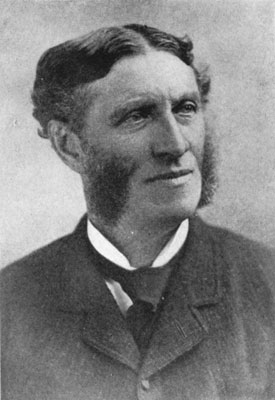
Matthew Arnold

Application # 6
(Something I wrote in graduate school)

The “interpoetic relationship” between Matthew Arnold’s Dover Beach and Anthony Hecht’s The Dover Bitch could hardly be less subtle. Hecht “clears poetic space” for himself by means of a “purposeful misreading” of Arnold in which Hecht inserts himself as a peripheral character in “Dover Beach”. This playful approach belies Harold Bloom’s contention that poets inevitably grapple with the “anxiety of influence” of prior works.

“Dover Bitch” is a lighthearted parody which mocks the sincerity and the seriousness of the original text. Hetch does this by transforming the object of desire in “Dover Beach” into a “girl” who is quite unworthy of her lofty stature. The woman spoken to in “Dover Beach” is the recipient of a protestation of a love which is meant to replace all the shattered Victorian certitudes which no longer exist:

Ah, love, let us be true
To one another! for the world ….
Hath really neither joy, nor love, nor light
Nor certitude, nor peace, nor help for pain

This is quite a tall order to fill: Make my life meaningful in a world without God. Hecht slyly deflates Arnold’s heroic affirmation of devotion by turning its recipient into a woman far more interested in having a good time than resolving Arnold’s spiritual devastation. Hecht does not merely remove her from her pedestal, but makes her scornful of Arnold’s attempt to recreate her “(A)s a sort of mournful cosmic last resort”.

Hecht’s attempt to supplant his predecessor offers a rich vein to be tapped by those who would extract psychoanalytical deposits from the rivalries which exist between authors. When Hecht proclaims “I knew this girl”, he means it in the biblical sense. It is hard to resist the Oedipal interpretation in which Hecht not only seduces the fictional object of Arnold’s desire, but has his way with his poem as well.

Hecht’s reduction of Arnold’s contemplation on the meaning of life into a tawdry one night stand is possible because Arnold permits him the space to do so. Arnold’s failure to consider how the poem plays to its internal audience makes it possible for the reader to accept her as seeing him as an insufferable blowhard.

by Richard W. Bray

No Laughter, No Hope

June 18, 2011


I can hate life
And I can hate me
And I can hit you
So you will hit me

No laughter, no hope
Just sock in the eye
You looking for hurt?
Then I am your guy

by Richard W. Bray

Eleven Stanzas that Strike Like a Chime through the Mind

May 29, 2011

Christina Rossetti

Richard Wilbur

e e cummings

Does the road wind up-hill all the way?
Yes, to the very end.
Will the day’s journey take the whole long day?
From morn to night, my friend.

from Uphill by Christina Rossetti

Let Observation with extensive view,
Survey mankind, from China to Peru:
Reark each anxious toil, each eager strife:
Then say how hope and fear, desire and hate,
O’spread with snares the clouded maze of fate,
Where wavering man, betrayed by venomous pride,
To tread the dreary paths without a guide,
But scarce observed, the knowing and the bold
Fall in the general massacre of gold;
Wide-wasting pest! That rages unconfined,
And crowds with crimes the record of mankind;
For gold his sword the hireling ruffian draws,
For gold the hireling judge distorts the laws;
Wealth heaped on wealth, not truth nor safety buys,
The Dangers Gather as the Treasures rise

from The Vanity of Human Wishes (The Tenth Satire of Juvenal Imitated) by Samuel Johnson

We have it and it doesn’t do us any
Good because nobody gets what they
Deserve more than everybody else.

from Family Values by Robert Pinsky

I am tired of tears and laughter,
And men that laugh and weep;
Of what may come hereafter
For men that sow to reap:
I am weary of days and hours,
Blown buds of barren flowers,
Desires and dreams and powers
And everything but sleep.

from Garden of Proserpine by Algernon Charles Swinburne

Thy gowns, thy shoes, thy beds of Roses,
Thy cap, thy kirtle, and thy posies
Soon break, soon wither, soon forgotten:
In folly ripe, in reason rotten.

from The Nymph’s Reply to the Shepherd by Sir Walter Ralegh

Joy’s trick is to supply
Dry lips with what can cool and slake,
Leaving them dumbstruck also with an ache
Nothing can satisfy.

from Hamlen Brook by Richard Wilbur

“I see the guilty world forgiven,”
Dreamer and drunkard sing,
“The ladders let down out of heaven,
The laurel springing from the martyr’s blood,
The children skipping where the weeper stood,
The lovers natural and the beasts all good.”
So dreamer and drunkard sing
Till day their sobriety bring:
Parrotwise with Death’s reply
From whelping fear and nesting lie,
Woods and their echoes ring.
The desires of the heart are as crooked as corkscrews,
Not to be born is the best for man;
The second-best is a formal order,
The dance’s pattern; dance while you can.

from Death’s Echo by W. H. Auden

To fight aloud, is very brave —
But gallanter, I know
Who charge within the bosom
The Cavalry of Woe —

from To Fight Aloud is Very Brave by Emily Dickinson

I knew a woman, lovely in her bones,
When small birds sighed, she would sigh back at them;
Ah, when she moved, she moved more ways than one:
The shapes a bright container can contain!
Of her choice virtues only gods should speak,
Or English poets who grew up on Greek
(I’d have them sing in chorus, cheek to cheek.)

from I Knew a Woman by Theodore Roethke

and nothing quite so least as truth
—i say though hate were why man breathe—
because my father lived his soul
love is the whole and more than all

from my father moved through dooms of love by e.e. cummings

No memory of having starred
Atones for later disregard
Or keeps the end from being hard.

from Provide, Provide by Robert Frost

by Richard W. Bray

For Emily

May 22, 2011


Syllables of glee–
Of bobolink and bee—
Her diadem of brain
Where lavish joy is pain

Temerity of breath
Seek ecstasy in death—
The doom of dim and wise
Is dust of paradise—

Inward—fighting woe,
Circumference of know—
Her raiment reveal
Sumptuous little meal

by Richard W. Bray

That’s How Easy War Can Be

May 16, 2011

american
bombs
courageously
dropped.
everybody
feels
great
here.
imperial
justice
keeps
liberating
manifold
nonhumans.
only
pacifists
queasy.
reality
shows
transmit
universal
values.
we’re
xceptional,
you’re
zapped.

by Richard W. Bray

Tonight in Every Bar

February 22, 2011

Tonight
In every bar
Drunken alcoholics speak
Of friends who really have
A drinking problem.

by Richard W. Bray

Holding on to Every Inch

February 15, 2011

I’m an old curmudgeon
I get older every day
Got no time to spare
Get the hell out of my way

I’m an old curmudgeon
Don’t give me no crap
I’m mean and I am cranky
And I’m late to take my nap

I’m an old curmudgeon
Get off of my goddamn lawn
Holding on to every inch
Until I’m dead and gone

I’m an old curmudgeon
I’ve seen what life can do
Here’s a brand new dollar
Go and buy yourself a clue

I’m an old curmudgeon
And I have to stay on top
Sinking is just dying
And I’m not about to stop

I’m an old curmudgeon
I keep barreling ahead
Reflection is for cowards
And rest is for the dead

by Richard W. Bray

Like we Love our Kids

November 28, 2010

Like we Love our Kids

Someday we’ll pay for all the things we did
We broke some stuff and made some noise
We love our soldiers like we love our kids

Methods and motives are better left hid
Nothing’s too good for our girls and boys
Someday we’ll pay for all the things we did

Missed every birthday, but I always did
Send a little box of love and joy
We love our soldiers like we love our kids

The mighty don’t fall so much as they skid
Lives and countries have been destroyed
Someday we’ll pay for all the things we did

Love ain’t cheap, so what’s your bid?
Can’t you see how much we spend on toys?
We love our soldiers like we love our kids

War and kids: Patriotic joy
Up too close they begin to annoy
Someday we’ll pay for all the things we did
We love our soldiers like we love our kids

by Richard W. Bray

Manly War Romancer

September 18, 2010

George Orwell

W_H_Auden_and_Christopher_Isherwood (3)

Auden and Isherwood

Manly War Romancer

Auden pronounces War is murder
Mister Orwell has a hissy:
Do not scorn the deeds of men
You damn, limp-wristed sissy

Orwell ran to join a war
Chris and Wystan sailed away
Orwell took one in the throat
But lived to write another day

Does this poem have a moral,
A message, or an answer?
Gladly lust for life unlike
A manly war romancer

by Richard W. Bray

Pride

August 26, 2010

Pride

If you don’t say you’re sorry
We’ll never speak again
And you will be so lonely
Without your favorite friend
I have my pride to think of
It makes a man a man
So I hope you’re on the brink of
Doing what you can
To drop your petty grievance
And put bygones away
You could be so happy
If we could go and play

by Richard W. Bray