
Greed and murder,
Nations gone mad,
Oceans of ugly,
Mountains of sad
I try real hard
I make it my duty
To force my focus
On goodness and beauty
Threads of compassion,
Scraps of nice,
Slivers of contact
Must suffice
by Richard W. Bray
Greed and murder,
Nations gone mad,
Oceans of ugly,
Mountains of sad
I try real hard
I make it my duty
To force my focus
On goodness and beauty
Threads of compassion,
Scraps of nice,
Slivers of contact
Must suffice
by Richard W. Bray

we’re all plugged in
we’re getting our reports
from everybody else
every minute of the day
perhaps we need
a little peace and quiet
before this deficit of solitude
fries all our circuits
by Richard W. Bray

How about when hope is starved
And dreams fade into dust?
How ’bout when your plans
Disintegrate with rust?
Dreams prepared and baked with love
Crumble to a crust
And hope is a mirage
With nothing left to trust
Who deserves to be the kid
Playing all alone?
Who deserves to hear her dad
Only on the phone?
Childhood deprivations
Don’t set like broken bones
Memories cut like razor blades
Even when you’re grown
Parents die in accidents
Puppies run away
Lovers get impatient
And set off on their way
Keepsakes and mementos
Tatter, crack, and fray
Everything you care about
Crumbles just like clay
by Richard W. Bray

W. H. Auden
Which is more significant, a person or a star?
People could not exist without stars. Not only does our sun provide us with essential warmth, light, and sustenance, but astronomers believe that all solid matter, ourselves included, is made up of the debris from former stars.
Compared to a person, our abiding sun is surely great and grand. But as far as we can tell, a star is neither sentient nor alert to its own existence. So unlike a human being or even a shih-poo who responds to the name of Max, a star will never want for anything.
W. H. Auden ponders his unreciprocated affection for stars and correctly concludes that despite a star’s magnificence, between the two, the poet himself is ultimately “the more loving one.”
Thus human beings gaze at stars with a longing that the stars themselves could never “return.”
Looking up at the stars, I know quite well
That, for all they care, I can go to hell,
And although the breadth of a star’s life is incomprehensible to a human being, a star is nonetheless ephemeral like everything else in our universe. (When the dividend is eternity, all quotients are miniscule.) Someday every star will “disappear or die.”
Getting back to my original question, is a star’s immense, blazing endurance a match for a human being’s cognizance and sensitivity? It’s a rhetorical question, of course. Even if it weren’t a false alternative, the answer would still lie beyond the scope of human imagination. We could not survive in a universe without stars, and as Richard Wilbur inquires,
How shall we dream of this place without us?–
For his part, Thomas Hardy maintains that the “disease of feeling” is overrated, and “all went well” prior to “the birth of consciousness,”
None suffered sickness, love, or loss,
None knew regret, starved hope, or heart-burnings;
None cared whatever crash or cross
Brought wrack to things.
If something ceased, no tongue bewailed,
If something winced and waned, no heart was wrung;
If brightness dimmed, and dark prevailed,
No sense was stung.
Auden is similarly cynical about the ultimate value of human sentimentality:
Were all stars to disappear or die,
I should learn to look at an empty sky
And feel its total darkness sublime,
Though this might take me a little time.
by Richard W. Bray
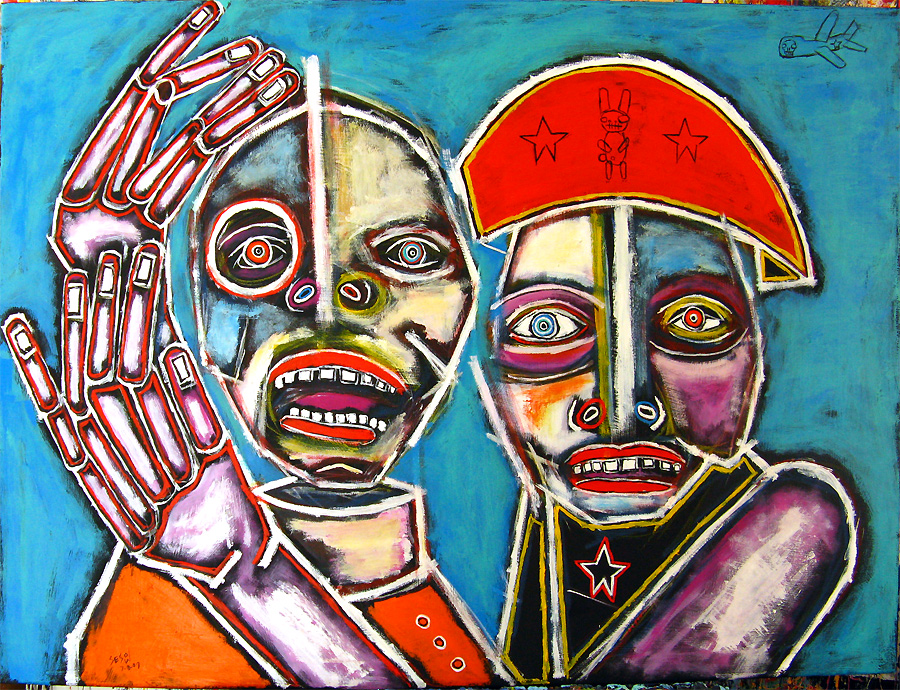
What if life were simple
For all to understand?
What if we could settle things
By killing just one man?
What if crime and evil
Had a clear solution?
What if all it took were
Gallant executions?
Does he walk among us?
A man of grace and skill
Sent by God to tell us
Exactly whom to kill?
Deliver us from feeling
God grants us alone
Righteous retribution
Delivered on a drone.
by Richard W. Bray
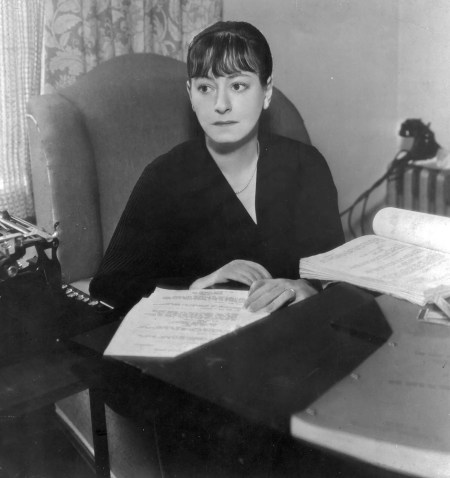
As Dorothy Parker once said
To her boyfriend, “Fare thee well”
—Cole Porter Just One of Those Things
Years ago I was up late reading a poetry anthology when I came across a familiar passage from Wordsworth:
She lived unknown, and few could know
When Lucy ceased to be;
But she is in her grave, and oh,
The difference to me!
I put the book down and thought, “You poor, poor man.” I was briefly flooded with empathy for Lucy and her chronicler. And this sensation connected my life and my various heartaches and disappointments with the turbid ebb and flow of human misery. (Soon I remembered that the people about whom I was reading had been dead for over a century. I picked up my book and went on to the next poem.)
Reading The Complete Poems of Dorothy Parker, a women who “wore [her] heart like a wet, red stain,” I am reminded of the sage* who informs us that “Happiness is a sad song” (10).
Although I’m no stranger to heartache and self-pity, Mrs. Parker obviously possesses, to paraphrase Emily Dickinson, a heart not so airy as mine.
The sun’s gone dim, and
The moon’s turned black;
For I love him, and
He didn’t love back. (151)
Just about every human being who has ever lived has had a similar experience. But how many of us could condense so much feeling into eighteen beautifully collocated metrical syllables?
(A note on Light Verse: Kurt Vonnegut complained that critics mistook Science Fiction for a urinal, and that’s how I feel about this dismissive term often applied to rhymed poetry which possesses a healthy meter. Even when, for example, Phyllis McGinley writes of serious topics like nuclear annihilation, critics belittle such poetry by classifying it as light verse. This is why I am heartened by the growing presence of poets such as Mrs. Parker and Ogden Nash in the anthologies.)
Of course, the poetry of Dottie Parker would be a dreary place were it not for the courage she demonstrates by climbing back on that horse no matter how many times it throws her.
Better be left by twenty dears
Than lie in a loveless bed;
Better a loaf that’s wet with tears
Than cold, unsalted bread (134)
And the existential vivacity of the tender heart which continues to grab life by the horns for all its gusto is heroic indeed.
For contrition is hollow and wrathful,
And regret is no part of my plan,
And I think (if my memory’s faithful)
There was nothing more fun than a man! (172)
Perhaps not coincidentally, the tenacity of Mrs. Parker’s amorousness is matched (if not bested) by the ferocity of her malevolence.
Then if friendships break and bend,
There’s little need to cry
The while I know that every foe
Is faithful till I die. (70)
Dorothy Parker is a legendary hurler of insults who penned several composites of enmity which she calls “hate poems.” Here are some of her more artful derisions:
(Serious Thinkers)
They talk about Humanity
As if they had just invented it; (224)
(Artists)
They point out all the different colors in a sunset
As if they were trying to sell it to you; (236)
(Free Verse)
They call it that
Because they have to give it away (237)
(Writers)
They are always pulling manuscripts out of their pockets,
And asking you to tell them, honestly—is it too daring? (237)
(Tragedians)
The Ones Who Made Shakespeare famous. (246)
(Psychoanalysts)
Where a Freud in need is a Freud indeed,
And we can all be Jung together (263)
(Overwrought Dramaturgy)
Of the Play That Makes You Think—
Makes you think you should have gone to the movies. (265)
(Married “Steppers-Out”)
They show you how tall Junior is with one hand,
And try to guess your weight with the other. (359)
(Bohemians)
People Who Do Things exceed my endurance;
God, for a man who solicits insurance! (120)
(Men)
They’d alter all that they admired.
They make me sick, they make me tired. (73)
(Past boyfriends)
The lads I’ve met in Cupid’s deadlock
Were—shall we say—born out of wedlock. (147)
*Schultz, Charles Happiness is a Warm Puppy
by Richard W. Bray

You tell me that I’m angry
It’s really not my fault
The world conspires against me
It’s not about to halt
You tell me that my anger
Won’t do me any good
Tell that to those people
Who aren’t acting like they should
You say I should be thankful
For everything I’ve got
Then I couldn’t complain about
The things that I have not
You say I am not helping
By being pessimistic
But nature gave me eyes
And it made me realistic
You tell me that I shouldn’t
See myself as God
A person needs a mentor
Why’s my choice so odd?
You say, “Get out and mingle
You’re a person, not a stone”
From what I’ve seen of people
I’m better off alone
by Richard W. Bray

Murder Machine
Feeds on resentment, hatred and fear
Murder Machine got a million gears
Profits mount—bodies stack high
Politicians—so easy to buy
Blood money drips to the greedy few
Till we’re all in hock to the thieves who rule
Spits out orphans, widows and pain
Murder Machine leaves a wicked stain
by Richard W. Bray
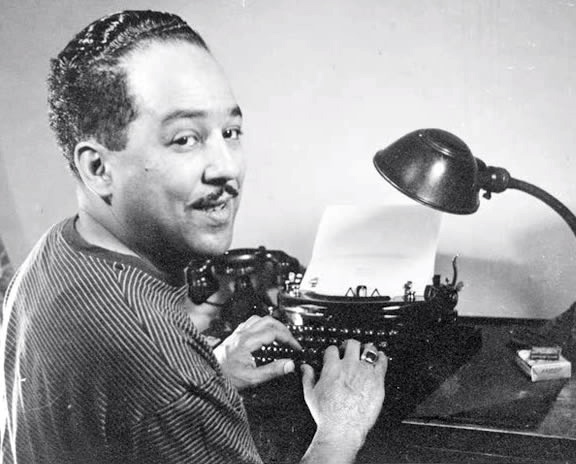
Here’s something I wrote a few years ago in graduate school for Professor Kaplan:
Application #2
Langston Hughes’s poem Harlem complies with Cleanth Brooks’s assessment of modern poetic technique as “full commitment to metaphor.” The poem consists of six cogent metaphors steeped together to create an elixir incomparable to the flavor of any one of these images standing alone. A raisin, an oozing sore, rancid meat, a sugary crust, a sagging load and an explosion are, by themselves, images which either assault or delight the senses. Hughes’s alchemy blends the first four contradictory metaphors, then offers a lull in the image of a sagging load before suggesting the possibility of an explosion.
The splattering of metaphors in Harlem qualifies as irony according to Brooks’s loose definition: “The obvious warping of a statement by context.”
The tension, or “pressure of context,” resulting from the incongruity of the metaphors in Harlem is resolved through the prospect of obliteration (explosion) of the entire batch of metaphors. This final loud, bright, apocalyptic eruption, so inconsistent with the lazy, passive images which precede it, relieves tension by hinting at annihilation.
The liquid quality of the poem’s first four metaphors reveal the fluid quality of human emotions. They also contain three food images and two carnal references, suggesting that the fulfillment of our dreams is a need just as basic and primal as the appetite for food.
by Richard W. Bray

Sam thinks
ten drinks
will clean
his spleen
rebuke
and puke
such thoughts
have brought
Bart buys
new tie
with cash
from Nash
gets job
from Bob
repays
next day
Meg mopes
no hope
her guts
erupt
since Ted
switched bed
time flows
pain grows
life hard
says bard
thought makes
hearts break
breathe, cry
soon die
rejoice
in choice
Richard W. Bray

