Posts Tagged ‘Language’

My Monkey Makes my Mother Mad

March 16, 2013

I had no idea what I was doing when I began the project that eventually culminated in this blog. Looking back on it, I’m reminded of the character played by Richard Dreyfuss in the movie Close Encounters of the Third Kind who was compelled to mindlessly build that miniature mountain inside his house. I just had to do something, but I really didn’t know what or why.

So I kept writing and reading about writing. And I took some English classes at Cal Poly Pomona. Then one of my professors, Dr. Carola Kaplan, suggested I apply for their MA program. (She advised that if I continued to take classes, sooner or later I would “accumulate” a Master’s Degree.) Many of the longer articles on this blog began as academic papers.

I continued to write until my computer was constipated. So I read the books on how to write the perfect cover letter and I sent out queries and more queries. And all that ever got me was shoe-boxes full of rejection letters.

After more than a decade of unrequited querying, I finally went on an Open Thread at Ta-Nehisi Coates’ blog and asked the nice people there how much it would cost to start my own blog. When they told me it was free I said, “Thank you so much. If I had known that, I would have gotten myself a blog years ago.”

Sometimes I begin writing a poem knowing exactly what I want to say and it turns out just like I planned. Sometimes. Other times I set out to write something, but I end up writing something else. And sometimes I think I have a long way to go when the poem suddenly informs me that I’m finished.

And sometimes I start with an idea that’s bugging me or just a single word. (I began this poem thinking about how much I like the word notion.) Other times an entire line will pop into my head. Once a line zipped across my brain, but I ignored it. A few days later it returned—louder. It wasn’t until I sat down at my computer and typed it up that I realized that the line was entirely alliterative: My monkey makes my mother mad. But I didn’t know what the poem was going to be about until I had finished writing the first stanza.
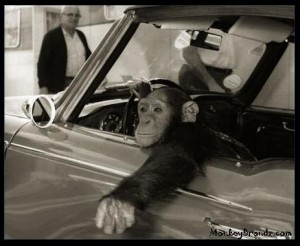
My Funny Farm

My monkey makes my mother mad
He also aggravates my dad
He took his car the other day
And drove it to the Hudson Bay

My kitty cat is kooky too
He likes to strut down to the zoo
And tell the tigers to all stand back
If they don’t want to get attacked

I have a hamster named Houdini
And though he is rather teeny
He’ll quickly pick a thousand locks
You could not hold him in Fort Knox

My kangaroo’s a real joker
Up all night playing poker
His friends come to destroy the house
I think I shoulda’ got a mouse

I got a hippo last July
He really is one swell guy
Everything he does is super
I got a giant pooper scooper

Living on this funny farm
I know my pets don’t mean no harm
But both my parents moved away
And no one wants to come and play

Richard W. Bray

The Terror of Suffix County

March 2, 2013

1-5

Annie’s destructful brother
Is a boogerypoopish mess.
Others have botherly brothers,
But Willie’s a vexsome pest.

Annie’s funtastic birthday
Was a jubilatious delight
Till Willie stealthed into her bedroom
Beneath the dimful light.

When the girls were finally sleepish
They detectified Willie’s disguise.
He was costumated in undies.
The girls were were horrorized.

Annie was fully rageistic.
Screamfully, she cried:
Abandonate this monster.
He must be porchified.”

Her parents wisefully noted
That though they were temptified,
They’d be keeping her boisterly brother.
Annie felt beastish inside.

Richard W. Bray

Idioms

October 13, 2012

Idioms-Examples-Colloqiuallisms

My dad was moving boxes
He said, “Give me a hand”
I really need them both
What a curious demand

My boyfriend’s disappointed
Says his team got creamed
What were they doing at the dairy?
I guess that’s why he screamed

A person on the sidewalk
Asked me for some bread
But if I give him money
He could buy a meal instead

My neighbor said her brother
Gets all bent out of shape
He needs a chiropractor
Or perhaps some ankle tape

My friend got dressed up fancy
Said she’s gonna paint the town
Wouldn’t it make more sense
To wear a dusty gown?

I took my sister to the beach
She said, “Let’s catch some rays”
I didn’t buy this bikini
For fishing on the bay

Sometimes folks are careless
And their brains aren’t very keen
People talk so silly
Like they don’t know what words mean

by Richard W. Bray

An Effective Title-Writing Strategy for Academic Papers

September 28, 2012

Research-Title-750x300

Here’s a fun and simple exercise to help students compose effective titles for academic papers.

1. Group students in threes.

2. Instruct each group to create a list of eight Type A or Type B titles (see below) for popular motion pictures.

Examples:

Balloons: I’m not Leaving this House

Imaginary Friend: No Club for Wimps

Switcheroo: Freaky Mother/Daughter Situation

High Quality H2O: From the Bench to the Starting Lineup

He Nose Who’s Lying: A Man and his Puppet

3. Students turn in lists.

4. Instructor reads titles to entire class and has students guess which movies they refer to.

The title of an academic paper should inform the reader of the paper’s main argument.

Which of the following four titles best announces its paper’s argument?

Cars: Who Needs Them?

Automobiles: An Expensive Waste of Energy

Driving Down your Freeway

Why Automobiles are a Bad Investment

The first title, Cars: Who Needs Them?, tells us the what but not the why of the argument.

The third title, Driving Down your Freeway, might score a few points with old hippy teachers like me by cleverly referencing a Doors lyric, but it doesn’t provide any clues about the paper’s contents.

The fourth title, Why Automobiles are a Bad Investment, doesn’t reveal why cars are a bad investment.

Only the second title, Automobiles: An Expensive Waste of Energy, clearly expresses the paper’s topic and its main argument.

My two favorite strategies for wring a titles for academic papers are:

a) General Idea/Colon/Specific Topic (Argument)

b) Clever Quotation/Colon/Specific Topic (Argument)

Here are some type A titles from this blog:

Listening to the Whirlwind: Theodicy for Deists

The Perils of Bardolatry: Harold Bloom’s Limited Perception of Hamlet

THE ROOT OF MUCH EVIL: MORALITY AND THE LUST FOR MONEY IN ARNOLD BENNETT’S ANNA OF THE FIVE TOWNS AND RICEYMAN STEPS

Silent Murmurs: A Funny Teacher Story

Here’s one title where I did it backwards (oops):

An Amusing Teacher Story: Tammy’s Puppy

Here are three titles where I used a dash instead of a colon:

Cheese-Eating Surrender Monkeys—Some Thoughts on Courage and Freedom

What’s the Matter with Kids these Days?, Part 473—It’s all about the Music, Man

Holden Caulfield—Whimpering Little Phony

Here are some type B titles from this blog:

All the Suffering the World Can Feel: The Pain and the Glory of Graham Greene’s Catholicism

Genius Knows Itself: The Wonderful Words of Emily Dickinson

Not Only by Private Fraud but by Public Law: Thomas More’s Utopia and the Imperfectability of Human Nature

Ghosts of all my Lovely Sins: Some Thoughts on the Complete Poems of Dorothy Parker

The “Oriental Mind”: E. M. Forster’s Fatuous Caricatures of Indians in A Passage to India

Innocence: A Famed American Virtue Demolished in a Wicked Novella by Herman Melville

Faith Might be Stupid, but it Gets us Through: The Syncretic Collision in Love Medicine by Louise Erdrich

VIRTUE IS “A PERPETUAL CLOG TO PUBLICK BUSINESS”: THE UBIQUITY OF CORRUPTION IN HUMAN INSTITUTIONS IN JONATHAN SWIFT’S GULLIVER’S TRAVELS

Of course, this is a blog, so I don’t always feel compelled to devise titles which are suitable for academia.

Here are some titles which include a clever quotation but no specific topic:

The Steaming Complaint of the Resting Beast

Natural if not Normal

This Business of Saving Souls

We Think by Feeling

Take it Decently

The Hemingway Defense

Famed American Virtue

For All They Care

Here are some clever titles that don’t inform the reader specifically what the paper is about:

Application #2

Hundred Dollar Rip-Off

In Praise of Clever

William Faulkner and the English Language

Men and Sports

Application #6

The Three Types of Irony and an Amusing Teacher Story

Celebrating the Violent Death of a Wicked Man

New Yorker Magazine Buries the Lede in Puff Piece on Education Secretary Duncan

nuh-NUH, nuh-NUH, nuh-NUH, nuh-NUH

The Island of Misused and Abused Words

What’s a War Junkie? Che v Zapata

Why am I so Goofy for Burn Notice?

I Wanna Hear

Me and Michael Medved

Confessions of a not-so-Old Curmudgeon

Negatory on the Neg

Poets at the Microphone

Teacher Knows Best–Not

Fantasy Christians

Seinfeld and Gilligan’s Island

Some Friendly Advice for Young Teachers in a World Poisoned by Power-Mad Bureaucrats and Clueless Billionaires

And my Thoughts on articles are book reports and other musings which do not necessarily contain thesis statements and thus do not require academic titles:

Some Thoughts on Joseph Sugarman’s Adweek Copywriting Handbook

Some Thoughts on Lyrics on Several Occasions

Some Thoughts on Where I Was From

Some Thoughts on The Spooky Art

Some Thoughts on Alfred Kazin’s America

Some Thoughts on Slaughterhouse-Five

Some Thoughts on Washington Rules

Some Thoughts on The Glass House

Some Thoughts on Primates and Philosophers

Some Thoughts on American on Purpose

Some Thoughts on The New American Militarism

Some Thoughts on The Death and Life of the Great American School System

More Thoughts on The Death and Life of the Great American School System

Some Thoughts on On Writing

Some Thoughts on the Efficacy of DARE-Type Programs and a Funny Teacher Story

Some Thoughts on The God Delusion

Some Thoughts on Streetball

On Redundancy, Oxymorons, and Grammatical Correctness

by Richard W. Bray

A Lesson Plan on Strong Verbs

September 15, 2012

Which statement is more likely to infuriate Dad?

Sorry Dad, but I wrecked your car.

or

Sorry Dad, but I demolished your car.

Which declaration evinces greater passion?

I enjoy fish tacos.

or

I crave fish tacos.

Which complaint expresses stronger indignation?

That slimy salesman confused me.

or

That slimy salesman bamboozled me.

In each of the above the examples, of course, the second sentence contains the stronger verb. But why?

Like Supreme Court Justice Potter Stewart’s famous observation about pornography, I don’t have a concise definition for what constitutes a strong verb, but I know one when I see it. Strong verbs can contain one or more syllable. Strong verbs can be Latin, Greek, Germanic, French, etc. in origin. There is no particular phonology for strong verbs—they can sound rugged or mellifluous.

An imprecise working definition of strong verbs is words that arouse a vivid image and/or a visceral emotional response.

A note on word choice

Effective writing is largely a matter of choosing cogent nouns and verbs. It is important to remember that adjectives and adverbs are weak instruments, not suitable for heavy lifting. Or, to switch metaphors, think of adjectives and adverbs respectively as spice and garnish added to improve flavor and presentation rather than to provide essential nourishment.

When you select ideal nouns, you can sprinkle on adjectives as necessary. (This rule does not apply to William Faulkner.)

Adverbs should be allocated even less frequently than adjectives. Strong verbs obviate the extensive utilization of adverbs. Stephen King admonishes: “The adverb is not your friend” because adverbs “seem to have been created with the timid writer in mind” (On Writing 124).

An exercise for recognizing strong verbs

1. Present the three examples of sentences with strong and weak verbs from this blog post to students.
2. Discuss the importance of strong verbs and the distinction between strong and weak verbs with the entire class.
3. Group students in threes.
4. Provide each group with a different nonfiction article between 500 and 750 words long.
5. Instruct each group to:
a) List all the verbs from the essay. (There should be at least one in     every sentence.)
b) Select by consensus the ten strongest verbs from the essay.
6. Each group shares their list of ten strong verbs with the whole class.

by Richard W. Bray

Some Things to Avoid in an Essay

August 28, 2012

New data in conclusion

A clever or pithy quotation can provide your conclusion with a nice kick, but data belongs in the body of your essay.

In conclusion

This expression is always redundant in a written essay because the reader can see that the paper is coming to an end.  Ditto, in closing and finally.  In a spoken address, however, such expressions are admissible.  They can even single blesséd relief when an ill-received palaverous speech is presented to a bored and restroom-ready audience.

As previously stated

You are padding your paper and then bragging about it—a double Bozo no-no.

Most/many

Only use the expression most when you can support your assertion with data that confirms that the phenomenon to which you are referring occurs with a frequency of at least 50.1%.   If you write in your paper that most Americans hate broccoli, then you must provide polling data from the American Association of Vegetable Eaters that backs up your claim.  It is otherwise preferable to say that many people dislike the highly nutritious flower head.  Even if only three percent of Americans actually detest the vegetable, nine million broccoli-haters are still a lot of people.

Some Commonly abused expressions

Try to instead of try and

This solecism is so commonly uttered in English that it has practically become the standard usage in all but the most refined settings.  When writing an essay, however, it is still necessary to use the expression try to do something instead of try and do something.  But I expect the linguistic police to throw in the towel on this one some time during the next half century or so.

By and large instead of buy in large

By and large means generally.  However, the expression buy in large is correct when followed by the word quantities.

Cut and dried instead of cut and dry

I once heard Executive Assistant District Attorney Mike Cutter use this common faux pas on the long-running NBC drama Law and OrderCut and dried means done according to a set and planned procedure. When I lived in Mount Baldy and firewood was my only source of heat, my neighbors warned me that if I burned green wood—wood that had not been allowed at least one year to dry out after being cleaved from its roots—I risked clogging my chimney with creosote and burning down the entire neighborhood.

For all intents and purposes instead of for all intensive purposes

For all intents and purposes means effectively, practically, or essentially.  I used to have a boss who would routinely use the common blunder for all intensive purposes during staff meetings.  I wisely rejected the near-overwhelming temptation to correct him on several occasions.

Whether they are correctly utilized or not or not, the following phrases do not strengthen your argument:

It is widely known that…
The population agrees that…
The fact is that…
It is common knowledge that…

So save your instructor some time, energy, and red ink by excising them before you turn in your final draft.

It is widely known that drunk driving is dangerous.
The population agrees that America is the greatest country ever.
The fact is that there are seven days in a week.
It is common knowledge that Donatello is the coolest Teenage Mutant Ninja Turtle.

by Richard W. Bray

In Praise of Clever

April 7, 2012

Clever is underrated.

Clever describes one who possesses brilliance, mental sharpness, originality, or quick intelligence. But the word clever also implies shallowness and superficiality.

Fables teach our children that the clever fox is subordinate to the wise old owl. Cleverness is ephemeral but wisdom abides.

According to this distinction between cleverness and wisdom, cleverness is quick and slick whereas wisdom is an invaluable beverage which must ferment over time: wisdom enlightens; cleverness simply amuses. But without intelligence there is no wisdom; there is merely pablum which seeks to comfort.

And even the least refined cleverness has value. Every flash illuminates, if only for an instant.

I hope you enjoy these witty rhymes from Lyrics on Several Occasions. Ira Gershwin was very clever and that is good enough for me.*

Ira Gershwin rhymed embraceable you with irreplaceable you and silk and laceable you in Embraceable You (29-30)

Ira Gershwin rhymed divorcement with of course, meant and he rhymed painless with ball-and-chainless in Sweet Nevada (78)

Ira Gershwin rhymed enjoyment with for girl and boy meant in Nice Work if You can Get it (96)

Ira Gershwin rhymed caress men with yes men and chessmen in How Long has this Been Going On? (277)

Ira Gershwin rhymed four leaf clover time with (my heart) working overtime in ‘S Wonderful (251)

* I realize, of course, that the word clever has often been used to disparage the accomplishments of Jews, just as the word sinister has often been used to impugn their motives. This is not my intention.

Richard W. Bray

Take it Decently

March 17, 2012

xxxgordimer

Nadine Gordimer

The remark that did most harm at the club was a silly aside to the effect that the so-called white races are really pinko-grey. He only said this to be cheery, he did not realize that “white” has no more to do with a colour than “God save the King” with a god, and that it is the height of impropriety to consider what it does connote.

—from A Passage to India by E.M. Forster (62)

I stand astonished at my own moderation.

Robert Clive’s response to a Parliamentary Inquiry on the plunder of India

Take it Decently

The obvious difference in pigmentation between the Europeans and Africans is the original point of reference for countless imaginary polarities: black and white, pure and impure, tame and wild, civilized and barbaric, rational and emotional, good and evil, decent and indecent. And in a culture built upon the systematic, racist murder and subjugation of tens of millions of Africans and Asians, members of the dominant class risk much pain and psychic confusion if they are unable to reconcile this tissue of false dichotomies at the core of imperialism.

The barter between the boy and the elderly native in “The Train from Rhodesia” is a microcosm of the imperial enterprise because it amuses the boy to toy with an old man who is attempting to eke out a meager livelihood. Oblivious to his own depravity, the boy represents all those who reveled in the plunder of Southern Africa.

“He laughed. ‘I was arguing with him for fun.’”

When the girl berates the boy for the callousness of his actions, he is “shocked by the dismay in her face.” Because the boy has internalized the imperialist denial of the old man’s humanity, the native is merely a thing to be trifled with for sport.

Unlike her boorish companion, the girl in “The Train from Rhodesia” has empathy for the old man, but as a member of the ruling race, she too is steeped in the toxic juices of Apartheid. Thus, her blindness to the inherent malevolence of imperialism is exposed by her protest that the boy should have found a way to “take it decently.”

The “shame that mounted through her legs and body and sounded in her ears like the sound of sand pouring” is merely the genesis of an appropriate response to a monstrous crime committed against entire populations for centuries.

The indecent mass murder, rape, and pillage of so much of the planet perpetrated by the Europeans over five centuries was carried out in direct contradiction to their notions of civility. When the Europeans commit such atrocities in the name of civilization who then are the real barbarians?

Richard W. Bray

The Steaming Complaint of the Resting Beast

March 11, 2012

aaaaaaawest-somerset_1981531b

The Steaming Complaint of the Resting Beast


The anthropomorphic train in Nadine Gordimer’s “The Train from Rhodesia” is not a single, neat, easily-envisioned metaphor
. But by utilizing contradictory symbols and images, Gordimer gives birth to a beast like none that ever lived, a creature which embodies human frailties and longings through the collision of beastly, anthropomorphic, and inanimate qualities.

Gordimer’s beast has many human attributes: It is ambulatory, vocal, sighted, blind, lonely, animated, rebellious, respiratory, contentious, melancholy and tragic. Ironically, the totality of these images forge a humanity which by far surpasses that of all but one of the white characters in the story.

Despite its numerous human qualities, Gordimer’s train can also be viewed as a beast of burden. The image of its “blind end pulled helplessly” would be familiar to any farmer who has led an oxen and plough. Also typical of a beast of burden, the train is not a silent, complacent victim. It “grunts”, “jerks” and brays out “the steaming complaint of the resting beast”. As the metaphor becomes less coherent, the train transforms into something at once animal, mechanical, and human.

Both men and beasts cry out when they feel pain, but only humans are capable of comprehending their fate. A train’s whistle is an eerie sound evocative of a howling wolf. And like our Hunting Fathers, the wolf is a carnivore which lives and hunts in small packs. So it is natural for people to associate the wolf’s cry with feelings of existential angst. But whatever the howling wolf may be feeling, its howl is not an existential lament because a wolf is not cognizant of its own mortality. When the train calls out “I’m coming” Gordimer’s metaphor is expanding into something exceeding the images of a train, a beast, or a person.

The train cries out “and again there was no answer” because its whistle echoes the inherent loneliness of self awareness. Just as humans have been calling out to the cosmos through prayers and radio antennae for millennia, the train’s cry is a prayer. Thus the man-made device mocks our craving for an omnipotent creator.

Like the trajectory of a human life, Gordimer’s train travels in one direction “over the single straight track” of time.” And the manner in which human existence is connected to an inescapable fate is captured by the complexity of the metaphor.

Ultimately, we must accept the messiness of the metaphor in order to appreciate its multiple meanings.

Richard W. Bray

Rough Draft Peer Review WorkSheet and an Amusing Teacher Story

December 9, 2011

STW-UniversityPark-Teaching20Group20Work_NoMusicNoGFX.00_01_06_20.Still003_v2

I have students bring two copies of their rough drafts. While the students are doing their peer reviews, I scan the other copy, looking at the structure of the essays rather than proofreading them. The students are free to proofread one another’s essays.

Directions

1. Turn in one copy of paper to instructor.
2. Take two Peer Review Worksheets.
3. Get into groups of 3-4 Students.
4. Take turns reading papers ALOUD to group.
5. Pass paper clockwise (or counterclockwise if you’re feeling rebellious).
6. Silently read another student’s paper and fill out worksheet.
7. Repeat steps 5 & 6.

Rough Draft Peer Review Sheet

Author: __________________________________________________

Reader:__________________________________________________

Paper Title:_______________________________________________

This paper is ______pages long (excluding Works Cited page)

This paper includes a Works Cited page in MLA format: Yes No

Thesis statement is in paragraph # _____

Copy thesis statement verbatim.

Two enlightening quotations from sources that the author utilized are:

and

Two notable sentences that the author composed are:

and

What is the paper’s strongest feature?

An Amusing Teacher Story

During a discussion about ESP, a student informed the class that he possessed a “sixth scent.” Miraculously, I resisted the temptation to say, “You’re telling me, buddy.” (Life rarely provides such a perfect straight line.)

by Richard W. Bray