We Think by Feeling

March 2, 2010

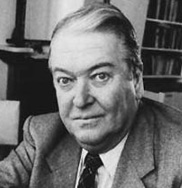
Theodore Roethke

David Hume

We think by feeling. What is there to know?

–Theodore Roethke

Morals and criticism are not so properly objects of understanding as of taste and sentiment. Beauty, whether moral or natural, is felt, more properly than perceived.

–David Hume

Emotions ignite moral judgments. Reason follows in the wake of this dynamic….Conscious moral reasoning often plays no role in our moral judgments, and in many cases reflects a post-hoc justification or rationalization of previously held biases or beliefs.

–Marc D. Hauser, Moral Minds (24-25)

We Think by Feeling

In my last post I objected to clever and stylistic cinematic portrayals of violence because violence is the ugliest and stupidest thing that people do. I selected four movies for disapprobation, Snatch, Mr. and Mrs. Smith, Pulp Fiction, and Kill Bill. (It is no accident that two of these movies were created by Quentin Terantino, but more on that later.) But it dawned on me after I made the post that the primary rationale that I could come up with for why Mr. and Mrs. Smith is such a morally execrable movie (it makes light of those wretched people who kill others instead of exploring the contours of their depravity) is also true of Prizzi’s Honor, one of my favorite movies. Of course, I could try to convince myself that Prizzi’s Honor deserves an exemption from my rule about glamorizing violence because it is a highly ironic work of art.

Unfortunately, I’m pretty sure that whoever came up with Mr and Mrs. Smith was trying to be ironic, and every movie is a work of art (but not necessarily a well-achieved work of art.) It has also occurred to me that every reason I can come up with for why I never enjoyed Married with Children (it’s about a bunch of pathetic losers who are constantly abusing each other) is true about Two and a Half Men, one of my favorite shows.

Because emotions ignite moral judgments, it is my feeling that violence in film should be just as ugly and stupid as it is in real life. That’s why I like Reservoir Dogs so much more than Pulp Fiction (Michael Madsen’s happy dancing torturer scene notwithstanding). Terantino is, of course, a lightening rod for people who object to violent movies, particularly when he says asinine things like this:

“Violence in the movies can be cool,” he says. “It’s just another color to work with. When Fred Astaire dances, it doesn’t mean anything. Violence is the same. It doesn’t mean anything. It’s a color.”

The maddening thing about Terantino is that he such an idiotic savant. He writes brilliant dialogue, gets unexpectedly marvelous performances out of his actors and he’s even capable of creating rather touching scenes. I was very moved, for example, by the way Robert Forster revealed his vulnerable side to Pam Grier in Jackie Brown by talking about how degrading it was to sit alone for hours in a dark room that reeked of cat piss in order to do the only job he was qualified for.

So is every work of criticism simply an attempt to rationalize feelings? I’m afraid so.

by Richard W. Bray

Why am I so Goofy for Burn Notice?

February 26, 2010

Burn_Notice_logo.svg

“In my experience, people get hurt and things get complicated no matter what you do”
–Fiona Glenanne

Why am I so Goofy for Burn Notice?

For the uninitiated, Burn Notice is a television show about love, vulnerability, friendship, pyrotechnics, loyalty, violence, family, duty, honor, deceit, murder, depravity, greed, sunglasses and yogurt.

But mostly it’s about decisions. A friend once chastised me for being “so damn existential,” but I’m practically a Calvinist compared to whoever writes Burn Notice.

For reasons related to my own mental health more than anything else, I am trying to figure out why Michael, Fiona, Sam and Madeline are my four favorite imaginary friends:

Michael Westen (Jeffrey Donovan) is a near-perfect hero. He’s brave, loyal, handsome, and honor-bound to do good in this fallen world. Week after week, this ascetic Good Soldier is reluctantly enlisted to aid and protect the helpless and downtrodden, and he just can’t say no. My favorite thing about Donovan is the way he can make his mouth smile while the rest of his face is saying, “You got to be kidding me.”

“The essential function of art is moral,” argued D. H Lawrence. That is why I get so upset when violence, the ugliest and stupidest thing people do, is portrayed in a stylish and witty fashion. I can’t stand philosophically nihilistic and morally empty movies like Snatch, Mr. and Mrs. Smith, Pulp Fiction, and Kill Bill, no matter how elegant and clever they may be. Thus, I am troubled by my intense affection for Fiona Glenanne (Gabrielle Anwar), an extremely stylish assassin. I reconcile my love for Fiona with my feelings about cinematic violence by telling myself that Fiona (unlike, say, Beatrix Kiddo) is driven in equal measure by an appetite for both vengeance and compassion. But I can’t quite convince myself that this is true.

Sam Axe (Bruce Campbell) is the carefree, fun-loving guardian uncle that everyone should have. (I’m embarrassed to admit how unhip I am, but I really didn’t know that Campbell was a B-movie legend until my friend Tim who knows about these things recently schooled me.)

I am less embarrassed about my previous ignorance of Sharon Gless’s estimable talent (The shapes a bright container can contain!). I never watched Cagney and Lacey because it’s the kind of show my mom would (and did) watch. (My loss) Gless plays Madeline Westen, a haggard nicotine addict who is interminably stretched to the limit. Without getting too maudlin, the Westens represent a compelling mother-son relationship due to their heroic efforts to attempt to negotiate beyond her hurt and denial and his deeply constrained psyche which is fettered by a monomaniacal sense of duty.

But the main reason I love Burn Notice so much is probably because the show somehow manages to take a stand against wicked things like torture, mercenaries, and dehumanizing corporate greed without ever losing its cool.

by Richard W. Bray

Writers on Writing

February 24, 2010

Adrienne Rich

Robert Pinsky

Writers on Writing

(Editor’s Note: This post is the result of a conversation I had in the comments section of Ta-Nehisi Coates’s blog. Until quite recently I would have scoffed at the very notion that such a thing as an online community could possibly exist)

W. H. Auden The Dyer’s Hand

Attacking bad books is not only a waste of time but also bad for the character. If I find a book really bad, the only interest I can derive from writing about it has to come from myself, from such a display of intelligence, wit and malice as I can contrive. One cannot review a bad book without showing off. (11)

Richard Wilbur Responses, Prose Pieces

Emily Dickinson elected the economy of desire, and called her privation good, rendering it positive by renunciation. And so she came to live in a huge world of delectable distances….And not only are the objects of her desire distant; they are also very often moving away, their sweetness increasing in proportion to their remoteness. “To disappear enhances,” one of the poems begins, and another closes with these lines:

The Mountain–at a given distance–
In Amber–lies–
Approached–the Amber flits–a little–
And That’s–the Skies

(11-12)

Adrienne Rich On Secrets, Lies and Silence

I have a notion that genius knows itself; that Dickinson chose her seclusion, knowing she was exceptional and knowing what she needed. It was, moreover, no hermetic retreat…But she carefully selected her society and controlled the disposal of her time. (160)

The Theater Essays of Arthur Miller

So long as modern man conceives of himself as valuable only because he fits into some niche in the machine-tending pattern, he will never know anything more than a pathetic doom. (60)

Ira Gershwin Lyrics on Several Occasions

When I was on jury service in New York many years ago there was a case found for the defendant. Afterwards, in the corridor, I saw the lawyer for the plaintiff approaching and thought I was going to be lectured. But no. Greetings over, all he wanted to know was whether the words or the music came first. (41)

Theodore Roethke On Poetry & Craft

The writer who maintains that he works without regard for the opinion of others is either a jackass or a pathological liar. (48)

Norman Mailer The Spooky Art

Kurt Vonnegut and I are friendly with one another but wary. There was a period when we used to go out together fairly often because our wives liked each other, and Kurt and I would sit there like bookends. We would be terribly careful with one another; we both knew the huge cost of a literary feud, so we certainly didn’t want to argue. On the other hand, neither of us would be caught dead saying to the other, “Gee, I liked your last book,” and then be met with silence because the party of the second part could not reciprocate. (288)

Robert Pinsky The Sounds of Poetry: A Brief Guide

There are no rules.
However, principles may be discerned in actual practice: for example, in the way people actually speak, or in the lines poets have written. If a good line contradicts a principle one has formulated, then the principle, by which I mean a kind of working idea, should be discarded or amended.
(7)

Javier Marias Written Lives (on Rainer Maria Rilke)

The fact that such a sensitive person, so much given to communing, should have turned out to be the greatest poet of the twentieth century (of this there is little doubt) has had disastrous consequences for most of the lyrical poets who have come after, those who continue communicating indiscriminately with whatever comes their way, with, however, far less remarkable results and, it has to be said, to the serious detriment of their personalities. (83-84)

Gore Vidal United States

Sex is. There is nothing more to be done about it. Sex builds no roads, writes no novels, and sex certainly gives no meaning in life to anything but itself. I have often thought that much of D. H. Lawrence’s self-lacerating hysteria toward the end of his life must have come out of some “blood knowledge” that the cruel priapic god was mad, bad and dangerous to know, and, finally, not even a palliative to the universal strangeness. (37)

George H.W. Rylands Words and Poetry

When a generation labels everything as “superb” or “divine,” when a man says “damn” or “hell,” the actual meaning of the word is secondary to its emotional value; the word becomes a symbol of pleasure or disgust. The use of language in poetry is extraordinarily similar.” (72)

Stephen Fry The Ode Less Travelled

I HAVE A DARK AND DREADFUL SECRET. I write poetry. This is an embarrassing confession for an adult to make. In their idle hours Winston Churchill and Noel Coward painted. For fun and relaxation Albert Einstein played the violin. Hemingway hunted, Agatha Christie gardened, James Joyce sang arias and Nabokov chased butterflies. But Poety? (xi)

Percy Lubbock The Craft of Fiction

…when we think of the storyteller as opposed to the dramatist, it is obvious that in the full sense of the word there is no such thing as drama in a novel. The novelist may give the very words that were spoken by his characters, the dialogue, but of course he must interpose on his own account to let us know how the people appeared and where they were, and what they were doing. (111)

Stephen King On Writing

The dictum in writing class used to be “write what you know.” Which sounds good, but what if you want to write about starships exploring other planets or a man who murders his wife and then tries to dispose of her body with a wood-chipper? (158)

Lajos Egri The Art of Dramatic Writing

It is imperative that your story starts in the middle, and not under any circumstances, at the beginning. (200)

by Richard W. Bray

Ain’t No Use in Keepin’ Score

February 20, 2010

Ain’t No Use in Keepin’ Score

I said and thought and did
Ever’thing that I could do
To convince you that I meant
Every word I said to you
Now you and I both know
This thing ain’t workin’ out
But that don’t mean we have to
Fuss and fight and shout

There’s nothing I wouldn’t do
To help you ease your pain
But make-believin’ nuthin’s wrong
Is driving me insane
If it makes you feel better,
I’ll gladly take the blame
Don’t forget that it’s our lives
And not some silly game
You can add up my trespasses
And subtract all of yours
But darlin’ just remember,
Ain’t no use in keepin’ score

Now you know I’ve said, “I’m sorry”
Forty-seven times
I’d say it forty more
If that would ease your mind
I never doubted for a second
That your love was true
And I’ll always cherish
The time I spent with you

There’s nothing I wouldn’t do
To help you ease your pain
But make-believin’ nuthin’s wrong
Is driving me insane
If it makes you feel better,
I’ll gladly take the blame
Don’t forget that it’s our lives
And not some silly game
You can add up my trespasses
And subtract all of yours
But darlin’ just remember,
Ain’t no use in keepin’ score

by Richard W. Bray

War-Junkie Worshipers

February 11, 2010

War-Junkie Worshipers

All who live to shoot and kill are really just one man:
Bonaparte and Patton, Alexander and his clan
Curtis Lemay, good ole Che, and the Son of Sam
Killers one and all. Why can’t you understand?

Glory, Glory Hallelujah–you can march and sing and shout
But an appetite for murder isn’t something one should tout
Don’t tell me that their cause was just. That ain’t what it’s about
‘Twas not for love of country Patton killed so many Krauts

It’s always a mistake to worship human beings
But idolizing killers is way beyond obscene
Actors, barons, rock stars, billionaires and queens
Should suffice for grownups who act like love-struck teens

Historians and novelists and tv talking heads
Reenactors and war-wankers who hail the happy dead
Are so quick to overlook so many who have bled
Perhaps they should revere blessed peacemakers instead

by Richard W. Bray

Nine Great Punchlines

February 7, 2010

Peter Sellers–The one and only Inspector Clouseau

#1 You had a bad week, so I should suffer?

Reb Nachum, from the play The Fiddler on the Roof

The town beggar says this to Tevye, demonstrating an absurd sense of entitlement

#2 Nobody’s Perfect

Man smitten by Jack Lemmon in drag in the movie Some Like it Hot

Final scene

#3 I’m thinking it over.

Jack Benny from The Jack Benny Show

Armed Mugger Says, “Your money or your life.”

Jack pauses (it’s all about the pause) and says nothing.

Mugger says, “C’mon buddy, I haven’t got all day.”

Jack pauses again and finally says, “I’m thinking it over.”

#4 WTF is moribund?

David Steinberg from classic collegiate routine.

Sorry, can’t find it on youtube, and it would be heretical to attempt to recreate it.

#5 We could sew the ends of our dicks back on.

Benjamin Siegel (played by Eric Roberts) from the HBO movie Lansky

Ben (don’t call me Bugsy) Siegel’s retort when famed (or notorious, depending on your perspective) Jewish mobster Arnold Rothenberg Rothstein tries to recruit the young Jewish hoodlums Siegel and Meyer Lansky by suggesting that they will never be allowed to rise up among the Italian crime organizations. (Screenplay by David Mamet.)

#6 I love wrong numbers

Danny Devito from the movie The War of the Roses.

You’ll have to watch the movie. (My mom reads this blog.)

#7 We’re against it, Ted

Mary Richards from The Mary Tyler Moore Show

Mary’s response when asked by dim-witted newscaster Ted Knight what the network’s position is in an editorial about child abuse

#8 Zat iz not my dog

German man in hotel to Peter Sellers from the movie The Pink Panther Strikes Again

Does your dog bite?

#9 You slut!

Bill Murray from the movie Tootsie

My words cannot adequately describe this marvelous scene, so again, you’ll have to watch the movie.

by Richard W. Bray

What’s the Matter with Kids these Days?, Part 473—It’s all about the Music, Man

February 4, 2010

What’s the Matter with Kids these Days?, Part 473—It’s all about the Music, Man

(Disclaimer: I don’t think that all new music is execrable; from what I’ve heard, much of it is quite good. While many of my contemporaries are content to listen to the same Classic Rock standards over and over, I’m actually open-minded enough to watch Austin City Limits even when they feature so-called Indie Rock groups)

This headline, Young People and ipods have Utterly Destroyed Music, reflects a nearly ubiquitous conversation among people my age these days. The argument goes something like this:

When we were young, music really meant something, man. Our music defined a generation and helped to end a war. This is a stark contrast to today‘s shallow and meaningless music, which is all about bling, sex and superficiality, man. Music is so sucky because Kids These Days are so busy navel-gazing, playing video games, and updating their Facespace pages that they don’t have the same kind of passion for music that our own glorious generation once did, man.

(This imaginary disgruntled DFH reminds me of a roommate I had in college with Ray Manzerek Disease, a verbal tic wherein the speaker is unable to utter three consecutive sentences without saying the word man)

Of course, What’s the Matter with Kids these Days? has been a common complaint at least since the time of Aristotle. (And a healthy dose of Mike Males is always a good antidote for this type of specious thinking.)

But there clearly is a difference in the way young people listen to music today. Without getting into to whether or not music means as much to today’s adolescents as it did to previous generations (how could you possibly quantify such a thing?) I will briefly note a few ways in which technology has changed music.

Today music is cheap, portable, durable and easily transferable, but that wasn’t always the case.

Back in the day, the standard delivery system for music (LPs), were much bulkier and more fragile than, say, MP3s. Records were big and delicate. They were kept inside a paper sleeve inside a cardboard sleeve (and many people placed the entire album inside a plastic sleeve for extra protection.) Records were easily-broken and they could only be held by the edges because mere fingerprints could ruin them. Although portable record players existed, they were weren’t exactly high fidelity (a term which was once freighted with a sanctified resonance among music lovers.) A good record collection and stereo, often including gargantuan speakers, was not only expensive, but it could take up practically an entire living room.

So do young people appreciate music less than we did because it’s practically free and you can put it in your pocket?

I don’t know, man.

by Richard W. Bray

New Yorker Magazine Buries the Lede in Puff Piece on Education Secretary Duncan

January 31, 2010

Arne Duncan

New Yorker Buries the Lede in Puff Piece on Secretary Duncan

I’m glad that Carlo Rotella decided to do some actual reporting in his treacly ode to Education Secretary Arne Duncan in the February 1st edition of the New Yorker Magazine. Unfortunately, it’s buried at the end of the article. After four puffy pages wherein we learn that Duncan is a marvelous human being who loves basketball, the author finally begins to do his job as a reporter, and the results aren’t very comforting. You see, there isn’t a whole lot of evidence that the programs Duncan is spending billions of taxpayer dollars on actually work. I’ll let the quotations speak for themselves:

Diane Whitmore Schanzenbach of the University of Chicago’s Harris School of Public Policy Studies (who describes herself as “basically in favor of Duncan’s policies”) gives this rousing endorsement of the upshot of Duncan‘s policies as head of the Chicago schools: “I don’t think there’s any real evidence that people are made worse off, and there’s limited evidence that that they’re making things better.”

Kenneth Saltman, professor of education at DePaul University, calls Duncan a “hatchet man for (Mayor) Daley” and a “militant privatizer who label(ed) schools in black communities as failures to justify opening new charters that could skim off the highest-achieving students, thereby widening the gap between winners and losers.”

Erik Hanishek of the Stanford Institution “is one of the most outspoken senior academics in the market forces camp. But even he describes the reforms that Duncan has pursued as ‘the best guesses for how to go forward’”

According to Rotella, Diane Ravitch of New York University believes that Duncan’s so-called “market forces party can offer nothing better than a vague idea that their reforms should work, rather than evidence that they actually do.” “You shouldn’t set the agenda if you’re not sure the agenda works,” argues Ravitch.

Steven Rivkin, an economist at Amherst, “worries that Duncan may be pushing too hard for policies which haven’t proven effective.”

by Richard W. Bray

What is a Crappy Little Country, Mr. Goldberg?

January 21, 2010

What did you do in the Global War on Terror, Daddy?

(Editor’s Note: I am not the person who brought Mr. Goldberg’s family into this. It was Jonah Goldberg who hid inside his own daughter’s skirt when it came time to fight in a war he so assiduously promoted)

People move into violence by a disposition to treat the world as entirely theirs.

–Alfred Kazin


Every ten years or so, the United States needs to pick up some small crappy little country and throw it against the wall, just to show the world we mean business.


Jonah Goldberg

What is a Crappy Little Country, Mr. Goldberg?


What’s a crappy little country, Mr. Goldberg?
When cluster bombs are dropped upon its conscripts
Is it fecal matter rather than blood
That drains from their bodies?
When a little girl in a crappy little country cries
Because the car transporting her family
Was shot to bits at a checkpoint
Does she cry saline tears, like your daughter?
Or does liquefied shit ooze out of her eyes?
Or am I just taking your metaphor too literally?

by Richard W. Bray

Petcipe #1 Chessie and Sadie’s Special (by Marjorie)

January 19, 2010

Sadie’s Special

This recipe is adapted from a dish prepared by a Korean-American former department secretary at an urban university.

    Ingredients

3 packages of Ramen noodles (discard the flavor packets)

3 medium or 2 large brown onions

3 medium or 2 large bell peppers

6 medium or 4 large tomatoes

Bean sprouts equivalent in bulk to the amount of noodles

A good vegetable oil

Water (about 3 cups)

Catsup, soy sauce, worcestershire sauce to taste (a bit of teriyaki sauce can also be added)

(the amounts of the ingredients can be expanded or contracted, the proportions should
remain the same)

    Directions

Cut the onions, peppers and tomatoes into half inch pieces (you can chop the peppers and tomatoes while the onions are cooking); heat the oil in a Dutch oven on the stove top (or in a large electric skillet) and brown the ramen noodles, turning when each side of the block of noodles has browned; remove and reserve the noodles; remove the oil and take out the bits of noodle that have come loose; return the oil to the kettle and add the onion; cook onions until they are limp and translucent; add the peppers, and after a bit the tomatoes and simmer for a while, but do not over cook the peppers; add the noodles and enough water to soften them; add the bean sprouts and simmer until the noodles are cooked; add the catsup and soy sauce to taste (it takes quite a lot of catsup); some worcestershire sauce and teriyaki sauce may also be used.

Note: This is a vegetarian version. The original recipe included a pound of cut up steak cooked with the onions. Alternatively a pound of cooked shrimp could be added during the final stage.