Posts Tagged ‘War’

Murder Machine

May 2, 2012

Murder Machine

Feeds on resentment, hatred and fear
Murder Machine got a million gears
Profits mount—bodies stack high
Politicians—so easy to buy
Blood money drips to the greedy few
Till we’re all in hock to the thieves who rule
Spits out orphans, widows and pain
Murder Machine leaves a wicked stain

by Richard W. Bray

Warbucks

April 3, 2012

rich man’s war
poor man’s fight
buddy, what gave
you the right
to profit offa
blood and misery?

warbucks fill
your bank account
tell me what’s
the right amount
to make you
be the best that you can be

i seen things
you can’t erase
i lost friends
you can’t replace
i pray to God
you worship property

your blood freezes
my blood burns
you seek silver
i just yearn
to be stateside
with my lovin family

Richard W. Bray

Exceptionalism

September 24, 2011

Exceptionalism

Time for you to move
We vanquish all we see
It’s written and it’s manifest
None thwart our destiny

Only fools oppose us
We’ll squash you all like bugs
Those who won’t stand with us
Are the real thugs

Our creed is tried and tested
Our cause is pure and just
We aren’t doing what we should
We do the things we must

We never say we’re sorry
That would make us weak
We know that God is with us
Mighty Glory we shall seek

We’re right because we’re righteous
That makes us good and true
We needn’t bother listening
To anyone like you

by Richard W. Bray

Famed American Virtue

August 19, 2011

Graham Greene

Famed American Virtue

Innocence always calls mutely for protection when we would be much wiser to guard ourselves against it: innocence is like a dumb leper who has lost his bell, wandering the world, meaning no harm.

Graham Greene, The Quiet American (29)

The Muslims just need to be shown that it is possible to set themselves free.

President George W. Bush Max Boot

Recently there has been a discussion on Andrew Sullivan’s blog about how Americans should go about thanking our combat veterans. Such spasms of guilt from a populace who mindlessly sent so many off to kill and die for no good reason are not surprising. But I think it would be a lot healthier for everyone involved to say this to our combat veterans: I’m sorry. I’m sorry that we made you experience horrific things for no good reason. I’m sorry that I only went to two anti-war rallies. I sorry that, lacking the courage of Henry David Thoreau, I continued to pay taxes in support of the bloodthirsty madness which consumed our nation after 9-11. I’m sorry that almost our entire leadership class chose to plunge its head up its collective keyster instead of exploring reasonable alternatives to war. I’m sorry that George W. Bush had Daddy Issues. I’m sorry that Thomas Friedman wanted to feel fellated.

But Americans, particularly our pundit class, aren’t about to start apologizing for our unjustified invasion of Iraq. Really, how hard would it be to say, “Oops. We accidentally conducted a war in Iraq which led to the death of over a hundred thousand people and the displacement of a few million more. Our bad. Can we get a mulligan on that?”

Our leaders, our institutions, our media, all of us—we failed miserably. And the people of Iraq were forced to pay for it. Yet we rarely even speak these days of the true ramifications of this monumental dereliction of duty. We prefer to exalt and fetishize our troops instead of facing up to ourselves and what we’ve done. If we just keep telling ourselves that the men and women who signed on to defend America did so with courage and purity in their hearts, and if we keep focusing on their sacrifice, we can magically shield ourselves from a horrible truth and regain that “famed American virtue“—our innocence.

This is certainly nothing new. Our Beloved Founders lectured the world on the Rights of Man while enslaving one group of humans and nearly exterminating another.

Lofty words about freedom and democracy notwithstanding, enabling repressive regimes in the Gulf Region has been the unofficial American policy for decades. That’s why we have propped up repressive regimes from Iran to Algeria. That’s why President Obama was so timid and vacillating in response to the recent popular uprising in Egypt.

Brent Scowcroft, a prudent paleoconservative from the Henry Kissinger School of International Realism and a trusted adviser to George H.W. Bush, bragged that American support for tyrannical dictatorships in the Middle East helped ensure “fifty years of peace” in the region and kept the precious oil flowing at reasonable prices. Notable examples this policy include the 1953 CIA–sponsored overthrow of the democratically elected Mossadegh government in Iran and our longstanding support of the Saudi Royal Family.

In light of this history, it was almost surrealistic to hear George W. Bush declare in 2002 with neo-Wilsonian zeal that it was now America’s duty to usher in a new age of Democracy across the Middle East by unleashing our cluster bombs upon Iraqi conscripts. There wasn’t “much regard for truth in our papers” in the wake of 9-11, as mass amnesia about the true history of America’s relationship with the region miraculously took root among our pundit class (88).

Graham Greene refers to the remarkable American ability to maintain our sense of innocence no matter what we do as “a kind of insanity” in The Quiet American, his 1955 novel about early American involvement in Indochina (155). This brilliant and prophetic book is the story of a world-weary English reporter named Thomas Fowler who is befriended by an idealistic young CIA operative with “pronounced and aggravating views on what the United states was doing for the world” named Alden Pyle (4).

Pyle is a dreamy youth “absorbed already in the dilemmas of Democracy and the responsibilities of the West” (10). Tumescent with high-minded ideas about bettering the lot of the world’s downtrodden, Pyle is haughty with book-learning. He brushes off Fowler’s hard-won wisdom with the brash certainty of true ignorance. If Pyle had been capable of listening, he might have heeded Fowler’s simple truth: “They don’t want our white skins around telling them what they want” (86). The United States might have spared itself the loss over sixty thousand lives and billions of dollars in Southeast Asia if our leaders had been willing to listen to such talk.

Instead, Pyle dismisses Fowler’s wisdom as the voice of a wicked and defeated continent: “You talk like a European, Thomas. These people aren’t complicated” (168). If only Pyle had paid more attention when Fowler wryly noted that the Vietnamese “know enough to turn your exhaust pipe into a mortar” (79).

Deaf to Fowler’s multiple warnings, Pyle is determined to heed Kipling’s call and Pick up the White Man’s Burden in Vietnam. Searching for a pro-American “third force” to shake things up in the region, Pyle ultimately mistakes renegade General Thé, “a bandit with a few thousand men,” for “a national democracy” (149). When Thé uses explosives provided by Pyle to murder several civilians, Folwer confronts Pyle and asks him how he can possibly “justify a child’s or a trishaw driver’s death”(155).

Undaunted, Pyle replies, “In a way you could say they died for democracy” (171).

It was easy for Alden Pyle to drift into support of Thé’s terrorism because Pyle “was determined…to do good, not to any individual person, but to a country, a continent, a world” (10).

America’s perpetual longing for a world that never was, that City on a Hill of our most perfervid imaginings, often has drastic consequences in the real world. When will we ever learn that it is impossible to absolve our own sins with the blood of others?

by Richard W. Bray

Application #6

July 1, 2011

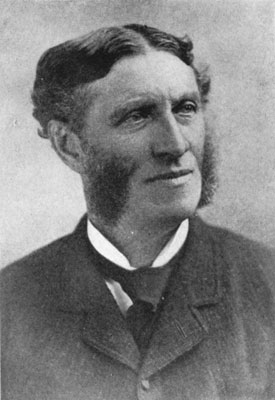
Matthew Arnold

Application # 6
(Something I wrote in graduate school)

The “interpoetic relationship” between Matthew Arnold’s Dover Beach and Anthony Hecht’s The Dover Bitch could hardly be less subtle. Hecht “clears poetic space” for himself by means of a “purposeful misreading” of Arnold in which Hecht inserts himself as a peripheral character in “Dover Beach”. This playful approach belies Harold Bloom’s contention that poets inevitably grapple with the “anxiety of influence” of prior works.

“Dover Bitch” is a lighthearted parody which mocks the sincerity and the seriousness of the original text. Hetch does this by transforming the object of desire in “Dover Beach” into a “girl” who is quite unworthy of her lofty stature. The woman spoken to in “Dover Beach” is the recipient of a protestation of a love which is meant to replace all the shattered Victorian certitudes which no longer exist:

Ah, love, let us be true
To one another! for the world ….
Hath really neither joy, nor love, nor light
Nor certitude, nor peace, nor help for pain

This is quite a tall order to fill: Make my life meaningful in a world without God. Hecht slyly deflates Arnold’s heroic affirmation of devotion by turning its recipient into a woman far more interested in having a good time than resolving Arnold’s spiritual devastation. Hecht does not merely remove her from her pedestal, but makes her scornful of Arnold’s attempt to recreate her “(A)s a sort of mournful cosmic last resort”.

Hecht’s attempt to supplant his predecessor offers a rich vein to be tapped by those who would extract psychoanalytical deposits from the rivalries which exist between authors. When Hecht proclaims “I knew this girl”, he means it in the biblical sense. It is hard to resist the Oedipal interpretation in which Hecht not only seduces the fictional object of Arnold’s desire, but has his way with his poem as well.

Hecht’s reduction of Arnold’s contemplation on the meaning of life into a tawdry one night stand is possible because Arnold permits him the space to do so. Arnold’s failure to consider how the poem plays to its internal audience makes it possible for the reader to accept her as seeing him as an insufferable blowhard.

by Richard W. Bray

That’s How Easy War Can Be

May 16, 2011

american
bombs
courageously
dropped.
everybody
feels
great
here.
imperial
justice
keeps
liberating
manifold
nonhumans.
only
pacifists
queasy.
reality
shows
transmit
universal
values.
we’re
xceptional,
you’re
zapped.

by Richard W. Bray

Blowing up Babies

March 15, 2011

Blowing up Babies

We’re lost and we’re angry
We ain’t got no plan
And we’re blowing up babies in Afghanistan

Things are falling apart
All across the land
We’re still blowing up babies in Afghanistan

Only fools wanna mess
With festering clans
Let’s stop blowing up babies in Afghanistan

When’d we all get so stupid?
I can’t understand
Why we’re blowing up babies in Afghanistan

Soldiers sign up
To protect the homeland
We make ’em blow up the babies in Afghanistan

We need our leader
To be a man
And stop blowing up babies in Afghanistan

by Richard W. Bray

Like we Love our Kids

November 28, 2010

Like we Love our Kids

Someday we’ll pay for all the things we did
We broke some stuff and made some noise
We love our soldiers like we love our kids

Methods and motives are better left hid
Nothing’s too good for our girls and boys
Someday we’ll pay for all the things we did

Missed every birthday, but I always did
Send a little box of love and joy
We love our soldiers like we love our kids

The mighty don’t fall so much as they skid
Lives and countries have been destroyed
Someday we’ll pay for all the things we did

Love ain’t cheap, so what’s your bid?
Can’t you see how much we spend on toys?
We love our soldiers like we love our kids

War and kids: Patriotic joy
Up too close they begin to annoy
Someday we’ll pay for all the things we did
We love our soldiers like we love our kids

by Richard W. Bray

Manly War Romancer

September 18, 2010

George Orwell

W_H_Auden_and_Christopher_Isherwood (3)

Auden and Isherwood

Manly War Romancer

Auden pronounces War is murder
Mister Orwell has a hissy:
Do not scorn the deeds of men
You damn, limp-wristed sissy

Orwell ran to join a war
Chris and Wystan sailed away
Orwell took one in the throat
But lived to write another day

Does this poem have a moral,
A message, or an answer?
Gladly lust for life unlike
A manly war romancer

by Richard W. Bray

Come Home, America

June 23, 2010

Come Home, America

We’re crossing seas in search of dragons
And other beasts to slay
Come home, America
Time to discover our own way

Solving other people’s problems
Is an errand meant for fools
Come home, America
It ain’t our job to make the rules

Dropping drones on wedding parties
Ain’t the best way to make friends
Come home, America
We have better gifts to send

Puffy, pasty pundits send
Our youngsters off to die
Come home, America
Before our nation is bled dry

We’re blowing up other countries
Instead of fixing up our own
Come home, America
Time to cast away the stones

We have so much to offer
But we ain’t the world’s cop
Come home, America
This madness has to stop

Decline and dissolution
Don’t have to be our fate
Come home, America
I hope it’s not too late

by Richard W. Bray