Chester and Pork with Sauerkraut (by Don)

March 14, 2010

Chester

Pork with Sauerkraut

Ingredients:
Two jars of Sauerkraut
Three Pounds Pork Shoulder

Directions:

1) Boil the pork for 40 minutes in enough water to cover the meat
2) Drain, cut up pork and remove bones
3) Add sauerkraut and simmer for 20 minutes

Optional Ingredients: Bacon, Apples and Onions

Serving Suggestions:
Serve over baked or mashed potatoes

Ten Things I Learned from Reading Lucky Jim which aren’t Actually True

March 12, 2010

bbbbking

(Editor’s Note: The novel Lucky Jim by Kingsley Amis is often compared to the works of Evelyn Waugh for its alleged hilarity. Sadly, I found the book to be mean-spirited and stupid and not that funny at all. Maybe I just like people too much.)

Ten Things I Learned from Reading
Lucky Jim which aren’t Actually True

1. Drinking solves more problems than it causes.
2. Most academics are pathetic dweebs.
3. Post-WWII colleges in England admitted way too many of the wrong type of people.
4. Most academic writing is worthless drivel.
5. Women tend to become less sexually attractive as you get to know them.
6. History shouldn’t be wasted on the unwashed masses.
7. Most people are ridiculous clowns.
8. Classical music is for losers.
9. Life is a sick, sad joke without a punch line.
10. You will be rescued by a rich benefactor so long as you don’t give too much of a damn about anything.

by Richard W. Bray

You’re Not Coming to my Birthday Party

March 10, 2010


Lucy Sparkles

You’re Not Coming to my Birthday Party

You wouldn’t let me pet your kangaroo
You didn’t take the time to tell me what’s new
You think you’re the world’s biggest smarty
You’re not coming to my birthday party

You hid my shorts. You ate my snack
You said awful things behind my back
You pushed me down and made me tardy
You’re not coming to my birthday party

You said my clothes were tattered and torn
You said you wished I’d never been born
You said it to George and you said it to Artie
You’re not coming to my birthday party

You don’t take baths, you smelly old lout
You scatter your grime all about
You’re filthy and stinky and stupid and farty
You’re not coming to my birthday party

by Richard W. Bray

What’s a War Junkie? Che v Zapata

March 9, 2010

bbbche shirt

bbbzap

What’s a War Junkie? Che v Zapata

I’ve taken some flak over my inclusion of Che Guevara in the poem War-Junkie Worshipers. My purpose here is not to verify whether or not Guevara fantasized about blowing up New York City, or if he wanted to ban the saxophone because it was too bourgeoisie. And I really don’t care if he actually had a medical degree. Separating this particular man from his myth is nearly impossible because he has become such a totemic figure for both his followers and his detractors.

But by the mere facts of his existence upon which we all can agree, Guevara was clearly a War Junkie. Instead of working to make his homeland a more just society, he went to three different countries in search of military glory. Even when he had the opportunity to build a New Society in Cuba, Guevara chose instead to go gallivanting across the globe looking for more people to shoot.

By way of contrast, let’s compare Che to that great Mexican Cincinnatus figure, Emiliano Zapata. Zapata was an highly respected and extremely gifted horseman who certainly would have achieved a comfortable existence had his life not been interrupted by the Mexican Revolution. Zapata, a natural leader of men, reluctantly came to fight for his own people only after it became clear that war was inevitable. Sadly, Zapata’s visage is simply no match for Guevara’s in the minds of so many silkscreen warriors.

Most soldiers are not War Junkies, and some War Junkies aren’t even soldiers. Generals George Washington, George Marshall, Dwight D. Eisenhower, Colin Powell, and Colonel Andrew Bacevich are just a few obvious examples of men whose exploits included both the Sword and the Ploughshare, so to speak. And millions of American soldiers returned home after serving admirably in our many wars without the slightest desire to ever return to the battlefield. Many (probably most) of them never even wanted to study war no more in any way.

btw, Please keep the emails coming, whether you agree with me or not.

laughterhopesockeye@yahoo.com

by Richard W. Bray

Max & Mia and Chile Verde (by Monica)

March 6, 2010

Max & Mia

Max Solo

Chile Verde

Ingredients

2 pounds of meat cut into 1-inch chunks(chicken or pork)
1 large Bell Pepper (Roasted)
Tomatillos (boiled whole with a little water)
3 Jalapenos (Roasted)
Cilantro
Garlic
Salt and Pepper to taste
Vegetable Oil

1) Roast chiles and place in bag to sweat; remove stems, seeds, and skin
2) Season meat with salt and pepper and brown in a heavy-bottom skillet
3) Remove excess fat and set aside
4)Pulse together in a blender chopped bell pepper, tomatillos, jalapenos, cilantro, garlic, salt, adding a little water from the boiled tomatillos or stock
5) If your skillet is large enough, add everything or remove to a larger skillet combining all ingredients
6) Bring to a boil and simmer all ingredients for about an hour to an hour and a half.

Cheese-Eating Surrender Monkeys–Some Thoughts on Courage and Freedom

March 3, 2010

Cheese-Eating Surrender Monkeys–Some Thoughts on Courage and Freedom

Our pathetic tendency to depict France as a nation of, in the words of Bart Simpson, “cheese-eating surrender monkeys” is tolerated across the political spectrum despite its absurd lack of historical legitimacy. Such silliness overlooks two salient facts: the French army was the scourge of Europe for centuries, and only one nation has lost more soldiers fighting in wars alongside America than France. Furthermore, the French mindlessly continued to sacrifice their soldiers for lost causes in Algeria and Indochina. (Of course, attributing such actions to a particular nation’s overall level of courage is a dubious assumption which may indeed conflate courage with stupidity. How much courage does it take to send other people off to die in the name of imperialism?) But the point remains that many people who really should have known better justified the foolhardy invasion of Iraq by constructing a straw man of French cowardice:

“If those perfidious Frenchies are against this war, then it must be a good idea. Now, let’s all have some Freedom Fries.”

But questioning the courage of other peoples does not enhance our national stature; in fact, it diminishes us. The hundred thousand or so Frenchman who died defending their country from the invading Nazis before their leaders surrendered were just as brave as the soldiers who defeated them, but courage alone does not win wars. Armies have gotten routed throughout history for many reasons that were not the responsibility of individual soldiers—inferior technology, smaller numbers, strategic blunders, etc. It’s odd that anyone would attribute the French surrender in WWII to cowardice, particularly in light of the ghastly casualties that nation endured during WWI. Curiously, I’ve never heard anyone accuse, say, General Cornwallis of being a poltroon.

Risking death and dismemberment in order to defend kith and kin is the supreme act of selflessness, and you don’t have to take my word for it: “Greater love has none than this, that one lays down his life for his friends.” (John 15:13) But it is unwise (and perhaps even ultimately depraved) to suggest that Americans are essentially more willing to make such sacrifices. Thus, to argue that America is free because we have the bravest soldiers in the world contains the seeds of fascism because it denigrates the humanity of people living in all other nations.

Americans have been able to maintain our democracy for over two hundred years because of the strength of our institutions, including, notably, the professionalism of our armed forces. Unlike the armies in so many other countries, our military has remained deferential to civilian authority through thick and thin. Even when we elected stupid and incompetent leaders like Lyndon Johnson and George W. Bush who misused and abused our soldiers by sending them on untenable, immoral and foolish errands, our soldiers have saluted and said, “Yes, sir” to their civilian masters. (Theirs is not to wonder why.) Occasionally, some decorated popinjay with a gargantuan ego, a McClellan or a MacArthur, has attempted to buck his president. Thankfully, however, our armed forces have never mutinied nor revolted en masse, and they have never attempted to directly interfere with the electoral process. This is one of our nation’s greatest contributions to civilization, right up there with The Bill of Rights, Louis Armstrong and Emily Dickinson.

So yes, America does owe its freedoms to the courage and professionalism of our foreparents, both in and out of uniform. But we need to find a way to acknowledge this debt without fetishizing our soldiers, and laughing at the alleged cowardice of others makes us all a bit smaller.

by Richard W. Bray

We Think by Feeling

March 2, 2010

Theodore Roethke

David Hume

We think by feeling. What is there to know?

–Theodore Roethke

Morals and criticism are not so properly objects of understanding as of taste and sentiment. Beauty, whether moral or natural, is felt, more properly than perceived.

–David Hume

Emotions ignite moral judgments. Reason follows in the wake of this dynamic….Conscious moral reasoning often plays no role in our moral judgments, and in many cases reflects a post-hoc justification or rationalization of previously held biases or beliefs.

–Marc D. Hauser, Moral Minds (24-25)

We Think by Feeling

In my last post I objected to clever and stylistic cinematic portrayals of violence because violence is the ugliest and stupidest thing that people do. I selected four movies for disapprobation, Snatch, Mr. and Mrs. Smith, Pulp Fiction, and Kill Bill. (It is no accident that two of these movies were created by Quentin Terantino, but more on that later.) But it dawned on me after I made the post that the primary rationale that I could come up with for why Mr. and Mrs. Smith is such a morally execrable movie (it makes light of those wretched people who kill others instead of exploring the contours of their depravity) is also true of Prizzi’s Honor, one of my favorite movies. Of course, I could try to convince myself that Prizzi’s Honor deserves an exemption from my rule about glamorizing violence because it is a highly ironic work of art.

Unfortunately, I’m pretty sure that whoever came up with Mr and Mrs. Smith was trying to be ironic, and every movie is a work of art (but not necessarily a well-achieved work of art.) It has also occurred to me that every reason I can come up with for why I never enjoyed Married with Children (it’s about a bunch of pathetic losers who are constantly abusing each other) is true about Two and a Half Men, one of my favorite shows.

Because emotions ignite moral judgments, it is my feeling that violence in film should be just as ugly and stupid as it is in real life. That’s why I like Reservoir Dogs so much more than Pulp Fiction (Michael Madsen’s happy dancing torturer scene notwithstanding). Terantino is, of course, a lightening rod for people who object to violent movies, particularly when he says asinine things like this:

“Violence in the movies can be cool,” he says. “It’s just another color to work with. When Fred Astaire dances, it doesn’t mean anything. Violence is the same. It doesn’t mean anything. It’s a color.”

The maddening thing about Terantino is that he such an idiotic savant. He writes brilliant dialogue, gets unexpectedly marvelous performances out of his actors and he’s even capable of creating rather touching scenes. I was very moved, for example, by the way Robert Forster revealed his vulnerable side to Pam Grier in Jackie Brown by talking about how degrading it was to sit alone for hours in a dark room that reeked of cat piss in order to do the only job he was qualified for.

So is every work of criticism simply an attempt to rationalize feelings? I’m afraid so.

by Richard W. Bray

Why am I so Goofy for Burn Notice?

February 26, 2010

Burn_Notice_logo.svg

“In my experience, people get hurt and things get complicated no matter what you do”
–Fiona Glenanne

Why am I so Goofy for Burn Notice?

For the uninitiated, Burn Notice is a television show about love, vulnerability, friendship, pyrotechnics, loyalty, violence, family, duty, honor, deceit, murder, depravity, greed, sunglasses and yogurt.

But mostly it’s about decisions. A friend once chastised me for being “so damn existential,” but I’m practically a Calvinist compared to whoever writes Burn Notice.

For reasons related to my own mental health more than anything else, I am trying to figure out why Michael, Fiona, Sam and Madeline are my four favorite imaginary friends:

Michael Westen (Jeffrey Donovan) is a near-perfect hero. He’s brave, loyal, handsome, and honor-bound to do good in this fallen world. Week after week, this ascetic Good Soldier is reluctantly enlisted to aid and protect the helpless and downtrodden, and he just can’t say no. My favorite thing about Donovan is the way he can make his mouth smile while the rest of his face is saying, “You got to be kidding me.”

“The essential function of art is moral,” argued D. H Lawrence. That is why I get so upset when violence, the ugliest and stupidest thing people do, is portrayed in a stylish and witty fashion. I can’t stand philosophically nihilistic and morally empty movies like Snatch, Mr. and Mrs. Smith, Pulp Fiction, and Kill Bill, no matter how elegant and clever they may be. Thus, I am troubled by my intense affection for Fiona Glenanne (Gabrielle Anwar), an extremely stylish assassin. I reconcile my love for Fiona with my feelings about cinematic violence by telling myself that Fiona (unlike, say, Beatrix Kiddo) is driven in equal measure by an appetite for both vengeance and compassion. But I can’t quite convince myself that this is true.

Sam Axe (Bruce Campbell) is the carefree, fun-loving guardian uncle that everyone should have. (I’m embarrassed to admit how unhip I am, but I really didn’t know that Campbell was a B-movie legend until my friend Tim who knows about these things recently schooled me.)

I am less embarrassed about my previous ignorance of Sharon Gless’s estimable talent (The shapes a bright container can contain!). I never watched Cagney and Lacey because it’s the kind of show my mom would (and did) watch. (My loss) Gless plays Madeline Westen, a haggard nicotine addict who is interminably stretched to the limit. Without getting too maudlin, the Westens represent a compelling mother-son relationship due to their heroic efforts to attempt to negotiate beyond her hurt and denial and his deeply constrained psyche which is fettered by a monomaniacal sense of duty.

But the main reason I love Burn Notice so much is probably because the show somehow manages to take a stand against wicked things like torture, mercenaries, and dehumanizing corporate greed without ever losing its cool.

by Richard W. Bray

Writers on Writing

February 24, 2010

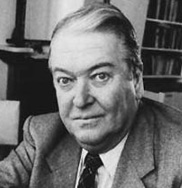
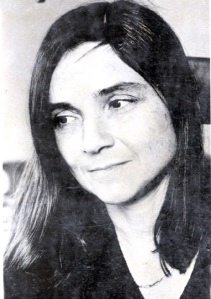
Adrienne Rich

Robert Pinsky

Writers on Writing

(Editor’s Note: This post is the result of a conversation I had in the comments section of Ta-Nehisi Coates’s blog. Until quite recently I would have scoffed at the very notion that such a thing as an online community could possibly exist)

W. H. Auden The Dyer’s Hand

Attacking bad books is not only a waste of time but also bad for the character. If I find a book really bad, the only interest I can derive from writing about it has to come from myself, from such a display of intelligence, wit and malice as I can contrive. One cannot review a bad book without showing off. (11)

Richard Wilbur Responses, Prose Pieces

Emily Dickinson elected the economy of desire, and called her privation good, rendering it positive by renunciation. And so she came to live in a huge world of delectable distances….And not only are the objects of her desire distant; they are also very often moving away, their sweetness increasing in proportion to their remoteness. “To disappear enhances,” one of the poems begins, and another closes with these lines:

The Mountain–at a given distance–
In Amber–lies–
Approached–the Amber flits–a little–
And That’s–the Skies

(11-12)

Adrienne Rich On Secrets, Lies and Silence

I have a notion that genius knows itself; that Dickinson chose her seclusion, knowing she was exceptional and knowing what she needed. It was, moreover, no hermetic retreat…But she carefully selected her society and controlled the disposal of her time. (160)

The Theater Essays of Arthur Miller

So long as modern man conceives of himself as valuable only because he fits into some niche in the machine-tending pattern, he will never know anything more than a pathetic doom. (60)

Ira Gershwin Lyrics on Several Occasions

When I was on jury service in New York many years ago there was a case found for the defendant. Afterwards, in the corridor, I saw the lawyer for the plaintiff approaching and thought I was going to be lectured. But no. Greetings over, all he wanted to know was whether the words or the music came first. (41)

Theodore Roethke On Poetry & Craft

The writer who maintains that he works without regard for the opinion of others is either a jackass or a pathological liar. (48)

Norman Mailer The Spooky Art

Kurt Vonnegut and I are friendly with one another but wary. There was a period when we used to go out together fairly often because our wives liked each other, and Kurt and I would sit there like bookends. We would be terribly careful with one another; we both knew the huge cost of a literary feud, so we certainly didn’t want to argue. On the other hand, neither of us would be caught dead saying to the other, “Gee, I liked your last book,” and then be met with silence because the party of the second part could not reciprocate. (288)

Robert Pinsky The Sounds of Poetry: A Brief Guide

There are no rules.
However, principles may be discerned in actual practice: for example, in the way people actually speak, or in the lines poets have written. If a good line contradicts a principle one has formulated, then the principle, by which I mean a kind of working idea, should be discarded or amended.
(7)

Javier Marias Written Lives (on Rainer Maria Rilke)

The fact that such a sensitive person, so much given to communing, should have turned out to be the greatest poet of the twentieth century (of this there is little doubt) has had disastrous consequences for most of the lyrical poets who have come after, those who continue communicating indiscriminately with whatever comes their way, with, however, far less remarkable results and, it has to be said, to the serious detriment of their personalities. (83-84)

Gore Vidal United States

Sex is. There is nothing more to be done about it. Sex builds no roads, writes no novels, and sex certainly gives no meaning in life to anything but itself. I have often thought that much of D. H. Lawrence’s self-lacerating hysteria toward the end of his life must have come out of some “blood knowledge” that the cruel priapic god was mad, bad and dangerous to know, and, finally, not even a palliative to the universal strangeness. (37)

George H.W. Rylands Words and Poetry

When a generation labels everything as “superb” or “divine,” when a man says “damn” or “hell,” the actual meaning of the word is secondary to its emotional value; the word becomes a symbol of pleasure or disgust. The use of language in poetry is extraordinarily similar.” (72)

Stephen Fry The Ode Less Travelled

I HAVE A DARK AND DREADFUL SECRET. I write poetry. This is an embarrassing confession for an adult to make. In their idle hours Winston Churchill and Noel Coward painted. For fun and relaxation Albert Einstein played the violin. Hemingway hunted, Agatha Christie gardened, James Joyce sang arias and Nabokov chased butterflies. But Poety? (xi)

Percy Lubbock The Craft of Fiction

…when we think of the storyteller as opposed to the dramatist, it is obvious that in the full sense of the word there is no such thing as drama in a novel. The novelist may give the very words that were spoken by his characters, the dialogue, but of course he must interpose on his own account to let us know how the people appeared and where they were, and what they were doing. (111)

Stephen King On Writing

The dictum in writing class used to be “write what you know.” Which sounds good, but what if you want to write about starships exploring other planets or a man who murders his wife and then tries to dispose of her body with a wood-chipper? (158)

Lajos Egri The Art of Dramatic Writing

It is imperative that your story starts in the middle, and not under any circumstances, at the beginning. (200)

by Richard W. Bray

Ain’t No Use in Keepin’ Score

February 20, 2010

Ain’t No Use in Keepin’ Score

I said and thought and did
Ever’thing that I could do
To convince you that I meant
Every word I said to you
Now you and I both know
This thing ain’t workin’ out
But that don’t mean we have to
Fuss and fight and shout

There’s nothing I wouldn’t do
To help you ease your pain
But make-believin’ nuthin’s wrong
Is driving me insane
If it makes you feel better,
I’ll gladly take the blame
Don’t forget that it’s our lives
And not some silly game
You can add up my trespasses
And subtract all of yours
But darlin’ just remember,
Ain’t no use in keepin’ score

Now you know I’ve said, “I’m sorry”
Forty-seven times
I’d say it forty more
If that would ease your mind
I never doubted for a second
That your love was true
And I’ll always cherish
The time I spent with you

There’s nothing I wouldn’t do
To help you ease your pain
But make-believin’ nuthin’s wrong
Is driving me insane
If it makes you feel better,
I’ll gladly take the blame
Don’t forget that it’s our lives
And not some silly game
You can add up my trespasses
And subtract all of yours
But darlin’ just remember,
Ain’t no use in keepin’ score

by Richard W. Bray