Compassion

February 17, 2014

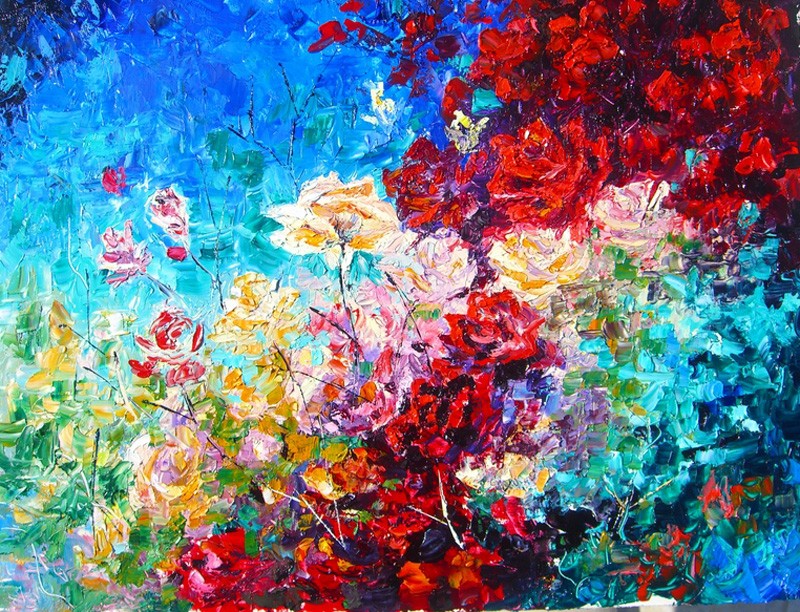
roses-abstract

Being mean
Don’t make a man
So love your neighbor
As you can

Compassion
Don’t grow on trees
It lives or dies
In you and me

I’ll never know
What you been through
But I can try
And comfort you

Compassion
Don’t grow on trees
It lives or dies
In you and me

Don’t hate folks
For being frail
A hardened heart
Is like a jail

Compassion
Don’t grow on trees
It lives or dies
In you and me

Try to have
A humble heart
Be thankful if
You’re strong and smart

Compassion
Don’t grow on trees
It lives or dies
In you and me

It don’t make
Much sense to live
If we can’t
Comfort and forgive

Compassion
Don’t grow on trees
It lives or dies
In you and me

by Richard W. Bray

Are Three-Syllable Words the Coolest Words, or What?

February 13, 2014

woven baskets

Why are handwoven baskets so lovely? Because human beings have an inborn hunger for beauty. And just as it is impossible to separate the utilitarian function of handicraft from its artistic function, the inherent beauty of the sounds and rhythms of words cannot be severed from the practical application of language.

That’s why everyone who speaks is a poet.

Just as a canary cannot read music, speakers of English needn’t study linguistics in order to employ rhyme, rhythm, assonance, and alliteration in their everyday speech.

The sportscaster is a poet when he says:

THAT BALL is OUTta here.

Instead of saying:

Chris Davis just hit another homerun.

And the adman is a poet when he writes:

BURGers are BETter at BURGer TOWN.

Instead of saying:

The chefs at Burger Town cook delicious burgers.

And the schoolteacher is a poet when she says in singsong:

PUT your PAPErs in the PACKet.

Instead of saying:

The assignment should be placed inside your homework folder.

And W.H. Auden is a poet when he tells us that the lover is

UNDer an ARCH of the RAILway

Instead of saying that the love smitten fellow is located

Underneath the elevated train tracks

Three-Syllable Words

We create poetry by collocating different types of words. And many of my favorite words have three syllables. (I have an unprovable theory that three-syllable words are the coolest words in the English language.)

There are three types of three-syllable words: Dactyls, Amphibrachs, and Anapests. Here are some examples:

Dactyl (The first syllable is stressed.)

Wonderful
Beautiful
Happily
Musical
Satisfy
Halibut
Excellent
Matterhorn
Saturday
Popular

Amphibrach (The second syllable is stressed.)

Accepted
Regardless
Terrific
Amazement
Exhaustion
Persistent
Reunion
Electric
Horizon


Anapest
(The third syllable is stressed.)

Incomplete
Misinformed
Unemployed
Understand
Interrupt
Comprehend
Unafraid
Absolute
Kangaroo

by Richard W. Bray

Broken

February 8, 2014

broken country

we got people to the moon
atop a big ole rocket
we got a thousand songs
to fit inside your pocket

we got politicians
with perfect teeth and hair
we got flying robots
that can kill you anywhere

we got favors for the rich folks
and prison for the poor
we got rampant unemployment
and never-ending war

we got a bunch of cameras
watching everything we do
we got a Constitution
but it don’t cover you

by Richard W. Bray

Madhouse Nuts

February 3, 2014

crazy love

Me and my man
We had a date
Would you believe
That he was late, late, late?
—Next day late

And when I finally
Saw that punk
Would you believe
That he was drunk, drunk, drunk?
—Smelly drunk

That loser is
My baby’s dad
Would you believe
That I am mad, mad, mad?
–Murder mad

This man is
More than I can take
Woul you believe
That he’s a snake, snake, snake?
–Walking snake

But I just love
The way he struts
Would you believe
That I am nuts, nuts, nuts?
–Madhouse nuts

by Richard W. Bray

Up to No Good

January 17, 2014

cluster

You can call me paranoid
You can say I live for hate
When evildoers strike
It ain’t no time to debate
I’m gonna rain down some metal
When hoodlums congregate

They were up to no good
It’s my duty as a man
To protect my neighborhood
And do everything I can
I‘ve always understood
Sometimes a feller’s gotta fight
They were up to no good
That’s what gives me the right

Comes a time to make a stand
No matter what the cost
Things don’t always go as planned
Sometimes guiltless lives get lost
I try to do the best I can
It ain’t no cinch to be the boss

They were up to no good
It’s my duty as a man
To protect my neighborhood
And do everything I can
I‘ve always understood
Sometimes a feller’s gotta fight
They were up to no good
That’s what gives me the right

by Richard W. Bray

Wastingtown Redux

January 1, 2014

images

Moochaholic money snatchers
Misanthropic power-grabbers
Avaricious Wallstreet bankers
Sycophantic KStreet barkers

The misappropriators
Down in Wastingtown
Take the people’s money
And spread it all around

Enterprisin keyster-kissers
Disbelievin merchandizers
Profiteering cluster-bombers
Homicidal problem-solvers

The misappropriators
Down in Wastingtown
Take the people’s money
And spread it all around

by Richard W. Bray

Stoodup

December 22, 2013

toodup


so we had some plans to meet
it was gonna be my treat
just another broke appointment
i’ll have to live the disappointment
and you used to be so sweet

so you’re never gonna come
now my heart is going numb
i sat for about an hour
with a bunch of wilting flowers
how could I ever be so dumb?

so I guess this is the end
you only liked me for a friend
all your kisses and your laughter
didn’t mean a whole lot after
is it so easy to pretend?

does it give your heart a thrill
when you close in for the kill?
is it true that you believe
you only win when you deceive?
or is it just your only skill?

by Richard W. Bray

Just What They Will

December 17, 2013

imagesCLR76LUL

folks gonna do just what they will
keep going till they get their fill
you can talk away your life
but you can’t live another’s strife

you only got one chance to live
there are so many ways to give
you can talk away your life
but you can’t live another’s strife

you gotta live in your own head
and so it goes until you’re dead
you can talk away your life
but you can’t live another’s strife

you can’t talk nobody sane
no matter how much you explain
you can talk away your life
but you can’t live another’s strife

by Richard W. Bray

An Old Car with a Good Paintjob

December 11, 2013

images

Lord, give me a Mustang
Or a GTO
With some big chrome bumpers
I’ll be ready to go
I’ll take a Sixty-Eight Charger
Or an Oldsmobile
With no power nothing
And some big rubber wheels

I want an old car with a good paintjob
A big solid hunk of American steel
I want an old car with a good paintjob
Take me back to a time when things were real

Lord, give me a pickup
With a three on the tree
With my buddies in back
Like it’s supposed to be
I’ll take red Firebird
Or a Dodge Daytona
We’ll be haulin some ass
From here to Pomona

I want an old car with a good paintjob
A big solid hunk of American steel
I want an old car with a good paintjob
Take me back to a time when things were real

Don’t need a big piece of plastic
With fuel injection
Don’t need no unibody frame
For my protection
Just want an AM/FM
With all transistors
I’ll be hittin the road
Till my butt gets blisters

I want an old car with a good paintjob
A big solid hunk of American steel
I want an old car with a good paintjob
Take me back to a time when things were real

by Richard W. Bray

The Existential Implications of “Unready to Wear”

December 4, 2013

Kurt Vonnegut

Now it is part of the Cartesian mode to think of consciousness as something peculiar to the head.  This is the organ originating consciousness.  It isn’t.  It’s an organ that inflects consciousness to a certain direction, a certain set of purposes, but there’s a whole consciousness here, in the body

Joseph Campbell from The Power of Myth (A PBS Documentary)

Sentience and consciousness are inseparable; thinking is a function of feeling.  The brain is not separate from the body; rather, the brain is part of the central nervous system, which runs throughout the body. In 1952 Kurt Vonnegut wrote a Science Fiction short story called “Unready to Wear” which pokes fun at the Cartesian notion of mind/body separation.

The unnamed narrator of “Unready to Wear” describes how people have become “amphibious” by liberating themselves from “parasite bodies” which “were a lot more trouble than they were worth.” The author notes that when an amphibian vacates the body, anger, greed, jealousy and vanity evaporate.

Although they are content to exist merely as souls, the amphibians maintain warehouses full of bodies which they reenter from time to time for reasons of nostalgia.  For example, the narrator’s wife Madge likes to occasionally visit her former house, so she

borrows a body once a month and dusts the place, though the only thing a house is good for now is keeping termites and mice from getting pneumonia.

As soon as an amphibious person enters body, however, “chemistry takes over” and the person become slave to his “glands”, rendering him

excitable or ready to fight or hungry or mad or affectionate, or—well, you never know what’s going to happen next.

Thus, reunited with a body, the amphibians are immediately overwhelmed by the body’s various appetites.  The narrator notes that he has never

met an amphibian yet who wasn’t easy to get along with, and cheerful and interesting –as long as he was outside a body. And I haven’t met one yet who didn’t turn a little sour when he got into one.

Our protagonist laments that

Nobody but a saint could be really sympathetic or intelligent for more than a few minutes at a time in a body–or happy, either, except in short spurts.

Unfortunately for humanity, our “bodies bring out the worst in us no matter how good our psyches are.” Of course, “Unready to Wear” is a silly story, but satire has its uses. Our narrator complains that “the mind is the only thing about human beings that’s worth anything.  Why does it have to be tied to a bag of skin, blood, hair, bones, and tubes?”  This question practically answer itself.  For human beings, the possibility of consciousness minus a physical body is an absurdity.  As the poet Theodore Roethke astutely explains, We think by feeling. And we have no alternative existential choice. We could never be happy or sad or angry or proud or anything else without the physical sensations that ignite thinking.* Whether we like it or not, human beings are animals.  However, we can take slight solace in the following observation from David Hume:

there is some benevolence, however small, infused into our bosom; some spark of friendship for human kind; some particle of dove kneaded into our frame, along with elements of the wolf and the serpent.

*I’m borrowing that term from Marc D. Hauser

by Richard W. Bray