Archive for the ‘Morsel’ Category

Angry Atheist Syndrome

May 1, 2016

wwwangry


The following exchange from Kurt Vonnegut’s novel Slaughterhouse-Five takes place in a  WWII POW camp between a German guard and an American prisoner.  It highlights the arbitrary and capricious nature of human existence.

An American had muttered something which a guard did not like. The guard knew English, and he hauled the American out of ranks, knocked him down.
The American was astonished. He stood up shakily, spitting blood. He had meant no harm by what he had said, evidently, had no idea the guard would hear or understand.
“Why me?” he asked the guard.
Vy you? Vy anybody?” he said.

“That’s not fair” is a common kid complaint, to which parents in Southern California sometimes respond “If you want fair, go to Pomona.” (Pomona is where the LA County Fairgrounds are.)  In other words, “Life ain’t fair, kid; you better hurry up and get used to it.”

Human beings (and at least some of our poop-flinging primate cousins) are hardwired by evolution to seek fairness and equity. So a big part of the human struggle consists of coming to terms with a world where, as poet Robert Pinsky notes,  “nobody gets what they deserve more than everybody else.

This is something that Christian and nonbeliever alike must deal with. Theosophy is the branch of theology devoted to answering the following question: How can a just, merciful, and loving God allow so much suffering to exist in the world? Here are some stock answers: God is a mystery beyond human comprehension; God will mete out perfect distributive justice in the afterlife; humanity is “fallen” (it’s Eve’s darn fault for eating that blasted apple.)

As a devout deist, I also believe that God is beyond human comprehension. But unlike Christians, I refuse to anthropomorphize God in order to reduce the incomprehensible chasm between God and humanity. And I think it’s extremely unlikely that God gives a rat’s patootie about me or about anything else for that matter. (Caring about things is a function of possessing a physical body; I really can’t imagine that God has one. Besides, the universe was around for a long, long time before humans showed up, so existence obviously isn’t about us.)

So how do I face life each day despite all of the suffering and injustice in the world? By constantly reminding myself about everything that is good and beautiful in this world, especially Love.

Unfortunately, not all atheists are as well-adjusted as I am. And many atheists fall into the trap of hating God and religion because it’s so much easier than confronting the font of anger which dwells within their breasts.

Such God-hating atheists as Christopher Hitchens, Richard Wright, and Bill Maher come off as pathetic, bellowing fools.

The subtitle of a book Hitchens wrote about organized religion is How Religion Spoils Everything.  Everything?  Talk about your unsubstantiated sweeping generalizations.

Like Hitchens, Richard Wright is incapable of appreciating anything that is good or beautiful about organized religion. In his memoir Black Boy, Wright heaps scorn on the African American church, a great and lovely institution which, in addition to offering succor to so many in pain, has also been at the forefront of the heroic struggle for civil rights.

Wright is “disgusted” by the “snobbery, clannishness, gossip, intrigue, petty class rivalry, and conspicuous displays of cheap clothing” which he encounters in church. Of course, with the possible exception of “cheap clothing,” these phenomena are apparent in all human institutions. It is disheartening that Wright’s quest to slay all dragons prevents him from experiencing the virtuous aspects of organized Christianity. He is absolutely blind to the worldly fellowship, charity, comfort, hope, and spiritual fulfillment religion has to offer. And the immense beauty of religious art and music are completely lost on him. As Wright sees it, “(t)he naked will to power seemed always to walk in the wake of a hymn”.

Bill Maher called religion a “neurological disorder” Of course, Bill Maher also said that children are “assholes” (presumable because they disturb him on airplanes.) And Maher also said that women are liars because he once gave his date twenty dollars to pick up something at the store and she forgot to give him change. Critical thinking is obviously not Bill Maher’s strong suit. (Arianna Huffington suggested that her friend Bill Maher needs to start dating a better class of women.)


by Richard W. Bray
An Interview on Writing Lyrics and Verse with Richard W. Bray Conducted by Richard W. Bray

February 7, 2016

xxxxxxxxxxxxxxxxxcat

Question: When you write in the first person, are you writing about yourself?

Answer: Not necessarily. The decision to use first or third person is often made for phonetic and/or syntactical reasons. For example, I chose first person for “It’s Better to Burst than Ripple Away” largely because it sounds better in first person. For example,

compare this

I’m a rough and tumble cowboy
In a civilized time
My boots are gonna ramble
Till the end of the line

with this

He’s a rough and tumble cowboy
In a civilized time
His boots are gonna ramble
Till the end of the line

The first person just sounds better. And going the from the bilabial m in my to the bilabial b in boots is a smoother transition.

Question: Is this what you meant when you wrote that poetry is a journey across syllables?

Answer: Yes. I can see you’ve done your homework. That’s important for an interviewer. You wouldn’t want to embarrass yourself like the time Charlie Rose asked a guy who had stabbed his wife: “What’s the biggest mistake you ever made in your life?”

Question: You have referenced Robert Pinsky’s elegant little book called The Sounds of Poetry.

Answer: So you’ve read that book too. What’s your question?

Question: You need to stop being such a spazz and wait for the question. You’ve written that there’s always tension sound and meaning.

Answer: Yeah. It’s a constant tug-of-war between what you want to say and how you want to sound.

Question: Are you a rough and tumble cowboy in a civilized time?

Answer: Not really. I’m more of a “Can’t we all get along?” sort of a guy.

Question: Do you ever wish you were more of a rough and tumble cowboy?

Answer: Sure. And I’m very sympathetic to guys like that. And I probably wish I were less cautious and more mavericky.

Question:
So your writing is a variety of wish fulfillment?

Answer: Sometimes. But more often I write about the types of people and behaviors which annoy me. “Fastidious Fred”, for example. The genesis of that poem was a news feature I watched about an extremely uptight famous performer who was ironing his own shirt before going onstage.

Question: Who?

Answer: I’d rather not say.

Question:
Why not?

Answer: Because it wouldn’t be nice.

Question: But isn’t the pursuit of Truth and the creation of art more important than being nice to people?

Answer: No. It’s not even close.

Question: But there must be at least a little bit of Fred inside you.

Answer:
Not much. I hate ironing and I’m lousy at it. But like Fred I’ve certainly been guilty of idiotic stubbornness. In a more general sense, however, if you’ll pardon my circular reasoning, Fred comes out of me so he must be inside me. Adrienne Rich wonders about herself (and this applies to all writers): What kind of beast would turn its life into words? And writers turn their lives into words as spiders turn their lives into silk.

Question: You wrote “sometimes I think I have a long way to go when the poem suddenly informs me that I’m finished.” Can you give me an example of when that happened?

Answer:
Sure. It happened with the last thing I wrote, “Put the World in its Place” which I expected to be much longer. But after I inverted the order of the two stanzas I had written, the poem said, “You’ve made your point. There’s nothing to add. Now shut up and take a shower; it’s time to go to work.”

Question: You also wrote “Sometimes I begin writing a poem knowing exactly what I want to say and it turns out just like I planned. Sometimes. Other times I set out to write something, but I end up writing something else.” Can you give me an example of when that happened?

Answer: Sure. Originally “Unspeakable Things” was going to be an Emperor’s New Clothes narrative where someone, probably a kid or a newcomer to the town of Lidane, was going to ask why nobody ever talks about the giant box in the center of town or perhaps he was going to ask why they don’t just tear the stupid thing down. But after writing three descriptive stanzas, it was a little late to begin my narrative and the poem said, “Wrap it up, dude. You made your point.”

Question:
I notice Lidane is an anagram for denial.

Answer: You probably think you’re pretty clever for figuring that out.

Question: You write a lot about denial.

Answer: No I don’t.

Question: How do you decide if what you write is a song or a poem?

Answer: Usually I know from the beginning based on its structure. For example, if it’s iambic it’s probably a poem and if the stresses are more spaced out it’s a song. But sometimes I argue with myself right up until the moment I post it.

Question: Do you primarily consider yourself a songwriter or a poet?

Answer: Neither. I think it was Robert Frost who said you can’t declare yourself a poet; someone else has to do it for you. And no one that I know of has ever accused me of being a poet. And I can’t be a songwriter because I don’t know anything about music. Besides, I’ve only ever read one book about songwriting, and no one has ever set any of my words to music. So I’m just a frustrated would-be lyricist waiting for someone to email me saying, “I just have to make a song out of something you’ve written. Time to quit the day job.”

Question: I noticed that you write a lot about alcoholism and substance abuse.

Answer: I noticed that too.

by Richard W. Bray (and Richard W. Bray)

Put Your Foot on his Head and Drown Him Quickly: Is This Baldassare Castiglione’s Ultimate Advice in The Book of the Courtier?

September 3, 2015

Baldassare Castiglione

Baldassare Castiglione’s The Book of the Courtier is a work which articulates some very sensitive issues. It is a deliberately ambiguous book at least in part because Castiglione wrote in tumultuous times when one could literally lose his head for offending the wrong people. Castiglione therefore wisely obscured his own final perspective by utilizing the clamor of contrasting opinions. Because there is no particular protagonist with whom the reader is expected to identify, no single dominant voice emerges on the book’s most sensitive question: Is the courtier ultimately loyal to himself or to the prince he serves?

Castiglione sought to convey a set of beliefs when he wrote The Book of the Courtier. However, well-founded prudence caused him to be circumspect in his presentation. Thus modern readers cannot ascertain Castiglione’s ultimate point of view with certainty. And it is also possible that his own opinions are as ambiguous as his dialogue. However, one thing can be stated unequivocally about The Book of the Courtier—despite the pretense that its interlocutors are playing a game, they are discussing critical issues which were often a matter of life and death.

The characters in The Book of the Courtier attempt to describe the qualities which define the ideal courtier; this is a very serious question. Yet the tone of the dialogue often seems Pollyannaish in contrast to its historical backdrop. A preponderance of the voices in the dialogue proffer a touchingly idealistic view of the courtier’s role. The disparity between the amount of ink devoted to the idealists versus that given to advocates of realpolitik is curious. The dialogue is dominated by unctuous proclamations that the courtier should be a paladin of honor and virtue. But such claims seem ridiculous when one considers the political realities of the time. The Medici family did not come to dominate Italian politics by being nice guys.

Occasionally, however, cynical dissenting views creep into the discussion. These counterarguments are often so compelling that the reader is left to wonder who exactly is foiling whom. At times one is tempted to ask if Castiglione were really a closet Machiavellian. The fact that the reader is unable to prove which side the author is on is a striking indication of his artistry. Castiglione’s final objective in writing The Book of the Courtier remains obscure because the views of both the idealists and the realists are eloquently expressed.

When Federico asserts in a pious tone that a good courtier “should never seek to gain grace of favor through wicked methods or dishonest means,” Calmeta cynically retorts that “our rulers love only those who follow such paths.” This interaction summarizes the conflict which permeates the entire dialogue: Should courtiers be loyal to their princes in the name of aristocratic honor or should they simply do what is best for their careers? Although the mood of The Book of the Courtier fluctuates from light to serious, the anxiety around this conflict simmers near the surface throughout, and sometimes it bubbles to the surface.

Castiglione asserts that the objective of the dialogue is to determine how to “create a courtier so perfect that the prince who is worthy of his service, even though his dominion is small, can count himself a truly great ruler.” Ottaviano argues that the ideal courtier should function as a sort of “whetstone” who “should introduce the prince to many virtues, such as justice, generosity, and magnanimity.” Federico echoes this sentiment by describing the perfect courtier as a tireless servant: “[V]ery rarely, or hardly ever will he ask his master anything for himself.”

However, the mawkish tone of such declarations makes it difficult for us to take them seriously as representations of courtly discourse during the Italian Renaissance, which was a cauldron of guile and intrigue. Ottaviano’s and Federico’s naive proclamations give little indication that Castiglione was a contemporary of Machiavelli unless we are willing to entertain the notion that Castiglione was some a closet Machiavellian.

Perhaps Castiglione furtively conceals his real message
in The Book the Courtier: Deceit and subterfuge constitute a courtier’s most effective self-defense in dangerous times. By utilizing some of the dialogue’s least appealing interlocutors to voice this reality, Castiglione shrewdly shelters himself from charges of cynicism. Cesare Gonzago, for example, has a limited role in the dialogue. Yet he adroitly articulates what could be seen as Castiglione’s hidden agenda when he demonstrates the temerity to counter the prevailing view that virtue is the courtier’s most important asset. When Magnifico asserts that it is unwise for a courtier speak ill of another courtier in order to gain a woman’s favor, Cesare wryly observes that “I confess that I haven’t the sense to be able to refrain from speaking ill of a rival of mine, unless you can teach me a better way of causing his downfall.” Cesare is not merely refuting Magnifico; he is also rebutting Federico’s unsophisticated assertion that an ideal courtier, “will speak no evil, and least of all of his lords.”

Magnifico is amused by Cesare’s perceptive observation, and although he expresses the sentiment that “I should never like our courtier to practice deceit,” he nonetheless happily relates the following proverb: “When your enemy is in water up to his waist, you should extend him your hand and pull him out of danger; but when he is in up to his chin, then put your foot on his head and drown him quickly.” Like Castiglione, Magnifico enjoys playing the game of defining how an ideal courtier would behave in a perfect world. But he is unable to resist pointing out that the sixteenth century Italian court was hardly an exemplary society.

A work of literature conceived to elicit an identical response from each potential reader is merely propaganda, and The Book of the Courtier is no such thing. Baldassare Castiglione’s The Book of the Courtier does not contain a simple, unified interpretation discernible only to the particularly astute reader. The Book of the Courtier is praiseworthy for the complexity of its ambiguities, which is hallmark of great literature.

by Richard W. Bray

A Journey Across Syllables

July 5, 2015
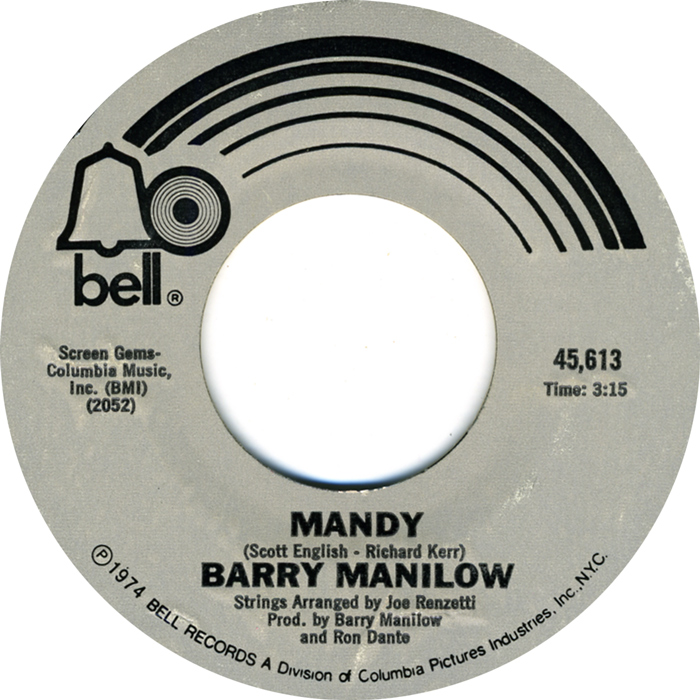
I Rode My Ten Speed to Pomona to Buy this Single

I Rode My Ten Speed to Pomona to Buy this Single

Where have you gone, Joe DiMaggio,
Our nation turns its lonely eyes to you.

When songwriter Paul Simon wrote the above lines in his song “Mrs. Robinson” he was grasping after the illusion that the 1950s had been a simpler time than the turbulent 1960s. (But there are no simple times.)

Mickey Mantle and Joe DiMaggio were Yankee teammates and unfriendly rivals. Years after writing Mrs Robinson, Paul Simon met Mickle Mantle. Simon gushed on and on about how Mantle had been his boyhood hero. When Mantle asked Simon why he had chosen to glorify DiMaggio rather than Mantle, Simon replied

“It was syllables, Mickey, the syllables were all wrong.”

A song, like any other type of poem, is a journey across syllables, and syllables are made of sounds. Linguists call these sounds phonemes. Linguists are people who study words. In England linguists are called philologists, which is a wonderful-sounding word. My favorite philologist is Henry Higgins from “My Fair Lady.” (Yes, I know he’s not a real person. So what?)

Linguists name and catalogue the sounds that make up languages. (That’s a lot of work.) They give these sounds really cool-sounding names like “fricatives” and “diphthongs.” Years ago I had to memorize the names of all the English language phonemes and a whole bunch of other stuff for a midterm in my Structure of Language class with Dr. Hilles. It was a tough test. (I got a 96%, thank you very much. But the student who spent her lectures reading fashion magazines got an 18%.)

Anyhow, those hardworking linguists tell us that the total number of phonemes employed in earthling human languages ranges from 11 to 112. The English language provides us with about forty-four phonemes to work with. That’s plenty of sounds for your gifted lyricist.

When Barry Manilow was recording the song that would make him famous, he had a phoneme problem. See if you can spot it.

Well you came and you gave without taking
But I sent you away, oh Brandy
Well you kissed me and stopped me from shaking
And I need you today, oh Brandy

The “b’” sound at the beginning of the word “Brandy” is called a voiced bilabial stop: voiced because it involves the vocal cords; bilabial because it utilizes both lips; and stop because it provides a halt between sounds. (Compare the voiced bilabial stop of the “b” sound with the voiceless bilabial stop of the “p” sound.)

The “br” sound at the beginning of the name “Brandy” was a jarring jolt which interrupted the flow of sounds. When Manilow switched out the name Brandy with the name Mandy, the sounds smoothly melted together, and the rest, as they say, is history. (The “m” sound is called a bilabial nasal)

Now consider the following stanza from Bob Dylan’s song “Shelter from the Storm.

In a little hilltop village, they gambled for my clothes
I bargained for salvation and she gave me a lethal dose
I offered up my innocence I got repaid with scorn
Come in, she said
I’ll give ya shelter from the storm

I lied. We’re not going to consider the whole stanza, with all its wit, humor, irony, imagery, and biblical references. We are only going to talk about the first half of the first line.

Say “in a little hilltop village” to yourself aloud. Now say it again, this time thinking about what your tongue, lips, and teeth are doing. Notice how all the action is happening at the front of your mouth.

And as for those poor benighted souls who don’t think song lyrics are poetry. Well, read the first comment on this blog post. It’s by somebody named Richard W. Bray.

by Richard W. Bray

An Unedited List of Artists, Movies, and Page Numbers from On Photography by Susan Sontag

March 8, 2015


Giorgio Morandi

Artists

Paul Strand 6, 96
Walker Evans 6, 29, 30, 61
Dorothea Lange 6,17
Alfred Stieglitz 6, 29, 32, 65
Paul Strand 6, 96
Walker Evans 6, 29, 30, 61
Ben Shahn 6,
Russel Lee 6,
David Octavious Hill 7,
Julia Margaret Cameron 7,
Atget 16, 67
Brassai 16, 46
Matthew Brady 17
Andersenville Photographs 17
Felix Green 18,
Marc Riboud
Don McCullen biafra 19,
Jacob Riis new your 23, 57, 63
Edward Steichen 28, 32
Lewis Heine 29, 63 Natl Child Labor Committee
Rosenfeld writes of Stieglitz 30, 47
Julia Margaret Cameron 35
Robert Frank 46, 61
Giorgio Morandi 46
Man Ray 52,
Laszlo Mohol-Nagy 52
John Hertfield 52
Alexander Rodchenko 52
John Thompson 57
Bill Brandt 58
Ghitta Carell 58
August Sander 59
Edward Muybridge 60
Emerson Stryker 61
Adam Clark Vroman 62, 64
Clarence John Laughlin 67,79
Roman Vishniac 67
Bod Edelman’s Down Home 72
Michael Lesy Wisconsin Death Trip 73
Albert Renger_Patzsch The World is Beautiful 91
Edward Weston 91, 96
Minor White 91
Ansel Adams 102
Nadar 104
W. Eugene Smith 105
John Szakowski 129

Movies

Godard Les Carabiniers 1963 (3)
Chris Marker Si j’avais 1966 (5)
Dziga Vertovm Man with a Movie Camera 1929 (12)
Hitchcock Rear Window 1954 (12)
Blowup 1966 (13)
Peeping Tom 1960 (13)
Tod Browning Freaks 1932 (38)
Warhol Chelsea Girls 1966 (45)
Buster Keaton The Cameraman 1928 (53)
Robert Siodmak Menshem am Sonntag 1929 (70)
Chris Marker La Jetee 1963 (70)
Goddard A Letter to June 1972 (108)

Too Big for Our Own Good: Kurt Vonnegut on the Human Brain

February 8, 2015

So far the human episode has been a brief chapter in the story of life on Earth—about two hundred thousand years.  That’s not very long compared to the dung beetles who feed on rhinoceros droppings, which are the hearty descendants of bugs that were frolicking in dinosaur poop at least forty million years ago.  And sharks have been around for over 400 Million years.

Although it’s fun to fantasize about a time long ago when giant monsters roamed the earth, it’s much more painful to imagine a point in the future when Mother Nature says: “Time’s up, humans.  You had your chance, but you blew it.”   Indeed, as the poet Richard Wilbur notes, it’s almost impossible to imagine a future on this planet without us:

Nor shall you scare us with talk of the death of the race.
How should we dream of this place without us?—

The novel Galapagos by Kurt Vonnegut describes a future where evolution has altered humanity beyond recognition.  A million years hence, we have mutated into a furry, seal-like creature with flippers and a much smaller brain encased in a “streamlined skull.”  Our future progeny is no longer equipped to build skyscrapers or compose Beethoven’s Ninth Symphony.  And these new creatures exhibit an immense moral superiority over modern-day humans because they lack the intellectual and physical tools to harm one another on a grand scale.  Besides, “how could you ever hold somebody in bondage with nothing but your flippers and your mouth?”

According to the Ghost of Leon Trout, the narrator of Galapagos who witnesses the million-year transformation of our species, this reduction of endowment is all for the better because humans

back then had a brain weighing about three kilograms!  There was no end to the evil schemes that a thought machine that oversized couldn’t imagine and execute.

Trout’s Ghost concludes that the human brain “is much too big to be practical.”  A practical brain would never “divert” people from “the main business of life by the hobgoblins of opinion.” The main business of life, of course, is survival and procreation.  Yet by some freak of evolution, human beings are capable of so much more.

Trout’s Ghost laments how our “overelaborate nervous circuitry” is responsible “for the evils we [are] seeing or hearing about simply everywhere.”  Furthermore, such self-inflicted horrors as war, famine, slavery, and genocide are “as purely a product of oversized brains as Beethoven’s Ninth Symphony.”

Trout’s ghost confides that, “A million years later, I feel like apologizing for the human race.”  He also describes “the most diabolical aspect” of the oversized human brain:

They would tell their owners, in effect, “Here is a crazy thing we could actually do.”….And then, as though in trances, the people would really do it—have slaves fight each other to the death in the Colosseum, or burn people alive in the public square for holding opinions which were locally unpopular, or build factories whose only purpose was to kill people in industrial quantities, or to blow up whole cities, and on and on.”

Here’s another disadvantage to having too much brain power for our own good:

Big brains back then were not only capable of being cruel for the sake of cruelty.  They could also feel all sorts of pain to which lower animals were entirely insensitive.

Today the “mass of mankind” is “quietly desperate” because “the infernal computers inside their skulls [are] incapable of idleness.”  The constant din of thought inside our brains that people must bear is akin to having “Ghetto blasters inside our heads.” And there is

no shutting them down! Whether we had anything for them to do or not, they ran “All the time!  And were they ever loud!  Oh, God, were they ever loud.”

Like Brick in Tennessee in Williams’ “Cat on a Hot Tin Roof,” humanity craves to hear a “click in the head” which renders life “peaceful.” In Galapagos, Kurt Vonnegut suggests an evolutionary solution to the plight which ails us.  And perhaps it is the most plausible solution.  As Emily Dickinson notes

Narcotics cannot still the Tooth That nibbles at the soul

by Richard W. Bray

This Happy Now

January 20, 2015
Not Me and Max

Not Me and Max

As soon as Max sees me grab the leash, he goes into spasms of delight, jumping in the air and making little pirouettes. Joy. It’s not just for humans.

(I try not to say the word “walk” in front of Max unless I’m ready to take him for one. So in order not to tease him, I’ll say, “Maybe I’ll take Max for a ‘W-Word’ later this afternoon.”)

Like so many poets, Max is giddy for the natural world, and he cannot contain his enthusiasm for outside smells, sights, and sounds. And like Max, William Wordsworth began to cultivate his love of nature exploring “those few nooks to which my happy feet/ Were limited.”

Unlike so many human beings, however, Max is not overburdened by the demands of his quotidian existence. And I’m pretty sure he’s never given much thought to the meaning of life. It is therefore unlikely that Max could share with Mr. Wordsworth

That blessed mood
In which the burthen of the mystery,
In which the heavy and the weary weight
Of all this unintelligible world
Is lighten’d:—that serene and blessed mood,
In which affections gently lead us on,
Until, the breath of this corporeal frame,
And even the motion of our human blood
Almost suspended, we are laid asleep
In body, and become a living soul:
While with an eye made quiet by the power
Of harmony, and the deep power of joy,
We see into the things of life

But ecstasy also hurts. Wordsworth referred to such ecstatic moments as “spots of time.” Spots of time are often induced by nature, and as Sheldon W. Liebman explains, nature is “a domain in which the fundamental conditions of life are mixed, even paradoxical.” Ecstasy hurts because even in its thrall we realize that soon we will return to a world where

That time is past,
And all its aching joys are now no more,

Once we get beyond joy “And all its dizzy raptures” we are once again confined to “The still, sad music of humanity”

In the poem “Hamlen Brook,” Richard Wilbur calls this phenomenon “joy’s trick.” (Collected Poems 115).

Confronted with the immense beauty of the natural world, Wilbur laments his inability to “drink all this”

Joy’s trick is to supply
Dry lips with what can cool and slake,
Leaving them dumbstruck also with an ache
Nothing can satisfy.

For his part, Robert Frost argues that “Happiness Makes Up In Height For What It Lacks In Length” (Collected Poems 445).

There are many moments in Frost’s poetry when

We went from house to wood
For change of solitude. (445)

And the trick for human beings is to appreciate this happy now on its own terms. Frost explains in “Two Look at Two” (283).

‘This must be all.’ It was all. Still they stood,
A great wave from it going over them,
As if the earth in one unlooked-for favor
Had made them certain earth returned their love.

by Richard W. Bray

Resources for a Lesson Plan on Tautologies and Circular Reasoning

January 9, 2015

If it sounds country, man, that’s what it is; it’s a country song.

Kris Kristofferson

A tautology is a grammatical construct; circular reasoning is a logical fallacy. The two phenomena are related but not identical.

A tautology is a sentence in which the conclusion is equivalent to its premise. In other words, in a tautology, the predicate can be surmised by reading the subject.

Here are some examples of tautologies:

My mother’s brother is my uncle.

Father Brown is a priest.

It is what it is.

A circular argument occurs when someone affirms her position simply by restating it in different terms. In other words, circular reasoning is an argument where the conclusion depends upon or is equivalent to its premise.

In a circular argument:

X is true because of Y.

and

Y is true because of X.

A circular argument is similar in structure to a tautology, but a circular argument includes causal reasoning (because, therefore, for this reason, etc.).

Here are some examples of circular reasoning:

My mom is terrific because she is wonderful.

People do what Dave tells; therefore, he is a great leader.

I slumbered beyond my assigned wakeup time; that’s why I overslept.

Lesson Evaluation: Explain why the following examples are tautologies, circular arguments, or neither.

Chris Rock is a hilarious comedian because he makes people laugh.

A bartender is a guy who listens to people talk all day.

Freedom’s just another word for nothing left to lose.

Anthony is extremely strong due to his ability to bench press three hundred pounds.

If aliens didn’t create the pyramids then how come pyramids are the product of technology that didn’t exist on earth at that time?

Allen hasn’t had a drink in twenty-three years, but he isn’t really sober because he doesn’t go to AA meetings and he isn’t working the steps.

A man’s gotta do what a man’s gotta do.

They are who we thought they were.

If I could tell you, I would let you know.

I stopped eating meat in 1987; that’s what makes me a vegetarian.

by Richard W. Bray

Flinging our Souls

December 24, 2014

aaaaaaathrush

I’m goofy for words. And I will happily read and read and read until I find a combination of words which “strikes like a chime through the mind.” Then I will read some more.

Thomas Hardy forges a concoction of meaning, sound, and feeling when he tells us that a singing little bird

Had chosen thus to fling his soul

Of course, every line of “The Darkling Thrush” is a work of art.

Poetry and language are the same thing. Perhaps the people we call poets live the music inside the words with greater intensity than the rest of us do, but all words are music.

Consider the first line of a poem by Emily Dickinson:

From Us She wandered now a Year,

There are a thousand less lovely ways to tell us that a woman has abandoned her family. And the beauty of the sound and rhythm of this line is assaulted by the sadness it conveys.

Here’s the entire poem:

From Us She wandered now a Year,
Her tarrying, unknown,
If Wilderness prevent her feet
Or that Ethereal Zone


No eye hath seen and lived
We ignorant must be—
We only know what time of Year
We took the Mystery.

There are so many things we are not told: Who is this woman? Whom did she abandon? Where? Why? The reader is left to fill in the blanks.

Robert Pinsky proffers a handy metaphor: Novelists wade through words while poets skate on their surface.

by Richard W. Bray

Great Writing Isn’t Alchemy, It’s Hard Work: Alfred Kazin’s Trip to the Beach

December 17, 2014

aaaaaa el

It’s hard for me to believe that people who read very little (or not at all in some cases) should presume to write and expect people to like what they have written, but I know it’s true. If I had a nickel for every person who ever told me he/she wanted to become a writer but “didn’t have time to read,” I could buy myself a pretty good steak dinner.

Steven King (On Writing 147)

As Stephen King notes, “If you want to be a writer, you must do two things above all others: read a lot and write a lot” (145).

But many people don’t realize that writing is a craft to be mastered. They think it’s some sort of alchemy that mysteriously springs out of one’s experiences. That’s why some people who know very little about writing think they could produce a great memoir or an enticing novel. They love their fabulous lives so much. They are so glamorous, so amusing, and they know so many unique people—the book would practically write itself.

With the application of talent and much work, a great writer can reveal the beauty and complexity of a common experience. In his memoir A Walker in the City, Alfred Kazin relives the train ride to and from Coney Island on a hot summer day:

It was from the El on its way to Coney Island that I caught my first full breath of the city in the open air. Groaning its way past a thousand old Brooklyn red fronts and tranquil awnings, that old train could never go slowly enough for me as I stood on the open platform between the cars, holding on to the gate. In the dead calm of noon, heat mists drifted around the rusty green spires of unknown churches; below, people seemed to kick their heels in the air just a moment before being swept from my sight. With each homey crásh-crásh crásh-crásh of the wheels against the rails, there would steal up at me along the bounding slopes of the awnings the nearness of all those streets in middle Brooklyn named after generals of the Revolutionary War. I tasted the sweetness of summer on every opening in my face. As we came back at night along the El again, the great reward of the long parched day, far better than any massed and arid beach, was the chance to stand up there between the cars, looking down on the quiet streets unrolling below me as we passed. The rusty iron cars ground against each other, protesting they might fall apart at each sharp turn. But in the steady crásh-crásh crásh-crásh there was a comforting homeward sound as the black cars rocked on the rails and more and more men and boys in open shirts came out on the top platform fiercely breathing the wind-changed damp air. In the summer night the city had an easy unstitched look—people sat on the corner watching the flies buzz around the street lamps, or at bedroom windows openly yawning as they stared past us (137-138).

First, notice the extreme paucity of adverbs.

I tell my students that nouns and verbs should do the heavy lifting. When you choose the right nouns and verbs, fewer adjective and adverbs are required.

For example, I could say “My landlord is a mean, ugly, tyrannical, bossy, gruesome, overbearing man.” Or I could simply say “My landlord is an ogre.” The appropriate noun eliminates the need for several adjectives.

And speaking of adjectives, notice how Kazin utilizes several noncordinate adjectives. Coordinate adjectives are parallel, modifying their nouns independently. That’s why we separate them with commas (big, bad John; new, green car). The effect of coordinate adjectives is cumulative; however, noncoordinate adjectives, when properly employed, multiply meaning into something new and beautiful: “first full breath” “rusty green spires” “long parched day” “rusty iron cars” “comforting homeward sound“ “wind-changed damp air” “easy unstitched look.” (Alfred Kazin’s beloved mother was a seamstress.)

I’ve affirmed the elegance of simple sentences. I will repeat myself: I wouldn’t want to live in a world without them. And simple sentences are even more beautiful when they are rare. Like a great jeweler, Kazin positions a gem in the middle of his creation: I tasted the sweetness of summer on every opening in my face.

Notice the strongest character in this paragraph, the anthropomorphized train: “protesting they might fall apart at each sharp turn” “Groaning its way past a thousand old Brooklyn red fronts and tranquil awnings.”

Finally, notice how Kazin plays upon the illusion that world itself is in motion: “people seemed to kick their heels in the air just a moment before being swept from my sight” “streets unrolling below me as we passed.”

by Richard W. Bray