Archive for the ‘Morsel’ Category

Some Thoughts on The God Delusion

April 22, 2010

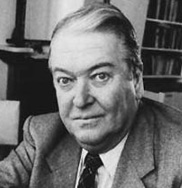
Richard Wright

Some Thoughts on The God Delusion

After patient and painstaking work he convinced his friend that his former beliefs were untenable, that science was indeed queen. But to his horror, Krummie had to confess to me, he soon discovered that he had succeeded only in making his friend supremely unhappy. He thought at first that this might pass, but when, after a year, the man remained miserably depressed, Krumwiede resolved, he told me, never again to tamper with a man’s hereditary convictions (89).

The Autobiography of William Carlos Williams

I’m a devout deist, and I’m generally happy about the recent trend of books promoting atheism. The God Delusion by Richard Dawkins is an erudite argument cogently delivered with much wit, and Dawkins is less overtly hostile to religion than many of the other purveyors of Atheist Manifestos recently on the bestseller lists.

Here’s Dawkins quoting Einstein (a great deist who is often mischaracterized as a theist):

I believe in Spinoza’s God who reveals himself in the orderly harmony that exists, not in a God who concerns himself with fates and actions of human beings (18).

If I could pick any creed, I would be a Liberal Secular Jew, but I’m not sure how to make that conversion. This brings me (sort of) to a friendly argument the author had with Robert Winston, whom Dawkins describes as a “respected pillar of British Jewry.”

When I pressed him, he said that Judaism provided a good discipline to help him structure his life and lead a good one. Perhaps it does; but that, of course, has not the smallest bearing on the truth value of its supernatural claims (14).

Goodness, Gracious, Sakes Alive, Mr. Dawkins! People, even scientists, believe all sorts of wacky things, so I’m not even sure how we could ever come to a consensus on what a “truth value” is. Mr. Winston’s personal beliefs about a deity neither pick my pocket nor break my leg. I’m glad to hear that he’s a decent bloke.

When Dawkins looks for “Direct Advantages of Religion,” he doesn’t see much, although he does concede that it has inspired much great art. But Dawkins does not believe that people should be comforted by mere beliefs which are obvious poppycock to the trained scientist. Dawkins quotes ardent atheist George Bernard Shaw:

The fact that a believer is happier than a skeptic is no more to the point than the fact that a drunken man is happier than a sober one (167).

Dawkins makes no effort to hide his condescension, which is a common trait among the New Atheists. Denis Dutton, another God-wrestling scientist, believes that nonbelievers should refer to ourselves as “brights,” an appellation which clearly implies that those who don’t agree with us are stupid. (And there’s nothing wrong with the word Freethinker.)

Lots of good and wonderful and beautiful things come from organized religion, and I’m not just talking about Verdi, Take 6, and El Greco. Organized religion promotes fellowship and improves people’s lives in various ways.

But some people just can’t stand it. Richard Wright, for example, was “disgusted” by the “snobbery, clannishness, gossip, intrigue, petty class rivalry, and conspicuous displays of cheap clothing” which he encountered in church (151). The beauty of the music and rituals is completely invisible to him. As Wright saw things, “[t]he naked will to power seemed always to walk in the wake of a hymn” (136).

I’ll bet Christopher Hitchens wishes he’d said that.

by Richard W. Bray

Resources for a Lesson Plan on Redundancy and An Amusing Teacher Story

March 30, 2010

George Carlin

Resources for a Lesson Plan on Redundancy

Use the list of redundancies from George Carlin’s wonderful book Braindroppings and The Redundant Little Short Story to teach a lesson on redundancies. Carlin’s list includes examples such as PIN number, safe haven, closed fist and linger on. (However, I would quibble with Carlin on the terms time clock and security guard. There’s a difference between a clock and a time clock just as there is a difference between a guard and a security guard.)


The Redundant Little Short Story

The two twins Ted and Ned lived in a teeny tiny little bungalow in the city of Chicago. The silly clown Fred Toolshed was Ted and Ned’s closest best friend. Fred lived in a small cottage near the University of UCLA. One day Ted, Ned, and Fred decided to go on a long journey in search of a famous celebrity or a royal queen. Ted said, “Fred, you would have to be a crazy maniac to travel through snowy blizzards and blustery tornadoes.”

“Ted,” said Ned, “only a stupid ignoramus or a cheap miser would pass up an opportunity to meet big giants, brilliant geniuses and dead mummies.”

So Ted, Ned and Fred had many exciting adventures in search of renowned luminaries and distinguished dignitaries. They also ate frozen popsicles with a young infant named Bed Wetter and an elderly octogenarian named Jed Sledder. The five of them met all kinds of living organisms, including a smelly skunk, a sleepy insomniac, a tiny microorganism, and a tall giraffe.

An Amusing Teacher Story

Sadly, due to the ill-conceived efforts of our current Education Secretary and his two immediate predecessors, frightened school administrators across the country are doing their best to eradicate all traces of art and humanity from the teaching profession (because, you know, teaching should only be about raising test scores).

But this sick, sad trend really has nothing to do with “accountability.” It’s just about power. (Accountability is a nice-sounding word, but in practice it means that schools are micromanaged by bureaucrats in Washington DC instead of being directly accountable to local school boards)

Back in the days before the federal government (a seven-percent stakeholder in education) made it so difficult for teachers to make even the smallest efforts to enrich the lives of their students, I used to show the kids gems like Donald O’Connor singing Make ‘em Laugh or the Nicholas Brother doing their thing in the movie Stormy Weather at the end of the day as we were preparing to go home.

Now, I’ve always been rather sympathetic to Freddy in My Fair Lady because I too find Audrey Hepburn to be irresistibly enchanting. So one day I was trying to explain why Freddy was so smitten with Eliza Doolittle before showing them the song On the Street Where You Live. I said that he had decided to sit in front of this woman’s house for days on end because he was in love with her but she was not in love with him.

One of my girls said, “I get it. He’s a stalker.”

I’m afraid she was right. (Kids really make you think sometimes.)

By Richard W. Bray

A Lesson Plan on Parts of Speech

March 27, 2010


Lewis Carroll

(A brief comment on parts of speech)

Individual words are not parts of speech. Instead, words are forms which act as parts of speech. But you don’t have to take my word for it.

According to Otto Jespersen, from the book The Philosophy of Grammar (1924):

Take the form round: this is a substantive in “a round of a ladder,” “he took his daily round,” an adjective in “a round table,” a verb in “he failed to round the lamp-post,” an adverb in “come round to-morrow,” and a preposition in “he walked round the house.” While similarly may be a substantive (he stayed here for a while), a verb (to while away time), and a conjunction (while he was away)….On the other hand, we have a great many words which can belong to one word-class only; admiration, society, life can only be substantives, polite only an adjective, was, comprehend only verbs, at only a preposition. (61)

A Lesson on Parts of Speech

Materials:

White board and markers or Smartboard with Microsoft Word

Academic Area – Parts of Speech
This is a unit designed to enable students to identify four major parts of speech: nouns, adjectives, verbs and adverbs.

Goals and Objectives:
Identify nouns, adjectives, and action verbs adverbs in context

Instructor will: Implement a variety of whole class small groups and paired activities in order to instantiate the concept of parts of speech.

Students will: Generate lists of the four parts of speech covered as a whole class activity and in small groups.

Lesson 1–Nouns

a) Teacher will ask if anyone can define the word “noun” (Answer: person, place, thing, or idea)
b) Write “noun test” on the board:
The noun test is simply putting an article or a personal pronoun in front of a word
Example: My ____________.
The ____________.
A ______________
c) Students will generate a list of nouns which I write on the board.
d) Students will “pair and share” to create a longer list of nouns.

Lesson 2–Adjectives

a) The teacher reviews nouns, using the “noun test” and ask students to give examples of nouns which he writes on the board, (Noun test: words that follow articles or possessive pronouns.)
b) Teacher will provide the definition of adjective, “a word that modifies a noun” Ask if anyone knows what modifies means. Explain how people sometimes modify their cars.
c) Using the list of nouns generated by the students, the teacher will have students give examples of words which would modify the meaning of these nouns.

d) Teacher will introduce the “adjective test”: My ____________house is ___________
or my __________________sister is _________. (it works with any noun)

e) Select five students to fill in the blank. For example, “My blue house is clean” Or, “My young sister is smart.”
f) Pair and Share: Give students five minutes to generate lists of adjectives individually and then share the lists with their seatmates.

Lesson 3–Verbs

a) Ask students to define both types of verbs (answer: state of being verbs and action verbs)

b) This lesson will focus on action verbs. Demonstrate the Verb Test:
Yesterday I _____________ed
Let’s ____________________
Tomorrow, I will ________________

c) Direct students to generate lists of action verbs in groups of four (at their tables)
d) Review lists with entire class.

Lesson 4–Adverbs

a) Review action verb definition from lesson three.
b) Explain that adverbs “modify” verbs. (Review the word modify from lesson two)
c) Write the “adverb test” on the board:

I ran __________________
Debbie ate _____________
Buffy talks ______________

(Teacher should sure to explain that adverbs do not always have to follow the verb directly and that they are not always “-ly” words. Also note how a part of speech depends upon context. For example, in the sentence “I ran home,” “home” is an adverb, although one would usually use it as a noun. Or, in the sentence “I ran fast,” fast is an adverb, but in the sentence “Hector is a fast runner” it would be an adjective. Also inform students that this is a working definition of adverbs because adverbs can also modify adjectives and other adverbs)

Evaluation (After also teaching prepositions, interjections, conjunctions, and onomatopoeia.)

1. Distribute copies of the poem Jabberwocky by Lewis Carroll to the entire class.
2. Have students take turns reading the poem aloud, one line at a time.
3. Play a version of the poem from Youtube or Librivox.
4. Group students and allow ten minutes for them to determine the parts of speech of the nonsense words.
Example:

“Twas Brillig (adj) and the slithy (adj) toves (noun)
Did gyre and gimble (verb) in the wabe (noun):

5. Review as a teacher-directed, whole-class activity.

by Richard W. Bray

Mailbag, a Beautiful Paragraph, and an Addendum

March 25, 2010

Ernest Hemingway

Mailbag

My old friend Jackie offers this addition to the post Island of the Abused and Misused Words

Enormity. It does not mean enormous or gigantic or overwhelming. It
means monstrously bad. No one seems to use it in the sense of it being a BAD thing.

Here’s an interesting discussion of it:

(Keep those emails coming, folks: laughterhopesockeye@yahoo.com)

A Beautiful Paragraph

From Counterfeiting Conservatism by Patrick J. Deneen in the
April 1 edition of The American Conservative

Conservatism thus came to embody the opposite of Kirk’s conservative principles: custom became economic monoculture (i.e., globalization); variety became nationalism; prudence became Kantian jurisprudence; imperfectibility became a religion of secular redemption; community became mobility; and restraint of power became lust for power, particularly control of the national agenda. It lost its moorings by tracking its opponent, and with every victory only fueled the further evisceration of the folkways, traditions, and commitments that an originally conservative disposition arose politically to defend.

Addendum

Addendum to Writers on Writing from Ernest Hemingway on Writing

Always stop while you are going good and don’t think about it or worry about it until you start to write the next day. That way your subconscious will work on it all the time. But if you think about it consciously or worry about it you will kill it and your brain will be tired before you start.(42)

by Richard W. Bray

My Top Ten Booklist (In no particular order)

March 23, 2010

Franz De Waal

My Top Ten Booklist (In no particular order)

#1 Ishi in Two Worlds: A Biography of the Last Wild Indian in North America by Theodora Kroeber

…so far as any record shows or any story relates, no member of the United States Army ever shot a single Yana Indian, whose multiple murder remained a home and civilian and strictly extralegal operation. (62) There’s a line in the song Sun City by Steven Van Zandt reminding us that Apartheid “ain’t that far away.” Episodes in Extermination, the fourth chapter of Ishi, written in a beautifully plain and sober tone, makes our own proximity to the horrors of genocide painfully clear.

#2 Primates and Philosophers by Franz De Waal

Chimpanzees think by feeling, just like we do:

In my own experience, chimpanzees pursue power as relentlessly as some in Washington and keep track of given and received services in a marketplace of exchange. Their feelings may range from gratitude for political support to outrage if one of them violates a social rule. All of this goes far beyond mere fear, pain, and anger: the emotional life of these animals is much closer to ours than once held possible. (76)

#3 War is a Force that Gives us Meaning by Chris Hedges

This indispensable book, which came out when our society was still very sick with war fever, tells us that war

Is peddled by mythmakers–historians, war correspondents, filmmakers, novelists and the state–all of whom endow it with qualities it often does possess: excitement, exoticism, power, chances to rise above our small stations in life, and a bizarre and fantastic universe that has grotesque and dark beauty. It dominates culture, distorts memory, corrupts language, and infects everything around it, even humor, which becomes preoccupied with the grim perversities of smut and death. Fundamental questions about the meaning, or meaninglessness, of our place on the planet are laid bare when we watch those around us sink to the lowest depths. War exposes the capacity for evil that lurks not far below the surface within all of us. And this is why for many war is so hard to discuss once it’s over (3)


#4 United States: Essays 1952-1992 by Gore Vidal

This collection of essays proves that in addition to being a damn fine novelist, Vidal is simply our finest living essayist. From his essay Theodore Roosevelt: An American Sissy:

Give a sissy a gun and he will shoot everything in sight….There is something strangely infantile in this obsession with dice-loaded physical courage when the only courage that matters in political or even “real” life is moral. Although TR was often reckless and always domineering in politics, he never showed much real courage, and despite some trust-busting, he never took on the great ring of corruption that ruled and rules in this republic. But then, he was born part of it. (733)

#5 Love Medicine by Louise Erdrich

A much underappreciated masterpiece. An earlier post demonstrated that Erdrich is a master of the simile. Some more examples:

Then the vest plunged down against her, so slick and plush that it was like being rubbed by an enormous tongue. (5)

My mother held out a heavy tin one (spoon) from the drawer and screwed her lips up like a coin purse to kiss me. (12)

On the much traveled, evil Sister Leopolda: Perhaps she was just sent around to test her Sisters’ faith, like a spot checker in a factory.(45)

She thought of everything so hard that her mind felt warped and sodden as a door that swells up in spring. (107)

Dot was a diligent producer of milk, however. Her breasts, like overfilled inner tubes, strained at her nylon blouses. (210)

#6 Slaughterhouse-Five by Kurt Vonnegut

The greatest and most important American novel published during the second half of the twentieth century. So it goes.

#7 The Quiet American by Graham Greene

Here’s Greene on innocence, which, as Arnold Rampersad wryly noted, is a famed American virtue:

Innocence always calls mutely for protection when it would be so much wiser to guard ourselves against it: innocence is like a dumb leper who has lost his bell, wandering the world, meaning no harm.(29)

#8 The Collected Poems of W. H Auden

The only artists who have made a comparable impression on my consciousness are Vonnegut, Sarah Vaughan and Ella Fitzgerald. And I shall continue to revere Auden until the day when I surrender my smidge of nitrogen to the World Fund. (690) (btw, the collected poems are not the complete poems because Auden left out many with which he later became unsatisfied. A notable omission is September 1, 1939 which was excised because Auden eventually decided that the line We must love one another or die constitutes a false alternative.)

#9 The Complete Poems of Emily Dickinson

Perhaps foolishly, in the spirit of Ernest Hemingway’s notoriously silly aspiration to knock Mr. Shakespeare on his ass, I would argue that Dickinson is the first, and quite possibly the only, American poet capable of going toe-to-toe with the Bard.

#10 The Complete Poems of Dorothy Parker

I recoil somewhat at the realization that there exists a profound kindred empathy in the deepest recesses of my psyche for this sad, sad, angry, witty woman.


by Richard W. Bray

Teacher Knows Best–Not

March 22, 2010


Teacher Knows Best–Not

Teachers should feel privileged that they have been entrusted to administer education to, and oversee the wellbeing of, other people’s children for a limited period of time. Nothing has ever moved me more than seeing parents reluctantly parting with their children before school, a cogent reminder of the love and aspirations people have for their children. This is why teaching is such a monumental task and an almost overwhelming charge to keep.

Teachers are part of the Social Persistence Team, along with pastors, social workers, community organizers, various types of volunteers, police officers and other first responders, and everyone who works in the criminal justice system and the healthcare industry. But teaching is not group therapy. And it isn’t social engineering, either. Teachers who enter the profession hoping to become microcosmic gods who will erase injustice from the planet and fix the world one child at a time are destined for disappointment.

Teachers often try to fix other people’s families, which is a horrible mistake. It’s crucial for teachers to realize that they were not hired to tell parents how to raise their children. It is a teacher’s primary responsibility to work with parents in order to come up with the best strategies for facilitating learning, not to berate or belittle parents. That’s why it is so important not too come off like “Teacher Knows Best,” particularly when the teacher comes from a different socioeconomic background than his students.

Here’s one small example of what I’m talking about: Like many people, I am appalled when I see parents bringing their small children to gory, R-rated movies. And it makes my job difficult when children want to talk about these movies in class. This can be particularly irksome when, during a discussion of a particular literary trope such as the use of flashbacks, several of my elementary school students remark that there is a really good flashback scene in the movie Killer Mutant Zombies from Outer Space. Because I don’t want to get a call from my principal asking me what in the world I’m teaching these kids, I say, “That’s not an appropriate movie to be talking about at school.” But then I hear a whole chorus of, “My mom lets me see those movies.” That’s when I quickly change the subject.

I knew a teacher who not only tells her students that she would “never” let her own children watch violent movies, but she goes on to inform them that she thinks it’s terrible that their parents aren’t as enlightened as she is. Of course, it’s okay for a teacher to tell her students what she would or would not allow her own kids to do. But condemning parents in front of their children is really not helping matters. If these kids go home and tell their parents that their teacher thinks they are raising their children improperly, it is unlikely that the parents will respond favorably. They certainly aren’t going to think, “The Great White Teacher believes we’re uncivilized. Oh, no. We better go buy some books on parenting.”

by Richard W. Bray

The Island of Misused and Abused Words

March 16, 2010

Alan Sokal

Misused Words–Dastardly, Dilemma, Prodigal, Abominable

Dastardly (it means cowardly, not detestable)

I think we all know who the culprit is on this one: Daffy Duck has been alternating this term of disparagement with the word despicable for phonetic effect for years, confusing generations of American youngsters.

Dilemma (it means a situation requiring a decision between two equally undesirable alternatives, not merely a situation requiring a painful resolution)

As with so many other ills that afflict our society, I blame Dr. Laura for this one. The McTherapy Maven and her callers abuse this word on a daily basis.

Prodigal (it means profligate, not reckless or rebellious)

We tend to think of the biblical Prodigal Son in terms of his wayward foolishness rather than his extravagance, which is probably why the word is often incorrectly used to describe a rogue rather than a spendthrift.

Abominable (it means loathsome or disagreeable, not monstrous)

We can trace this common linguistic blunder to an unlikely perpetrator, the avuncular actor and folksinger Burl Ives. That’s right, his masterful annual narration of Rudolph the Red-Nosed Reindeer conditioned millions of Americans to forever link the words abominable and snowman.

Abused Words–Heuristic, Ontological, Semiotic

Thanks to the heroic efforts of Alan Sokal, Katha Pollitt, Stephen Katz and other brave souls, the Emperor’s Clothes are now visible and the literary abomination know as postmodernism (or post-structuralism) is finally being driven from the halls of academia. But I’m afraid that the many casualties of this wretched interregnum include three undeserving victims: Heuristic (serving to point out, stimulating further investigation), Ontological (relating to the branch of metaphysics that studies the nature of existence or being as such) and semiotic (pertaining to signs/symbols).

Sadly, these three fine words have been reduced to mere markers indicating oncoming highfalutin literary gibberish like this absurd sentence by Roy Bhaskar that Stephen Katz discovered:


Indeed dialectical critical realism may be seen under the aspect of Foucauldian strategic reversal—of the unholy trinity of Parmenidean/Platonic/Aristotelean provenance; of the Cartesian-Lockean-Humean-Kantian paradigm, of foundationalisms (in practice, fideisticfoundationalisms) and irrationalisms (in practice, capricious exercises of will-to-power or some other ideologically and/or psychosomatically buried source) new and old alike; of the primordial failing of western philosophy, ontological monovalence, and its close ally, the epistemic fallacywithin its ontic dual; of the analytic….

Katz humorously points out that, “The sentence contains 55 more words, but is harder to follow after this point.”

by Richard W. Bray

Some Thoughts on the Efficacy of DARE-Type Programs and a Funny Teacher Story

March 14, 2010

Some Thoughts on the Efficacy of DARE-Type Programs

My existential perspective would suggest that it is heroic to try to enlist support across our institutions to attempt to reduce violence and drug abuse whether or not school-based programs to mitigate the ills that effect our society are actually effective (a hotly debated topic). But all good-doers who attempt to discover the perfect pedagogy to fix whatever ails us would do well to remember that the instructional day is finite and teachers already have a lot on their plate (particularly in an age when knuckleheaded politicians would have us fire teachers and administrators based upon student test scores.) This all brings me to a discussion about DARE (Drug Awareness and Resistance Education) and it also gives me an opportunity to relate one of my favorite teacher stories.

Many people have argued about the efficacy and appropriateness of programs like DARE because there is little evidence that it changes student behavior. But seeking quantifiable changes in societal behavior is asking a lot of any curriculum. And even if DARE did cause, say, one out of a hundred kids to say no to drugs, or if it were to decrease in any way the harmful effects of substance abuse in our society, how could we possibly measure such success in light of so many other confounding variables?

Like all human behavior, substance abuse involves a multiplicity of causal relationships which are difficult to gauge, and some things are easier to measure than others. Let’s look at efforts to reduce traffic fatalities, for example. It is obvious that enacting mandatory seatbelt laws and reducing speed limits will result in demonstrably fewer traffic fatalities. But how do we measure the effects of educational programs which operate on the margins of these statistics, such as traffic school and public service announcements? Just because it would be difficult for a statistician to isolate the slender portion of a decline in traffic fatalities attributable to such efforts, we would be foolish to abandon such efforts. That’s how I feel about DARE. What harm could it do? (There are those who argue that DARE actually teaches kids how to be more effective drugs users, but I find this claim dubious. There was, however, one time when Officer S____ did a lesson on the dangers of Whiteout, which was certainly news to me. I immediately put all my Whiteout away.)

Funny Teacher Story

Say what you want about DARE, it supplied me with one of my best teacher stories. One of the first things that Officer S____ always tells the kids is that it’s okay to relate stories about people they know, but they should not use real names.

So if officer S____ is talking about, say, methamphetamines, it is not appropriate for a student to say, “My uncle has a meth lab out in San Bernardino.”

Instead, the student should say, “Someone I know has a crank factory in his garage.”

So one day when Officer S____ was describing the perils of drunk driving, a student (we’ll call him David) rose his hand.

“My dad drives when he’s drunk all the time.” said David.

Officer S____ quickly cut him off. “You mean, someone you know drinks and drives on occasion”

David responded in a very condescending tone, “Well yeah, I know him. He’s my dad!”

by Richard W. Bray

Ten Things I Learned from Reading Lucky Jim which aren’t Actually True

March 12, 2010

bbbbking

(Editor’s Note: The novel Lucky Jim by Kingsley Amis is often compared to the works of Evelyn Waugh for its alleged hilarity. Sadly, I found the book to be mean-spirited and stupid and not that funny at all. Maybe I just like people too much.)

Ten Things I Learned from Reading
Lucky Jim which aren’t Actually True

1. Drinking solves more problems than it causes.
2. Most academics are pathetic dweebs.
3. Post-WWII colleges in England admitted way too many of the wrong type of people.
4. Most academic writing is worthless drivel.
5. Women tend to become less sexually attractive as you get to know them.
6. History shouldn’t be wasted on the unwashed masses.
7. Most people are ridiculous clowns.
8. Classical music is for losers.
9. Life is a sick, sad joke without a punch line.
10. You will be rescued by a rich benefactor so long as you don’t give too much of a damn about anything.

by Richard W. Bray

What’s a War Junkie? Che v Zapata

March 9, 2010

bbbche shirt

bbbzap

What’s a War Junkie? Che v Zapata

I’ve taken some flak over my inclusion of Che Guevara in the poem War-Junkie Worshipers. My purpose here is not to verify whether or not Guevara fantasized about blowing up New York City, or if he wanted to ban the saxophone because it was too bourgeoisie. And I really don’t care if he actually had a medical degree. Separating this particular man from his myth is nearly impossible because he has become such a totemic figure for both his followers and his detractors.

But by the mere facts of his existence upon which we all can agree, Guevara was clearly a War Junkie. Instead of working to make his homeland a more just society, he went to three different countries in search of military glory. Even when he had the opportunity to build a New Society in Cuba, Guevara chose instead to go gallivanting across the globe looking for more people to shoot.

By way of contrast, let’s compare Che to that great Mexican Cincinnatus figure, Emiliano Zapata. Zapata was an highly respected and extremely gifted horseman who certainly would have achieved a comfortable existence had his life not been interrupted by the Mexican Revolution. Zapata, a natural leader of men, reluctantly came to fight for his own people only after it became clear that war was inevitable. Sadly, Zapata’s visage is simply no match for Guevara’s in the minds of so many silkscreen warriors.

Most soldiers are not War Junkies, and some War Junkies aren’t even soldiers. Generals George Washington, George Marshall, Dwight D. Eisenhower, Colin Powell, and Colonel Andrew Bacevich are just a few obvious examples of men whose exploits included both the Sword and the Ploughshare, so to speak. And millions of American soldiers returned home after serving admirably in our many wars without the slightest desire to ever return to the battlefield. Many (probably most) of them never even wanted to study war no more in any way.

btw, Please keep the emails coming, whether you agree with me or not.

laughterhopesockeye@yahoo.com

by Richard W. Bray