Posts Tagged ‘Theodore Roethke’

Some Thoughts on The Glass House

August 2, 2010

Allan Seager

Theodore Roethke

Some Thoughts on The Glass House

I’m naked to the bone,
With nakedness my shield.
Myself is what I wear:
I keep the spirit spare.

–from Open House by Theodore Roethke, Collected Poems (3)

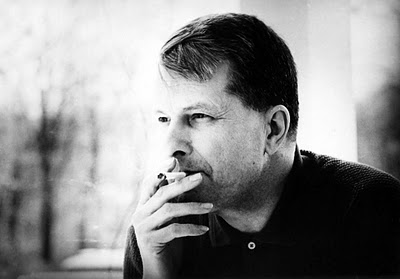
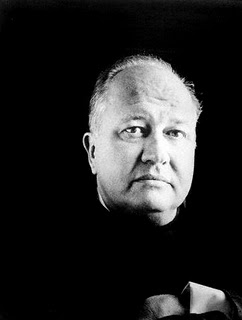
Theodore Roethke and his biographer Allan Seager had a lot in common. Although they were not particularly close, the two writers were one year apart as undergraduates at the University of Michigan and they were later colleagues at Bennington College and sometime drinking buddies. Their respective literary reputations, however, are far from equal: Despite achieving a certain amount of critical acclaim during his lifetime, Allan Seager’s fiction is rarely read today; Theodore Roethke, a poet who garnered a copious collection of prizes and honors in his time, is one of the titans of American Letters. But Seager was uniquely qualified to chronicle Roethke’s life in The Glass House, as fine a biography of a literary figure as one is likely to encounter.

Allan Seager was a heavy drinker who suffered with tuberculosis and finally succumbed to lung cancer in 1968. He had just completed The Glass House, which turned out to be his most enduring work. A Rhodes Scholar and champion swimmer in his early years, Seager wrote novels and short fiction which “never won general recognition,” yet his work was “highly praised ” by such esteemed critics as Hugh Kenner, James Dickey, and Robert Penn Warren (x). In his illuminating introduction to The Glass House, Donald Hall asserts that Seager’s real strength was constructing “stories and sentences–maybe sentences more than stories,” which is confirmed by the book’s many marvelous words, beautifully collocated (xii).

Any book tells us at least as much about its creator as it does about its subject. And The Glass House is particularly revealing when it comes to Seager’s feelings about what it felt like for a young man with an artistic temperament to grow up in a small-town Michigan about a century ago. (Seager was born in Adrian which is near Lansing; Roethke was reared in the more rural and remote city of Saginaw.) Seager’s Michigan was hardly a hotbed of artistic activity:

It is hard to convey how strange, how foreign the willful making of a poem would have been in a society like his, the inert weight of custom that not only did not have room for any original work in the arts but feared and hated it (46).

And we can only wonder to what extent Seager is speaking about himself when he notes how a poetic temperament was evident in Roethke from an early age:

his despair seems to prove that he already had the prime requisites of a poet, a tingling sensitivity as if he lacked an outer layer of skin, and some sort of compulsion to elevate his life, his emotions into words (28).

As any reader of Roethke would immediately surmise, the glass house of the title refers to his family’s floral farm in Saginaw as well as the poet’s delicate ego. When Ted was fourteen, feuding between his father Otto and his Uncle Charlie, Otto’s brother, led to breakup of the family business and the sale of the beloved greenhouse. Soon thereafter, Uncle Charlie committed suicide. And then Otto, a monumental figure in young Ted’s world, died from intestinal disease. “In the space of three months, the greenhouse was gone, his uncle was gone, his father was gone” (43).

This fateful period in Roethke’s life “must have been a hell of bright awareness” because “he had suffered deprivations greater and keener than he was going to suffer again” (55). Thus, the first fourteen years of his life were “burned into his memory” and, as a poet, Roethke would continue to revisit his bucolic childhood for the rest of his life:

what he writes about are always himself, his father, his mother, more rarely his sister, the greenhouse and its flowers and its working people, the field behind it, the fishing trips with his father, and his own rambles in the game preserve and along the rivers. Instinctively he remembers the period and the area that has been charged with his deepest emotions (163).

Forever collapsing back into his early years, Roethke built one of the most remarkable careers in American Literature. According to the poet Stanley Kunitz, a great friend and supporter of Roethke, “[t]his florist’s son never really departed from the moist, fecund world of his father’s greenhouse in Saginaw” (New York Review, 1963). Ultimately, a writer has only himself to work with, and he must “use himself as a mine, to dig out, to identify, and make images of his emotions” (105). Roethke’s keen reflections of a lost youth stoked his artistic furnace for decades.

Although he would later travel extensively throughout Europe, the greatest journey for Roethke was always inward. He had little interest in sightseeing.

“Churches, galleries, the Colosseum meant nothing to him and he simply refused to see them. It was people he liked to see”(211).

Seager relates that “Stanley Kunitz says he was not a really close observer, and, of course, he did not need to be since everything around him was useful to him only as signatures of himself” (123).

Roethke, who told his students that he never voted, was not someone who kept up with current affairs (50). He read voraciously but not systematically. As Roethke’s good friend W. H. Auden explains, “Ted had hardly any general ideas at all” (67). Seager explains that Roethke was “always reading–and it was not to acquire a fund of general knowledge. Rather, like most writers, he abstracted and kept only what concerned him and let the rest slide out of his memory” (110). At any rate, somehow the multitude of words that went into his head would later recombine in marvelous combinations in his poems.

Seager concedes that Roethke’s greatest artistic asset, a near total disregard for what was happening outside his own psyche, has been seen as a liability by some critics:

Ted’s work has been criticized for the narrowness of its range, for his constant concentration on the fluctuation of the state of his own soul, with the implication that he either selfishly or helplessly limited his vision or deliberately turned it inward, using his images of the nature outside himself merely as barometric signals of internal pressures, as if he found nothing worth writing about in the world around him or was blindly unaware of it (222).

At this point, however, Roethke’s high rank in the literary cannon is very secure.

In Allan Seager’s estimation, Theodore Roethke’s life was a smashing success:

It takes determination and luck for an artist to surmount the variety of obstacles which society–and he himself with unwitting inadvertence–can throw in the way of a period when he can work effectively, eat well enough, have friends to drink with, and be bothered by only petty everyday worries. But Ted managed it (189).

(An entire post about Theodore Roethke that doesn’t mention his renowned prowess as a teacher, his mental illness, the University of Washington, the incessant self-aggrandizing lies he would tell, nor his relationships with women. Wow.)

by Richard W. Bray

We Think by Feeling

March 2, 2010

Theodore Roethke

David Hume

We think by feeling. What is there to know?

–Theodore Roethke

Morals and criticism are not so properly objects of understanding as of taste and sentiment. Beauty, whether moral or natural, is felt, more properly than perceived.

–David Hume

Emotions ignite moral judgments. Reason follows in the wake of this dynamic….Conscious moral reasoning often plays no role in our moral judgments, and in many cases reflects a post-hoc justification or rationalization of previously held biases or beliefs.

–Marc D. Hauser, Moral Minds (24-25)

We Think by Feeling

In my last post I objected to clever and stylistic cinematic portrayals of violence because violence is the ugliest and stupidest thing that people do. I selected four movies for disapprobation, Snatch, Mr. and Mrs. Smith, Pulp Fiction, and Kill Bill. (It is no accident that two of these movies were created by Quentin Terantino, but more on that later.) But it dawned on me after I made the post that the primary rationale that I could come up with for why Mr. and Mrs. Smith is such a morally execrable movie (it makes light of those wretched people who kill others instead of exploring the contours of their depravity) is also true of Prizzi’s Honor, one of my favorite movies. Of course, I could try to convince myself that Prizzi’s Honor deserves an exemption from my rule about glamorizing violence because it is a highly ironic work of art.

Unfortunately, I’m pretty sure that whoever came up with Mr and Mrs. Smith was trying to be ironic, and every movie is a work of art (but not necessarily a well-achieved work of art.) It has also occurred to me that every reason I can come up with for why I never enjoyed Married with Children (it’s about a bunch of pathetic losers who are constantly abusing each other) is true about Two and a Half Men, one of my favorite shows.

Because emotions ignite moral judgments, it is my feeling that violence in film should be just as ugly and stupid as it is in real life. That’s why I like Reservoir Dogs so much more than Pulp Fiction (Michael Madsen’s happy dancing torturer scene notwithstanding). Terantino is, of course, a lightening rod for people who object to violent movies, particularly when he says asinine things like this:

“Violence in the movies can be cool,” he says. “It’s just another color to work with. When Fred Astaire dances, it doesn’t mean anything. Violence is the same. It doesn’t mean anything. It’s a color.”

The maddening thing about Terantino is that he such an idiotic savant. He writes brilliant dialogue, gets unexpectedly marvelous performances out of his actors and he’s even capable of creating rather touching scenes. I was very moved, for example, by the way Robert Forster revealed his vulnerable side to Pam Grier in Jackie Brown by talking about how degrading it was to sit alone for hours in a dark room that reeked of cat piss in order to do the only job he was qualified for.

So is every work of criticism simply an attempt to rationalize feelings? I’m afraid so.

by Richard W. Bray

Writers on Writing

February 24, 2010

Adrienne Rich

Robert Pinsky

Writers on Writing

(Editor’s Note: This post is the result of a conversation I had in the comments section of Ta-Nehisi Coates’s blog. Until quite recently I would have scoffed at the very notion that such a thing as an online community could possibly exist)

W. H. Auden The Dyer’s Hand

Attacking bad books is not only a waste of time but also bad for the character. If I find a book really bad, the only interest I can derive from writing about it has to come from myself, from such a display of intelligence, wit and malice as I can contrive. One cannot review a bad book without showing off. (11)

Richard Wilbur Responses, Prose Pieces

Emily Dickinson elected the economy of desire, and called her privation good, rendering it positive by renunciation. And so she came to live in a huge world of delectable distances….And not only are the objects of her desire distant; they are also very often moving away, their sweetness increasing in proportion to their remoteness. “To disappear enhances,” one of the poems begins, and another closes with these lines:

The Mountain–at a given distance–
In Amber–lies–
Approached–the Amber flits–a little–
And That’s–the Skies

(11-12)

Adrienne Rich On Secrets, Lies and Silence

I have a notion that genius knows itself; that Dickinson chose her seclusion, knowing she was exceptional and knowing what she needed. It was, moreover, no hermetic retreat…But she carefully selected her society and controlled the disposal of her time. (160)

The Theater Essays of Arthur Miller

So long as modern man conceives of himself as valuable only because he fits into some niche in the machine-tending pattern, he will never know anything more than a pathetic doom. (60)

Ira Gershwin Lyrics on Several Occasions

When I was on jury service in New York many years ago there was a case found for the defendant. Afterwards, in the corridor, I saw the lawyer for the plaintiff approaching and thought I was going to be lectured. But no. Greetings over, all he wanted to know was whether the words or the music came first. (41)

Theodore Roethke On Poetry & Craft

The writer who maintains that he works without regard for the opinion of others is either a jackass or a pathological liar. (48)

Norman Mailer The Spooky Art

Kurt Vonnegut and I are friendly with one another but wary. There was a period when we used to go out together fairly often because our wives liked each other, and Kurt and I would sit there like bookends. We would be terribly careful with one another; we both knew the huge cost of a literary feud, so we certainly didn’t want to argue. On the other hand, neither of us would be caught dead saying to the other, “Gee, I liked your last book,” and then be met with silence because the party of the second part could not reciprocate. (288)

Robert Pinsky The Sounds of Poetry: A Brief Guide

There are no rules.
However, principles may be discerned in actual practice: for example, in the way people actually speak, or in the lines poets have written. If a good line contradicts a principle one has formulated, then the principle, by which I mean a kind of working idea, should be discarded or amended.
(7)

Javier Marias Written Lives (on Rainer Maria Rilke)

The fact that such a sensitive person, so much given to communing, should have turned out to be the greatest poet of the twentieth century (of this there is little doubt) has had disastrous consequences for most of the lyrical poets who have come after, those who continue communicating indiscriminately with whatever comes their way, with, however, far less remarkable results and, it has to be said, to the serious detriment of their personalities. (83-84)

Gore Vidal United States

Sex is. There is nothing more to be done about it. Sex builds no roads, writes no novels, and sex certainly gives no meaning in life to anything but itself. I have often thought that much of D. H. Lawrence’s self-lacerating hysteria toward the end of his life must have come out of some “blood knowledge” that the cruel priapic god was mad, bad and dangerous to know, and, finally, not even a palliative to the universal strangeness. (37)

George H.W. Rylands Words and Poetry

When a generation labels everything as “superb” or “divine,” when a man says “damn” or “hell,” the actual meaning of the word is secondary to its emotional value; the word becomes a symbol of pleasure or disgust. The use of language in poetry is extraordinarily similar.” (72)

Stephen Fry The Ode Less Travelled

I HAVE A DARK AND DREADFUL SECRET. I write poetry. This is an embarrassing confession for an adult to make. In their idle hours Winston Churchill and Noel Coward painted. For fun and relaxation Albert Einstein played the violin. Hemingway hunted, Agatha Christie gardened, James Joyce sang arias and Nabokov chased butterflies. But Poety? (xi)

Percy Lubbock The Craft of Fiction

…when we think of the storyteller as opposed to the dramatist, it is obvious that in the full sense of the word there is no such thing as drama in a novel. The novelist may give the very words that were spoken by his characters, the dialogue, but of course he must interpose on his own account to let us know how the people appeared and where they were, and what they were doing. (111)

Stephen King On Writing

The dictum in writing class used to be “write what you know.” Which sounds good, but what if you want to write about starships exploring other planets or a man who murders his wife and then tries to dispose of her body with a wood-chipper? (158)

Lajos Egri The Art of Dramatic Writing

It is imperative that your story starts in the middle, and not under any circumstances, at the beginning. (200)

by Richard W. Bray