Archive for the ‘Morsel’ Category

Application #6

July 1, 2011

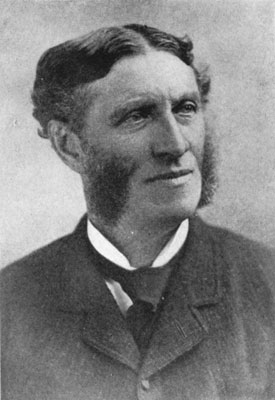
Matthew Arnold

Application # 6
(Something I wrote in graduate school)

The “interpoetic relationship” between Matthew Arnold’s Dover Beach and Anthony Hecht’s The Dover Bitch could hardly be less subtle. Hecht “clears poetic space” for himself by means of a “purposeful misreading” of Arnold in which Hecht inserts himself as a peripheral character in “Dover Beach”. This playful approach belies Harold Bloom’s contention that poets inevitably grapple with the “anxiety of influence” of prior works.

“Dover Bitch” is a lighthearted parody which mocks the sincerity and the seriousness of the original text. Hetch does this by transforming the object of desire in “Dover Beach” into a “girl” who is quite unworthy of her lofty stature. The woman spoken to in “Dover Beach” is the recipient of a protestation of a love which is meant to replace all the shattered Victorian certitudes which no longer exist:

Ah, love, let us be true
To one another! for the world ….
Hath really neither joy, nor love, nor light
Nor certitude, nor peace, nor help for pain

This is quite a tall order to fill: Make my life meaningful in a world without God. Hecht slyly deflates Arnold’s heroic affirmation of devotion by turning its recipient into a woman far more interested in having a good time than resolving Arnold’s spiritual devastation. Hecht does not merely remove her from her pedestal, but makes her scornful of Arnold’s attempt to recreate her “(A)s a sort of mournful cosmic last resort”.

Hecht’s attempt to supplant his predecessor offers a rich vein to be tapped by those who would extract psychoanalytical deposits from the rivalries which exist between authors. When Hecht proclaims “I knew this girl”, he means it in the biblical sense. It is hard to resist the Oedipal interpretation in which Hecht not only seduces the fictional object of Arnold’s desire, but has his way with his poem as well.

Hecht’s reduction of Arnold’s contemplation on the meaning of life into a tawdry one night stand is possible because Arnold permits him the space to do so. Arnold’s failure to consider how the poem plays to its internal audience makes it possible for the reader to accept her as seeing him as an insufferable blowhard.

by Richard W. Bray

Eleven Stanzas that Strike Like a Chime through the Mind

May 29, 2011

Christina Rossetti

Richard Wilbur

e e cummings

Does the road wind up-hill all the way?
Yes, to the very end.
Will the day’s journey take the whole long day?
From morn to night, my friend.

from Uphill by Christina Rossetti

Let Observation with extensive view,
Survey mankind, from China to Peru:
Reark each anxious toil, each eager strife:
Then say how hope and fear, desire and hate,
O’spread with snares the clouded maze of fate,
Where wavering man, betrayed by venomous pride,
To tread the dreary paths without a guide,
But scarce observed, the knowing and the bold
Fall in the general massacre of gold;
Wide-wasting pest! That rages unconfined,
And crowds with crimes the record of mankind;
For gold his sword the hireling ruffian draws,
For gold the hireling judge distorts the laws;
Wealth heaped on wealth, not truth nor safety buys,
The Dangers Gather as the Treasures rise

from The Vanity of Human Wishes (The Tenth Satire of Juvenal Imitated) by Samuel Johnson

We have it and it doesn’t do us any
Good because nobody gets what they
Deserve more than everybody else.

from Family Values by Robert Pinsky

I am tired of tears and laughter,
And men that laugh and weep;
Of what may come hereafter
For men that sow to reap:
I am weary of days and hours,
Blown buds of barren flowers,
Desires and dreams and powers
And everything but sleep.

from Garden of Proserpine by Algernon Charles Swinburne

Thy gowns, thy shoes, thy beds of Roses,
Thy cap, thy kirtle, and thy posies
Soon break, soon wither, soon forgotten:
In folly ripe, in reason rotten.

from The Nymph’s Reply to the Shepherd by Sir Walter Ralegh

Joy’s trick is to supply
Dry lips with what can cool and slake,
Leaving them dumbstruck also with an ache
Nothing can satisfy.

from Hamlen Brook by Richard Wilbur

“I see the guilty world forgiven,”
Dreamer and drunkard sing,
“The ladders let down out of heaven,
The laurel springing from the martyr’s blood,
The children skipping where the weeper stood,
The lovers natural and the beasts all good.”
So dreamer and drunkard sing
Till day their sobriety bring:
Parrotwise with Death’s reply
From whelping fear and nesting lie,
Woods and their echoes ring.
The desires of the heart are as crooked as corkscrews,
Not to be born is the best for man;
The second-best is a formal order,
The dance’s pattern; dance while you can.

from Death’s Echo by W. H. Auden

To fight aloud, is very brave —
But gallanter, I know
Who charge within the bosom
The Cavalry of Woe —

from To Fight Aloud is Very Brave by Emily Dickinson

I knew a woman, lovely in her bones,
When small birds sighed, she would sigh back at them;
Ah, when she moved, she moved more ways than one:
The shapes a bright container can contain!
Of her choice virtues only gods should speak,
Or English poets who grew up on Greek
(I’d have them sing in chorus, cheek to cheek.)

from I Knew a Woman by Theodore Roethke

and nothing quite so least as truth
—i say though hate were why man breathe—
because my father lived his soul
love is the whole and more than all

from my father moved through dooms of love by e.e. cummings

No memory of having starred
Atones for later disregard
Or keeps the end from being hard.

from Provide, Provide by Robert Frost

by Richard W. Bray

Celebrating the Violent Death of a Wicked Man

May 5, 2011

any man’s death diminishes me, because I am involved in mankind

John Donne

My grandfather lived to be a hundred years old. He had a remarkable career in which he enriched the lives of thousands of people. In fact, he loved his job teaching Geology so much that he continued to go to work every day for over thirty years after he retired. He was a respected family man and a pillar of the community. None of us could reasonably ask for anything more out of life.

If every person’s death makes me smaller, then it would be natural to assume that the passing of a kind, decent, and noble man like my grandfather would represent the greatest type of loss for humanity.

However, I believe that, paradoxically, the opposite is true: A life squandered in pursuit of violent and vindictive hatred is a failure for all of humanity because, as Donne noted in his famous sermon, no man is an island.

I’m not saying this to scold people who exalt in the death of someone who has committed heinous crimes. This is perfectly natural and I am in no way superior to anyone who would cheer when a bad man gets a bullet to the head. I feel petty and vindictive impulses every day, which are usually directed towards those whom I love the most. That’s simply a function of having an ego.

Being human, the best that I can ever hope to achieve is pity for the wicked in the rag and bone shop of my crooked heart.

by Richard W. Bray

Some Thoughts on Joseph Sugarman’s Adweek Copywriting Handbook

January 29, 2011

sugarman

It’s all about getting her to read the first sentence. And then the next. And the next. Until she finishes the copy and picks up the phone to place her order.

In The Adweek Copywriting Handbook, legendary adman Joseph Sugarman explains the art of creating print advertising which will motivate a person “to exchange his or her hard-earned money for a product or service” (5).

Grab and Keep the Reader

Sugarman describes how “the purpose of all the elements in an ad” is “to get you to read the copy” (31). The pictures, layout and headline must pull readers into the ad. Then the words take over.

The first sentence must “really grab and keep” the reader (32). In order to do this, Sugarman advises copywriters to “Keep it short, sweet and almost incomplete so that the reader has to read the next sentence” (32).

It had to happen.

It’s you against the computer.

It’s easy.

Each of the three brief opening sentences provided by Sugarman is designed to lure the unsuspecting reader down the “slippery slope” of words, ultimately leading him to commit an act of unnecessary consumption.

Once the potential customer has begun her descent, the copy must be compelling enough to “get momentum going and create that buying environment” (114).

A good salesman can decide which strategy to utilize by reading his customer’s face, but a copywriter uses mere words to generate the elements of a showroom inside the reader’s imagination. This process includes anticipating and assuaging all possible objections. Sugarman warns: “Give the readers any excuse not to buy and they won’t buy” (124).

From Me to You

And just like any other salesman, the copywriter’s most important task is to develop a personal relationship with the customer. Although a particular advertisement appears in a magazine that will be read by thousands of readers, it should address potential customers in the same manner one would use speaking to a friend.

It is essential that you write your copy as if you are writing to that single individual. Your copy should be very personal. From me to you. Period (91).

One way copywriters achieve this sense of intimacy is by using the personal pronouns, you, I and me, which “create the feel of a personal form of communication” (88). The word we, however, can make the seller seem large and impersonal. That’s why it’s best to refer to a company and its support staff in an endearing manner: “My team of great engineers is available to help you” (281).

You sell on emotion but you justify a purchase with logic

Human beings are capable of making rational decisions, but decision-making is not a rational process. As poet Theodore Reothke shrewdly noted, “We think by feeling.” And any purchasing decision is fraught with feelings.

As Sugarman explains:

You buy a Mercedes automobile emotionally but you then justify the purchase logically with its technology, safety and resale value (138-9).

How Many Words?

Is there such a thing as too much copy? Not according to Sugarman: “There really is no limit to how long copy should be if you get results” (83). However, space is always finite in newspaper or magazine advertisements. (But space is not restricted with internet ads, which creates many selling opportunities)

But as a general rule brevity is better, and “the goal in writing ad copy is to express the thoughts you want to convey in the most powerful way but with the fewest words” (102 ).

Like a Poet

Like a poet, an effective copywriter needs to understand the emotional connotations of the words she chooses. Also like a poet, she must learn to “edit for rhythm,” in order to create copy that flows mellifluously (104).

You’ll Have to Buy the Book to Get the Rest of the Stories

Like how Sugarman got sales to rise twenty percent by changing a single word in a page of copy (70). Or how he sold a quarter of a million Walkie-Talkies by calling it a Pocket CB.

by Richard W. Bray

Some Thoughts on Lyrics on Several Occasions

December 30, 2010

VVVVIRA

Some Thoughts on Lyrics on Several Occasions

Ira Gershwin, a City College dropout, was a great lover of words.  The lyricist who is best-remembered for penning songs such as Embraceable You, I got Rhythm, and Someone to Watch Over Me with his prodigiously talented younger brother George displays much wit and erudition in Lyrics on Several Occasions (1959), which is part memoir, part songbook (minus the music), part dissertation on his craft, and part meditation on language.

Gershwin discusses various philological topics which range in complexity from the correct pronunciation of the word “Caribbean” and the use of “like” as a conjunction (77), to Sidney Lanier on the “laws governing music and verse” (301) and “erudite Isaac D’Isreali (father of brilliant ‘Dizzy’)” on the origins of rhyme (321-322).

Gershwin demonstrates his impressive breadth of knowledge in both poetry and linguistics describing how he makes what might seem to be a rather mundane word choice:

In “Crush on You” I used “sweetie pie,” which I felt wasn’t too diabetic a term. And I have gone for “sweet” as a noun of endearment several times. But the parent of the last two, “sweetheart” (which goes back about eight centuries to “swete heorte”), I have somehow always given a wide berth (95).

Other times Gershwin’s explanations for his word choices are more prosaic. Here is how he came up with a particular rhyme in the preamble for Looking for a Boy (‘Bout five foot six or seven):

…about the only rhymes I could use for “Heaven” were “seven” and “eleven”; hence her preoccupation with height. (“Devon” was geographically out-of-bounds; Laborite E. Bevins was probably already married; and what could one do with “replevin”?) (9).

Words enter a writer’s brain from various directions, and then via some mysterious alchemy, words come out. I will offer an example from my own writing simply because I’m the writer I know the best (and I’m not presuming in any way that anything I have written is on a par with Mr. Gershwin’s work.) When I read the complete works of Wilfred Owen a few years back I thought, “Wow, this slant rhyme is pretty cool!” I naturally assumed that after a brief interval my brain would begin to sprout forth slanty rhymes. Still waiting.

And when the words do come, sometimes a writer has to drop everything and tend to inspiration which might not return:

Working incommunicado, trying to solve the riddle of a lyric for a tune, I sometimes didn’t get to bed until after sunrise. Even then the tune could be so persistent that it could keep running on through sleep, and was still with me at breakfast. And later in the day when I was about to tackle some other problem, it was capable of capricious intrusion with the threat of “Write me up! Work on me now or you’ll never get through!” However, after some years of tussling with any number of tunes, I found that the newer ones gradually became less tenacious and more tractable (136).

Two Brief Funny Stories

When I was on jury service in New York many years ago there was a case found for the defendant. Afterwards, in the corridor, I saw the lawyer for the plaintiff approaching and thought I was going to be lectured. But no. Greetings over, all he wanted to know was whether the words or the music came first (41).

And on how Gershwin made use of the phrase Nice work if you can get it, which he came across in a book of cartoons rejected by British humor magazines:


One, submitted to Punch, I think, was–I’m pretty sure–by George Belcher, whose crayon specialized in delineating London’s lowly. In this one, two char-women are discussing the daughter of a third, and the first says she’s heard that the disscussee ‘as become a ‘ore. Whereat the second observes it’s nice work if you can get it
(97).

Morality and Popular Music

In comparison to today’s popular music, it’s hard to imagine people who would find Ira Gershwin’s lyrics offensive, although “Stairway to Paradise” pokes fun at people who are too pious for dancing and “Fascinating Rhythm” is obviously about a couple whose amorous activity is too loud for the neighbors. In Gershwin’s time, however, one musicologist referred to Gershwin Brothers hit Do, Do, Do as “smart smut,” (261) and in Philadelphia “one of the town’s top critics” objected to an “obscene phrase” in the song “‘Swonderful”:

I don’t know what he would think about these Freedom-of-Four-Letter-Speech days, but at the time he felt that “feeling amorous” was something better scrawled in chalk than sung from a stage (253).

In the Winter, 1955 edition of ETC., noted semanticist and future California United States Senator S.I. Hayakawa proffered the absurd notion that Ira Gershwin and his colleagues were causing an epidemic of helplessly lovelorn youth. He labeled the phenomenon it “IFD disease (Idealization; Frustration; Demoralization).” Mr. Gershwin’s hilarious response is on page 113.

The Most Interesting Thing I Learned from This Book 

Ira Gershwin continued to work with several composers for decades after his brother’s unfortunate and untimely passing. He wrote The Man that Got Away with Harold Arlen, which was nominated for an Academy Award in 1954. This portion of the haunting song contains two classic two-syllable Ira Gershwin rhymes.

The man that won you
Has gone off and undone you
That great beginning
Has seen the final inning.
Don’t know what happened. It’s all a crazy game!

by Richard W. Bray

The Three Types of Irony and an Amusing Teacher Story

December 4, 2010

Coincidence is NOT irony

As George Carlin and others have pointed out, sportscasters, particularly baseball announcers, have an irony problem. Many of them simply don’t understand what the word means. Usually they mistake coincidence for situational irony. For example, an announcer might say,

“It’s ironic that Stubby McGillicutty broke the single season RBI record in Anaheim where Angel great Jackie Fullcup, whose record McGillicutty broke, spent his entire career.”

No. IT’S COINCIDENTAL.

The Three Types of Irony

1) Verbal IronySaying what you DON’T mean

Definition: A speaker means something different than, often the opposite of, what she says.

Examples:

“I can’t wait to start writing these forty-seven reports.”

“My walk home was only twenty-three blocks.”

(Note: The terms sarcasm and irony are often used interchangeably, but there is a semantic difference. Sarcasm is meant to insult or cause harm. So strictly speaking, “Great, I forgot my umbrella” is ironic, whereas “You call this a cup of coffee?” is sarcastic.)

2) Situational IronyThe gods are laughing at me by giving me ten thousand spoons when I just need a knife.*

Definition: When the outcome of actions or events is different than the desired or expected result

Examples:

If Dave died because he was allergic to the antibiotics that were supposed to save him, he is not merely a victim of bad luck. There is an oddly perverse poetry in Dave’s plight. Such a phenomenon as situational irony would only occur to a species which has a concept of fairness and a tendency to automatically anthropomorphize Fate.

The Psychic Friends Network went bankrupt due to “unforeseen circumstances.”

(George Carlin’s marvelous book Brain Droppings has some wonderful examples of situational irony, particularly the one about the Kurd who survives a brutal attack by Saddam Hussein at the end of the First Gulf War and escapes over the mountains only to be crushed by an airdropped box of humanitarian aid. If you want to teach Carlin on situational irony, however, be prepared to explain about the Kurds and the first Gulf War and to tell them who Darryl Stingley was.)

3) Dramatic IronyThe reader or audience knows something fictional characters don’t

Definition: When we say something is ironic we almost never mean dramatic irony. Dramatic irony occurs when the reader or audience has important knowledge which is withheld from a character or characters in a story, a movie, or a play.

The most obvious example of this is when the young lady in the slasher flick doesn’t realize that the guy in the hockey mask with the meat cleaver is hiding behind the hot tub—but we do.

Perhaps a more erudite example would be that the audience knows who Oedipus Rex’s parents really are.

* From the song Ironic by Alanis Morissette which can be a good teaching tool because it contains some hits and several misses. (Rain on your wedding day is simply a case of bad luck unless you are having an outdoor wedding in Southern California in June and all your bridesmaids are wearing paper dresses.) The song has been much-derided by English teachers because it contains one example of verbal irony, four examples of situational irony, six examples of bad luck, two examples of stupidity and one example of coincidence.

Evaluation

State whether the following are examples of verbal irony, situational irony, dramatic irony or not ironic in any way.

1. “Oh, great! It’s raining and I forgot my umbrella.”

2. I failed the test because I did not study.

3. Dave’s blood pressure medication gave him a heart attack.

4. Batman doesn’t know that the Joker is waiting for him, but the audience does.

5. Cal Poly Pomona and Cal Poly SLO are both located in California.

6. The box of airdropped humanitarian aid landed on the refugee and killed him.

7. I missed the job interview because I overslept.

8. “Thank you for this ticket, Officer. You just made my day.”

9. Three celebrities died in three separate plane crashes yesterday.

10. “I heard that sun block causes cancer.”

An Amusing Teacher Story (which is in no way ironic)

I made a class of college freshman read Welcome to the Monkey House, a collection of short stories by Kurt Vonnegut. At the end of the quarter we watched some videos of stories from the book which were introduced by the author. Before class a student came up to me and asked how the man in the video could be Vonnegut when it says on the book jacket that he is “our finest black-humorist.” I explained that there are people who practice dark humor and there are also African-American humorists.

Richard W. Bray

Some Thoughts on Where I Was From

November 18, 2010

Some Thoughts on Where I Was From

In the introduction to his book Many Mexicos, historian Lesley Byrd Simpson explains how its jagged mountain ranges carve the nation up into several distinct geographical and cultural regions. It dawns on me that Many Californias would be an apt title for the book Where I Was From, a collection of Joan Didion’s writings about her native state.

Not much about California, on its own preferred terms, has encouraged its children to see themselves as connected to one another. The separation, of north from south—and even more acutely west from east, of the urban coast from the agricultural valleys and of both the coast and the valleys from the mountain and desert regions to their east—was profound, fueled by the rancor of water wars and by less tangible but even more rancorous differences in attitude and culture (64).

Our Many Californias often seem to be working at cross purposes from one another, much like our notoriously undisciplined congressional delegation. (State-boostering legislative discipline is the only thing we envy about Texas.)

So the much-hyped rivalry between the San Francisco Bay Area and Southern California (a label which, oddly, doesn’t seem to include the San Diego area) is merely one of many divides. Rivalry, however, isn’t really the correct word because that would imply that people in Southern California are actively conscious of what others are thinking about us. Yes, the smug sense of superiority that Bay Area residents feel over their glittery and shallow water-thieving “neighbors” to the south is a cornerstone of regional identity, but Southern Californians don’t spend a lot of time worrying about the haters. This is fortunate because we are roundly detested (BEAT LA). In San Diego, for example, TV weathermen give the “Smell A” forecast.

In 1890 my grandfather was born in Upland, which makes my California lineage much longer than that of most of my fellow inhabitants. But my ancestors came by railroad; Joan Didion’s people came by covered wagon. Ms. Didion insists that this distinction created a clan of hearty settlers who don’t look kindly upon those who fuss and dawdle:

Sentiment, like grief and dissent, cost time. A hesitation, a moment spent looking back, and the grail was forfeited. Independence Rock, west of Fort Laramie on the Sweetwater River, was so named because the traveler who had not reached that point by the Fourth of July, Independence Day, would not reach the Sierra Nevada before snow closed the passes (32-33).

The details of the Crossing are deeply ingrained in family lore because “The gravity of the decisive break demands narrative” (30).

The importance of recording these memories was unquestioned: the flood and the levees and the two-story house on the Grape Vine Ranch had become, like the potato masher that crossed the plains, like the books that did not get jettisoned on the Umpqua River, evidence of family endurance, proof of our worth, indistinguishable from the crossing story itself (158).

Of course, many Californians were ambivalent about the massive influx of citizens which transformed our state into the nation’s largest and most prosperous in the nation. In particular, California’s tradition-conscious older families who are often large landholders, “have an equivocal and often uneasy relationship to the postwar expansion (97).” More people might bring wealth and increase real estate “value”, but they will never get what it really means to be a Californian.

“New people, we were given to understand, remained ignorant of our special history, insensible to the hardships endured to make it, blind not only to the dangers the place still presented but to the shared responsibility its continued habitation demanded” (95).

And Californians have been happy to share the cost of much of our growth with the rest of the country by way of federal railroad subsidies, massive hydro-agricultural projects and military/aerospace spending. For decades we blissfully accepted federal largess despite the obvious contradiction that such an “extreme reliance of California on federal money [was] so seemingly at odds with the emphasis on unfettered individualism that constitutes the local core belief” (23).

For example:

The cost of controlling or rearranging the Sacramento [River], which is to say the “reclamation” of the Sacramento Valley, was largely born, like the cost of controlling or rearranging many other inconvenient features of California life, by the federal government (23).

And:

It was a quartet of Sacramento shopkeepers, Charles Crocker and Leland Stanford and Collis P. Huntington and Mark Hopkins, who built the railroad that linked California with the world markets and opened the state to extensive settlement, but it was the citizens of the rest of the country who paid for it through a federal cash subsidy (24-25).

During the remarkable postwar boom, California grew and grew. We built cities, freeways, airports and the greatest system of higher education in the world. It was perfectly natural to assume that “[g]ood times today and better times tomorrow were supposed to come with the territory” (129).


Then came the Oil Shock, Governor Moonbeam, Proposition 13, an era of limits, the end of the Cold War, the loss of “800,000 jobs between 1988 and 1993”, the Rodney King Riots, OJ, and thriving auto and aerospace factories replaced by warehouses offering “165,000 Square Feet of T-Shirts Madness”
(134, 151).

A scared and frustrated public reacted angrily to the demise of our “artificial ownership class” (113). However,

“when they finally noticed that the jobs had gone to Salt Lake or St. Louis, [they tended] to see their problem as one caused by ‘the media’ or by ‘condoms in the schools’ or by less-good citizens, or by non-citizens” (116).

As Californians began to turn on ourselves, bizarre, fear-driven policies led to this:

“It was 1995 when, for the first time, California spent more on its prisons than on its two university systems, the ten Campuses of the University of California and the twenty-four campuses of California State University” (187).

When Joan Didion was a child, she asked her mother to which class the family belonged, only to be rebuffed that “class” was “not a word we use.”

We believed in fresh starts. We believed in good luck. We believed in the miner who scratched together one last stake and struck the Comstock Lode. We believed in the wildcatter who leased arid land at two and a half cents an acre and bought in Kettleman Hills, fourteen million barrels of crude in its first three years. We believed in all the ways that apparently played-out possibilities could while we slept turn green and golden (128).

California could sure use a green and golden fresh start these days.

by Richard W. Bray

I Wanna Hear

November 12, 2010

I Wanna Hear

I listen to poetry on my ipod while I stretch at the gym before a workout. Guess what? England (Caedmon, BBC, etc.) really kicks our ass when it comes to recorded poetry. It’s easy to find poets like Dylan Thomas available on CD in addition to actors such as Boris Karloff reading Kipling or James Mason reading The Rime of the Ancient Mariner. There are also many recordings of fine stage performers reading just about every major British and Irish poet.

But it’s slim pickins for recorded American poetry. Poetry Speaks is a nice project, but it’s only four CDs. And even the excellent Voice of the Poet series has only one female poet available on CD (Adrienne Rich) and nothing on CD from Robert Lowell, Elizabeth Bishop, Theodore Roethke or Sylvia Plath.

I don’t think Americans will ever crave poetry the way people in other countries do. And I don’t expect to live to see a time when it is common to find people reciting poetry in front of large audiences in parks and amphitheaters.

But wouldn’t it be cool if, once in a while, instead of presenting music from some no-hit wonder, maybe Jimmy/Steven/Jimmy could feature:

CCH Pounder reciting If I Should Die by Emily Dickinson

Brad Pitt reciting Burnt Norton by T.S. Eliot

Martin Sheen reciting Samurai Song by Robert Pinsky

Sigourney Weaver reciting Aunt Jennifer’s Tigers by Adrienne Rich

Holland Taylor reciting Bohemia by Dorothy Parker

James Earl Jones reciting anything by Carl Sandburg

Rosie Perez reciting Mad Girl’s Love Song by Sylvia Plath

Kelsey Grammer reciting Those Winter Sundays by Robert Hayden

by Richard W. Bray

Some Thoughts on The Spooky Art

October 24, 2010

norman-mailer

Some Thoughts on The Spooky Art

The problem with naturalism is that there are just so many ways of saying that life is futile. About a hundred years ago when God was freshly deceased in the modern mind, Jack London, Theodore Dreiser and Stephen Crane had room to ruminate about the bleak, harsh unfairness of it all without getting stuck in naturalism’s inevitable cul-de-sac. Artful naturalism can still be written (see Being Dead by Jim Crace), but novelists with a metaphysical predisposition have many more aesthetic avenues to explore than devout nonbelievers.

Unlike so many twentieth century writers who were unable to reconcile belief in an anthropomorphized deity with the carnage and horror of two world wars and the Holocaust, Norman Mailer saw the supernatural everywhere. He was a confirmed mystic who was constantly groping after salvation in his tempestuous personal and artistic life.

In The Spooky Art, a compilation of the novelist’s musings about the craft of writing, Mailer insists that an “ongoing and conceivably climactic war between God and the Devil” manifests itself in the quotidian world of human strife (307). This is no mere literary affectation. Although Mailer did not ascribe to a particular faith, he was afflicted with a mercurial temperament which sought a deity that was, interestingly, much like himself:

“I confess that I have no attachment to organized religion. I see God, rather, as a Creator, as the greatest artist.”

Mailer enjoyed quoting Kierkegaard — I have a theory that Kierkegaard is more quoted than read. And he was deeply concerned with matters of good, evil, courage, and existence. Mailer argues that it is ludicrous to contemplate a universe without an active deity and some form of an afterlife (Mailer’s money is on reincarnation).

“Carnage walks the aisles of history hand in hand with philosophy. If there is no afterworld where the contest continues, then existence is indeed absurd” (148).

Sparkling literary careers have been wrought from that absurdity (see Brecht, Vonnegut, Kafka, and the Hebrew wit who wrote the Book of Job). But a diverse group of modern writers, including Fyodor Dostoevsky, G. K. Chesterton, Graham Green, Flannery O’Connor, John Updike, W. H. Auden and T.S. Eliot, have been theists.

It is not surprising that the pugnacious novelist and raconteur would have an idiosyncratic approach to religion. Mailer submerged everything that frightened and confused him into a big, dark pit which is alternately seen as hell or his own subconscious. For Mailer, the two are deeply connected. He asks us to

“Suppose the unconscious has a root in the hereafter that our conscious mind does not”(138).

For a novelist, the subconscious is a magic and mysterious font “and you never know where your words are coming from, those divine words” (70). Mailer, who was “always a little uneasy when my work comes to me without much effort,” liked to think of his unconscious as a “separate creature”(127, 143).

The novel Nightwood is a mad dreamy reactionary assault on society written by a brilliant, confused and obviously self-loathing woman, Djuna Barnes. In the section “Watchman, What of the Night?” Dr. Matthew Mighty O’Connor argues that night time—sleep time—is when the devil does his battling. Nightwood is a bizarre and disturbing book for many reasons, but Dr. O’Connor’s rant about sleep, “that unpeopled annihilation” in many ways explains how Mailer sees his own relationship with his unconscious (95).

…the day and the night are related by their division. The very constitution of twilight is a fabulous reconstruction of fear, fear bottom-out and wrong side up. Every day is thought upon and calculated, but the night is not premeditated. The Bible lies the one way, but the night-gown the other (87).

Norman Mailer takes his craft seriously and he fears the decline of “serious” novelists such as himself because “[n]ovels that reinvigorate our view of the subtlety of moral judgments are essential to a democracy” (161). Surveying the present state of fiction in America, Mailer laments how “the smart money would bet against the serious novel”(51). (Mailer’s observation, “I don’t think Jackie Susann went to bed with Rainer Maria Rilke on her night table,” gives us an idea about his regard for un-serious novelists(49).

For Mailer, the difference between “serious” novels and bestsellers is that the latter generally do not challenge their readers:


“mega-best-seller readers want to be able to read and read and read–they do not want to ponder any truly unexpected revelations. Reality might lie out there, but that is not why they are reading”
(51).

Norman Mailer was not sanguine about the future of fiction in America, a profession that has long been plagued with “various pirates, cutthroats racketeers, assassins, pimps, rape artists, and general finks (57).” And he has even less faith in our press which produces a “[n]ausea-broth of TV pundit-heads, coming to an intellectual climax every night” (83). A co-founder of the Village Voice in 1955, Mailer is hailed as an “innovator of narrative” . Here is his portrait of the journalist’s life:

“One half is addiction, adrenaline, anecdote shopping, deadlines, dread, cigar smoke, lung cancer, vomit, feeding The Goat; the other is Aloha, Tahiti, old friends, and the free ride to the eleventh floor of the Sheraton-Chicago, Patterson-Liston Press Headquarter, everything is free.” (185).

by Richard W. Bray

Some Thoughts on Alfred Kazin’s America

October 4, 2010

Alfred-kazin

We can only guess how many literature–loving undergraduate English majors have been dissuaded by the massive edifice of Literary Theory: Freudianism. Marxism. New Criticism. Structuralism. Semiotics. Feminism. Poststructuralism. Postmodenrism. Reader Response. etc. The tumescent postwar expansion of our university system along with the demise of so many literary publications has in many cases reduced the discussion of literature in this country to the “endless theorizing about what literature cryptically is” (513).

Rereading Alfred Kazin’s America, a selection of the late writer’s works adroitly and lovingly edited by Ted Solotaroff, I am transported to a less restive time when a university professor of literature like Kazin could get by simply expressing his enchantment with the written word. As Solotaroff notes in his introduction, Kazin “was not interested in literary theory or in what nowadays is called textuality” (xxi).

Ralph Waldo Emerson’s solipsistic (and rather disturbing) assertion in Self Reliance that “Nothing is at last sacred but the integrity of your own mind” is faintly echoed in Kazin’s essay To be a Critic:

To be a critic, nothing else is so important as the ability to stand one’s ground alone. This gets more important as criticism gets more standardized and institutionalized, as the critic gets more absorbed in literary theory rather than in the imaginations who are his raison d’etre (510).

Kazin always stood his ground, even when his opinions collided with hagiography. Here he is on the Lost Generation:

They had a special charm–the Byronic charm, the charm of the specially damned; they had seized the contemporary moment and made it their own; and as they stood among the ruins, calling the ruins the world, they seemed so authoritative in their dispossession, seemed to bring so much craft to its elucidation, that it was easy to believe that all roads really had led up to them (117).

And here he is describing how The Great Gatsby triumphs despite its flaws:

The book has no real scale; it does not rest on any commanding vision, nor is it in any sense a major tragedy. But it is a great flooding moment, a moment’s intimation and penetration; and as Gatsby’s disillusion becomes felt at the end, it strikes like a chime through the mind (122).

The mercurial and sometimes brilliant Norman Mailer has been an enigma for both reader and critic because his uneven output is often overshadowed by his tempestuous personality.

Mailer’s tracts are histrionic blows against the system. They are fascinating in their torrential orchestration of so many personal impulses. Everything goes into it on the same level. So they end up as Mailer’s special urgency, that quest for salvation through demonstration of the writer’s intelligence, realism, courage, that is to be effected by making oneself a gladiator in the center of the ring, a moviemaker breathing his dreams into the camera (278).

Things don’t always go according to plan for American writers, as demonstrated by this cutting observation about Sinclair Lewis:

Here was the bright modern satirist who wrote each of his early books as an assault on American smugness, provincialism, ignorance, and bigotry; and ended up by finding himself not an enemy, not a danger, but the folksiest and most comradely of American novelists (99).

e. e. cummings, another brash and electric talent, is neatly summed up by Kazin:

As Cummings saw it, the world was composed of brutal sensations and endured only by fiercely desperate courage and love; it was so anarchical that all attempts to impose order were motivated by either ignorance or chicanery (127-128).

And here he is on the tempestuous Sherwood Anderson:

Anderson turned fiction into a substitute for poetry and religion, and never ceased to wonder at what he had wrought. He had more intensity than a revival meeting and more tenderness than God; he wept, he chanted, he loved indescribably (93).

Emily Dickinson is the greatest literary genius our culture has created (says me). Adrienne Rich wrote that “genius knows itself” and Dickinson “chose her seclusion, knowing she was exceptional and knowing what she needed.” Here’s how Kazin describes Dickinson’s beautifully bizarre, cheerful death wish:

In poem after poem she expressed, in her odd blend of heartbreaking precision and girlish winsomeness, the basic experience, in the face of death, of our fear, our awe, our longing—and above all, of our human vulnerability, of the limit that is our portion (402).

Kazin reflects on the singular achievement of Ralph Ellison’s Invisible Man from the perch of a dispirited and tumultuous time (1971) while taking a swipe at Richard Wright, James Baldwin, Langston Hughes and every other notable contemporary African American writer.

Certainly more than any black writer, Ellison achieved as dramatic fact, as a rounded whole, beyond dreamy soliloquy or angry assertion, a demonstration of the lunatic hatred that America can offer, on every facet of its society, to a black man. This irrationality is more real, more solidly grounded to blacks writing out of actual oppression than is the idea of an irrational society to white writers dislocated in a country they used to take for granted and now find so much of America “meaningless” (282).

And here’s Kazin on Herman Melville’s fall and posthumous rise:

Melville may have been ditched by his own century; he became important to the next because he stood for the triumph of expression over the most cutting sense of disaster, negation, and even the most ferociously unfavorable view of modern society in classical American literature (366).

The young Ezra Pound was in many ways a generous soul who took the time to befriend and nurture younger poets. He was also an egomaniac. According to William Carlos Williams, once, when the two young poets were walking through the New Jersey countryside, Williams exclaimed that the winter wheat was coming up to meet Ezra. Pound noted wryly that it was the “first intelligent wheat” he had ever come across. (This sounds like something Sheldon Cooper might say.) Kazin discusses how this great mind eventually became so diseased:

Pound was a convinced fascist. The cruelty and death of fascism are an essential part of his epic and cannot be shrugged away in judging his work. Pound recognized his epic hero in Mussolini because fascism, like Ezra Pound, had few abiding social roots and was based on an impersonation, like Pound’s, of a mythic personage (196).

There is a sheen of other-worldliness in Nathaniel Hawthorne, “the only novelist from New England as subtle as its poets” (338).

Hawthorne, surrounded by so many moralists who thought they commanded the reality principle, created more memorably than he did anything else a sense of the unreality of existence, of its doubleness, its dreaminess, its unrealizability by anything less profound than the symbolic tale (338).

While Kazin was enthralled with the “imaginations” of our finest writers, he wasn’t afraid to take a shot at one of our most exalted figures:

Thoreau was a pure idealist, living on principle: typical of New England in his scorn for Irish immigrants, properly indignant about slavery in far-off Mississippi, but otherwise, as he wrote Walden to prove, a man who proposed to teach others to be as free of society as himself (329).

Over seven hundred thousand combatants perished in the Civil War, the bloodiest conflict in human history up to that point. Much good resulted from this ghastly episode in our history, but millions of lives were damaged irreparably and African Americans would not be fully emancipated and enfranchised for another century. Only God could say if such massive suffering were justifiable for any cause, but that didn’t prevent victorious Northerners from singing “Glory, Glory, Hallelujah!”

The triumphant North needed proof of its saintliness, and found it in the consecration of Abraham Lincoln. The civil religion that came out of the war turned America itself into a sacred object and ritual demanded that America be its own religion—and that everybody had to believe in it. The Lincoln who never joined the Church became the god of a godless religion. Under the smug Republican administration of Calvin Coolidge, a great temple in Washington was built around a statue of Lincoln seated on a throne. Now the people truly had someone eternally to worship (400).

I’ll leave you with a final warning from Alfred Kazin.

If the critic cannot reveal to others the power of art in his own life, he cannot say anything useful or even humane in its interest. He will scrawl, however learnedly, arbitrary comments on the text (512).

by Richard W. Bray